
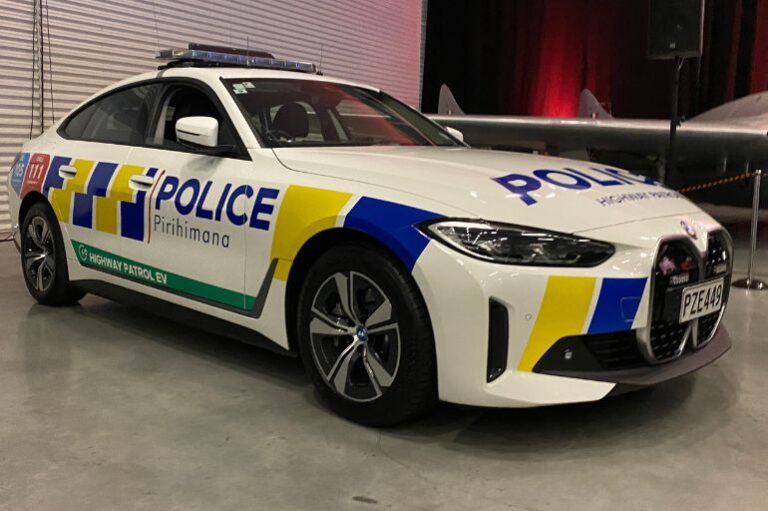
Managing a national fleet of more than 3,700 vehicles is a complex task, particularly for an organisation such as New Zealand Police where vehicles are mission-critical assets supporting frontline operations. In 2025, NZ Police introduced a new Vehicle Replacement Programme Methodology designed to improve how replacement decisions are made across the fleet. The approach moves beyond simple age- or kilometre-based triggers and instead applies a structured framework that considers operational risk, asset condition and whole-of-life cost.
The methodology was developed between January and June 2025 and is now embedded as business-as-usual for the 2026 financial year. Using a weighted scoring model supported by Power BI dashboards, the programme prioritises vehicles for replacement based on multiple operational and financial factors. The goal is to ensure limited capital budgets are directed to the vehicles that present the greatest risk to service delivery or cost efficiency.
Moving beyond age and kilometres
Historically, fleet replacement decisions relied heavily on two simple indicators: vehicle age and kilometres travelled. While these metrics are easy to administer, they often fail to capture the real operational risk within a large and diverse fleet operating across urban, regional and remote environments.
For NZ Police, the limitations of this approach became increasingly evident as repair costs rose, supply chain delays affected vehicle availability, and public-sector spending faced greater scrutiny. Vehicles were sometimes retained beyond their optimal economic life, increasing maintenance volatility and the risk of downtime affecting frontline policing.
Fleet leadership recognised the need for a more transparent and defensible system that could align replacement decisions with operational risk and fiscal responsibility.
A multi-factor approach to replacement decisions
The new Vehicle Replacement Programme Methodology uses a weighted, multi-factor scoring model that assesses every vehicle against six criteria:
- Kilometres travelled
- Whole-of-life maintenance spend (excluding routine servicing)
- Age
- Time off-road
- Vehicle type and model supportability
- Operational criticality
Each factor contributes to an overall score that categorises vehicles using a clear RAG framework: Green for prevention, Amber for intervention, and Red for replacement. This creates a prioritised replacement queue that is transparent, repeatable and easier for governance bodies to understand.
The methodology also includes documented exclusions, such as vehicles recently fitted with replacement engines or those affected by accident damage. These safeguards ensure the scoring model remains fair and auditable.
Data and dashboards driving better decisions
Power BI dashboards play a key role in supporting the new methodology. The dashboards provide national benchmarking, forecasting and a 12-month forward view of replacement demand.
This visibility enables the fleet team to adjust priorities throughout the year as funding or operational needs change. When budget underspend or overspend occurs, the next highest-priority vehicle can be quickly identified, maintaining a risk-based approach to decision-making.
Automation has also reduced the manual workload required to manage the fleet programme. Tasks that previously required extensive spreadsheet analysis can now be completed in hours rather than weeks.
Early results showing operational benefits
Although the methodology has only been in place for a short period, early outcomes are already evident. Forecast accuracy for replacement planning has improved significantly, with the variance between projected and actual demand dropping from around 25–30% to within 10%.
Processing time for fleet analysis has also been reduced by between 40% and 60%, freeing up the fleet team to focus more on strategic planning rather than manual data work.
Operationally, the programme has improved fleet availability by reducing time off-road and limiting the need for emergency vehicle replacements. Replacement timing is now better aligned with economic and safety thresholds, improving capital efficiency across the fleet.
A governance-focused approach to fleet management
One of the key benefits of the methodology is the increased confidence it provides to leadership and governance bodies. Replacement decisions are now supported by transparent data and a consistent national framework, making it easier to justify investment decisions in a constrained funding environment.
The NZ Police experience also highlights an important lesson for fleet managers: innovation does not always require additional funding. In this case, stronger governance, better use of data and disciplined decision logic have delivered measurable improvements in availability, planning accuracy and operational readiness.
For large public-sector fleets, the programme demonstrates how a structured, risk-based replacement framework can improve asset stewardship while maintaining service continuity.
The case study was an entry in the 2026 IPWEA Fleet Innovation Award.
- Connected vehicles put data security on the fleet agenda
 The recent Four Corners program examining connected vehicle security may have been eye-opening for many motorists, but for Fleet Managers it should reinforce an issue that has been developing for years: a modern vehicle is increasingly a connected device as well as a transport asset. Connectivity is becoming standard across the automotive industry. Vehicles can communicate
 - EV sales surge exposes a growing gap in Australia’s new-car market dataAustralia’s new-car market edged higher in September, but the headline result masks a much more significant change taking place underneath: almost one in four new vehicles sold during the month was battery electric. According to the Federal Chamber of Automotive Industries (FCAI), 102,924 new vehicles were sold in September 2026, an increase of 0.9 per
- MG sees EV interest rise as Australian range expandsMG Motor Australia says its electric vehicle sales are accelerating as the company prepares to expand the choice of vehicles and powertrains available to Australian buyers. Speaking during the media tour at Everything Electric in Sydney, MG Motor Australia Marketing Director Dimitri Andreatidis said changing Australian buying patterns are being reflected in MG’s own results.
- FleetPartners takeover race narrows to three as Sumitomo joins the huntThe FleetPartners takeover contest has entered a more serious phase, and the latest update confirms something the market already suspected: there is real strategic value in this business. SG Fleet, ORIX and the Sumitomo Consortium have all returned with higher offers after getting access to FleetPartners’ books, while Element Fleet Management has decided not to
- Novated leasing growth pushes Smartgroup past 91,000 vehiclesSmartgroup has reported continued growth in its novated leasing business, with the number of leases under management reaching 91,600 at the end of June 2026. The total was up 11,600 vehicles, or 15%, compared with the same period a year earlier. Smartgroup had 80,000 novated leases under management at June 2025 and 64,600 at June