

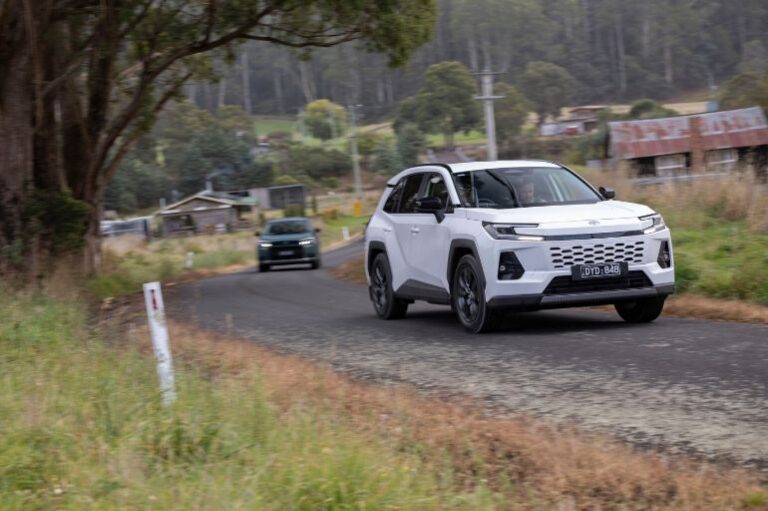
The sixth-generation Toyota RAV4 introduces a more assertive exterior design that reflects changing buyer expectations in the medium SUV segment. While the previous generation established the RAV4 as a dependable fleet workhorse, the new model aims to balance rugged capability with a more modern, technology-focused appearance.
The result is not a radical departure, but a deliberate evolution. Toyota has retained the practicality and recognisable proportions that made the RAV4 a fleet favourite, while refining the visual details to give the vehicle stronger road presence and broader appeal to both fleet and novated lease buyers.

A more confident front-end design
The most noticeable change is at the front of the vehicle, where the new RAV4 adopts Toyota’s latest “Hammer Head” design language. The updated look features distinctive C-shaped headlights that frame the vehicle’s front fascia and create a more connected, horizontal visual signature.
This design direction aligns the RAV4 with newer Toyota models and signals a shift toward a more cohesive brand identity.
Across the range, LED headlamps with automatic levelling are standard, improving visibility in low-light conditions — an important consideration for fleet drivers operating in regional or night-time environments.
The integrated grille design has also been refined. A body-coloured hexagonal mesh replaces the more traditional grille structure, creating a cleaner and more contemporary appearance while maintaining the robust, utilitarian character expected from a fleet vehicle.
Dimensions that support practicality
Despite the visual changes, the overall size of the new RAV4 remains familiar. Core dimensions are:
- Length: 4600 mm
- Width: 1855 mm
- Height: 1680 mm
- Wheelbase: 2690 mm
These measurements closely match the outgoing model, ensuring continuity in:
- Parking and manoeuvrability
- Garage and car park compatibility
- Fleet fit-for-purpose planning
Maintaining similar dimensions also allows organisations to transition between model generations without operational disruption — a practical consideration often overlooked in design discussions.
Stronger visual cues for capability and durability
Toyota has placed greater emphasis on ruggedness in the new design, particularly around the wheel arches and lower body panels.
Black wheel-arch cladding and reinforced bumper elements create a more durable appearance and provide protection against stone chips and debris — features that are especially relevant for vehicles operating on regional roads, construction sites or unsealed surfaces.
The sculpted bonnet and sharper body lines also give the vehicle a more muscular stance, reinforcing its identity as a capable SUV rather than a passenger car with raised suspension.
From a fleet perspective, these visual cues matter. Vehicles used in field operations, local government or utilities often need to project durability and reliability, not just style.
Rear design improves both function and visibility
At the rear, Toyota has focused on improving both aesthetics and usability. The new RAV4 features:
- A more upright tailgate design
- Larger rear glass area
- Integrated rear spoiler
- Redesigned LED tail-light signature
The more vertical tailgate shape helps maximise cargo capacity, enabling the vehicle to carry up to 705 litres of luggage to the roofline.
That additional usable space supports a wide range of fleet applications, including:
- Service and maintenance operations
- Inspection and field work
- Pool vehicle use
- Travel and logistics tasks
The repositioned RAV4 badging across the rear panel also contributes to a cleaner and more modern appearance.
Variant-specific styling adds differentiation
Toyota has introduced greater visual distinction between model grades, particularly with the new adventure-focused Edge variant. The Edge features:
- A wider wheel track
- Unique front bumper design
- Vertically oriented grille
- Integrated skid plates
- More pronounced wheel-arch styling
These elements create a more off-road-oriented look and signal the vehicle’s capability in rougher operating conditions.
While most fleet buyers will focus on the GX or GXL grades, the stronger visual identity across the range reflects a broader shift in the market. Increasingly, fleet vehicles must satisfy both operational requirements and driver expectations.
That trend is particularly evident in novated leasing, where vehicle choice is influenced as much by design appeal as by functionality.
Lighting technology enhances safety and visibility
Lighting upgrades play a central role in the new design, combining visual impact with practical safety benefits. Standard features across the range include:
- LED headlights
- Daytime running lights
- Integrated turn signals
Higher-grade variants offer an adaptive high-beam system that automatically adjusts headlight intensity to avoid dazzling oncoming traffic.
For Fleet Managers, improved lighting performance contributes directly to risk reduction, particularly in rural and regional driving environments.
A design that supports fleet identity
One of the strengths of the new RAV4 design is its balance between visual appeal and operational practicality. It looks more modern and more confident than before, but it does not sacrifice the functional characteristics that fleets depend on.
Key design priorities remain clear:
- Durability
- Visibility
- Cargo capacity
- Ease of use
- Consistency across model generations
This continuity is critical for organisations managing large vehicle fleets, where reliability and predictability often outweigh styling considerations.
The fleet perspective
The exterior design of the new Toyota RAV4 reflects a broader shift in the market. Fleet vehicles are no longer purely utilitarian assets. They must also meet driver expectations, support brand image, and remain competitive in an increasingly crowded SUV segment.
Toyota’s approach recognises that reality.
Rather than reinventing the vehicle, the company has refined it — strengthening its visual identity while preserving the practicality that made the RAV4 one of the most successful fleet vehicles in Australia.
For fleet buyers, that balance is likely to be the most important design feature of all.