

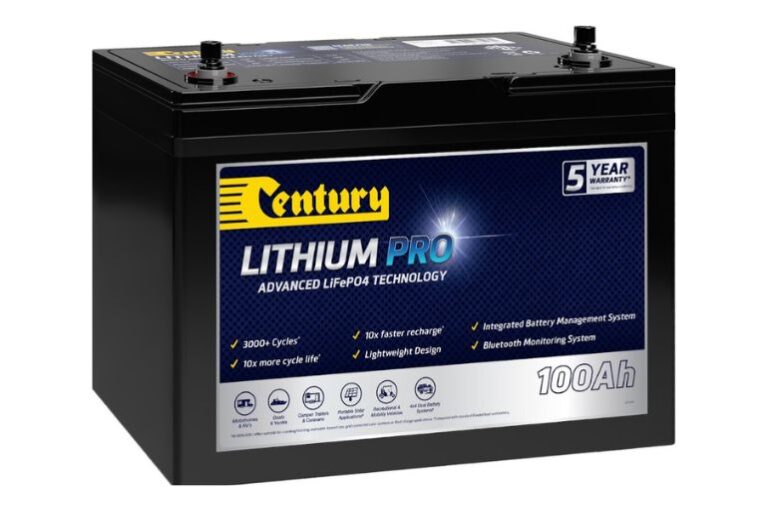
Century Batteries has released a new generation lithium deep cycle battery designed to support growing demand for lighter, faster-charging power solutions across off-road, trade and mobile work environments.
The new Lithium Pro battery is positioned as an upgrade to traditional deep cycle technology, with a focus on improved efficiency, reduced weight and smarter power management. According to the company, the product has been engineered to perform in harsh Australian conditions where reliability and downtime can directly impact productivity.
For fleet operators managing vehicles used in remote locations, field service work or seasonal operations, battery performance and maintenance requirements are increasingly important considerations. The shift toward lithium technology reflects broader changes in how fleets approach energy storage, particularly where auxiliary power is required for tools, communications equipment or refrigeration systems.

Lighter systems and faster recharge times
Century says the 12-volt 100Ah Lithium Pro battery uses Lithium-Ion Phosphate (LiFePO₄) chemistry and is designed to deliver more than 3,000 charge cycles at 80 per cent depth of discharge. The battery weighs 12.6 kilograms, significantly less than many conventional flooded deep cycle batteries, which can help reduce overall vehicle weight and improve handling in mobile applications.
Recharge time is another key feature highlighted in the product specification. The battery is designed to charge up to ten times faster than traditional flooded deep cycle units, potentially reducing downtime for vehicles operating on tight schedules or in remote areas where charging windows may be limited.
For fleet buyers, these performance characteristics may support improved asset utilisation, particularly in applications such as service vans, emergency response vehicles or mobile workshops where reliable auxiliary power is essential.
Technology features aimed at operational reliability
The new Lithium Pro battery includes an integrated Battery Management System (BMS) designed to protect against overcharging, over-discharge and short circuits, while also managing thermal performance and cell balancing. These features are increasingly standard in lithium battery systems and are intended to support safe operation across varying environmental conditions.
Additional functionality includes Bluetooth monitoring capability, allowing users to check charge status, performance and battery health through a mobile application. This type of connectivity can assist fleet managers and technicians with proactive maintenance planning and condition monitoring, particularly for vehicles operating across dispersed worksites.
A Low Power Consumption Mode is also included to minimise self-discharge after periods of inactivity. This feature may be relevant for fleets with seasonal equipment or vehicles that are not used daily, such as council plant, emergency response units or recreational support vehicles.
The battery housing is constructed with a flame-retardant ABS casing and carries an IP65 rating for water and dust protection, along with vibration resistance designed for touring and off-road environments.
Growing demand for lithium solutions
The release of the next-generation Lithium Pro reflects a wider industry trend toward lithium battery technology in both recreational and commercial applications. As equipment loads increase and fleets rely more heavily on electrical systems, the need for dependable energy storage has become more pronounced.
Century Batteries General Manager – Australia & New Zealand, Shaun O’Brien, said the product development focused on addressing real-world operating conditions.
“We’ve engineered Lithium Pro from the inside out — it’s faster to charge, smarter to manage and easier to install,” O’Brien said.
He added that durability was a key design consideration.
“It’s built to thrive in harsh Australian conditions, whether powering a weekend 4WD trip, running tools on-site or supporting essential systems on long-distance adventures.”
Relevance for fleet and field operations
While the product is marketed primarily toward recreational and off-road users, the same performance characteristics are relevant to many commercial fleet applications. Trades, utilities, local government and infrastructure operators often rely on auxiliary power systems to support field work, communications and safety equipment.
From a fleet management perspective, battery technology decisions should be assessed using a whole-of-life cost approach. Factors such as cycle life, charging efficiency, downtime risk and maintenance requirements can have a direct impact on operational productivity and asset reliability.
As fleets continue to electrify tools and equipment — even before full vehicle electrification — auxiliary power systems are becoming a more strategic component of vehicle specification and procurement planning.