

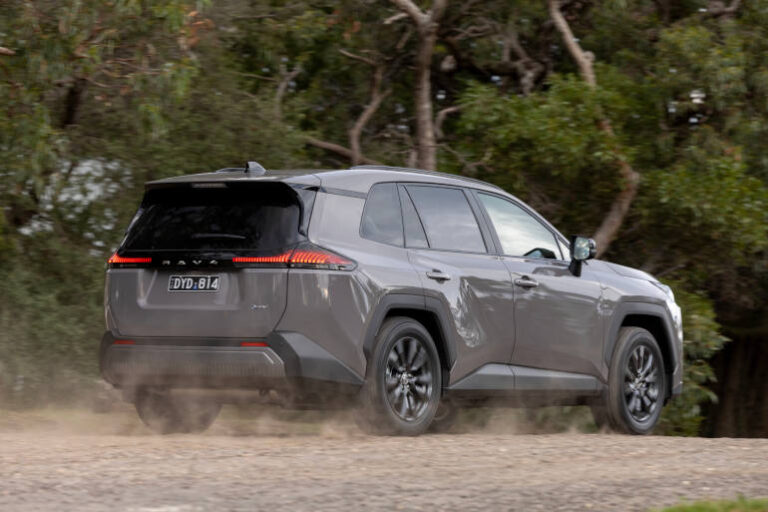
The sixth-generation Toyota RAV4 arrives with meaningful engineering updates to its chassis and hybrid system, and after several days behind the wheel across highways, gravel roads and winding mountain routes, the improvements in ride and handling are clear.
But one issue makes me question the update..
Road noise from the cargo area — first noticed when driving a pre-production vehicle last year — was still present in the launch vehicles. And when I stepped back into the outgoing model after the event, the difference was noticeable. The previous generation was quieter.
That contrast doesn’t undermine the progress Toyota has made with the new platform, but it does highlight an area fleet buyers will want to assess carefully, particularly for high-kilometre drivers where cabin comfort directly affects fatigue and productivity.

Ride and handling show genuine engineering progress
The new RAV4 feels more composed on the road, particularly through corners and on uneven surfaces. Steering response is more predictable, braking feel is more natural, and the vehicle maintains stability even when conditions change quickly.
Those improvements are not accidental.
Toyota engineers increased overall body rigidity by almost 10 per cent and strengthened key suspension mounting points to improve handling precision and ride comfort.
In practical driving terms, that translates to:
- Better stability on winding roads
- Reduced body roll through corners
- Improved steering feedback
- More confidence on gravel and wet surfaces
One of the more subtle but effective upgrades is the introduction of vehicle braking posture control, which gently applies braking force during cornering to stabilise the vehicle. The system operates in the background and is effectively invisible to the driver, but it contributes to the planted feel of the chassis.
Across multiple three-hour drive sessions covering highway, rural and gravel conditions, the vehicle handled consistently and maintained traction without slipping, even in wet environments.
For fleet drivers operating in mixed conditions — urban, regional and light off-road — the improvements in control and predictability will be immediately noticeable.
Suspension tuning improves comfort without sacrificing control
Toyota has revised spring and damper rates and introduced new shock absorber valves designed to deliver smoother low-speed damping.
That engineering change shows up most clearly in everyday driving.
The vehicle rides more comfortably over uneven surfaces while still maintaining composure through corners. It feels less floaty than previous generations and more settled over longer distances.
For fleet applications, this matters. Ride quality is not just about comfort — it affects driver fatigue, vehicle control and ultimately safety.
Hybrid powertrain feels stronger and more refined
The updated 2.5-litre hybrid system delivers noticeable improvements in responsiveness and acceleration, particularly at low speeds.
The system combines a recalibrated petrol engine with upgraded electric motor output, providing stronger torque delivery and smoother performance across the rev range.
Key technical changes include:
- Increased electric motor output
- Reduced component weight
- Improved cooling and efficiency
- A new lithium-ion battery replacing the previous nickel-metal hydride unit
Together, those upgrades improve performance while reducing fuel consumption and emissions. The official combined fuel consumption figure for the two-wheel-drive hybrid is 4.5 L/100 km, with CO₂ emissions of approximately 102 g/km.
Toyota claims the latest hybrid generation delivers around a four per cent reduction in fuel consumption compared with the previous model.
In real-world driving, the system feels more responsive and less reliant on high engine revs when climbing hills or accelerating out of corners — a common weakness in earlier hybrid systems.
Engine noise more noticeable under load
While the hybrid system is more capable, engine noise becomes more noticeable during hard acceleration or when climbing steep terrain. That is not unusual for hybrid vehicles, but it was clearly audible in certain driving conditions.
In particular:
- Uphill acceleration
- Tight cornering
- Sustained load situations
I could hear the engine working harder in those scenarios, especially when pushing through twisty mountain roads. The difference was not intrusive, but it was noticeable.
The cargo area noise issue remains unresolved
The most surprising observation from the launch drive was the persistence of road noise from the rear of the vehicle.
This was not a new discovery. The same characteristic was identified when our Editor got to drive a pre-production model last year, and it remained evident in the launch vehicles.
After the event, I drove the outgoing model provided a useful comparison. It was quieter.
That finding is important because Toyota has clearly invested in noise reduction measures, including additional sound insulation and vibration-damping materials throughout the vehicle structure. Yet in practice, the rear cargo area still transmits more road noise than expected.
Possible contributors include:
- Tyre choice and tread pattern
- Cargo floor design
- Rear body structure acoustics
- Suspension tuning characteristics
Some vehicles fitted with Bridgestone tyres appeared slightly louder than those using alternative brands, suggesting tyre specification may play a role.
For fleet operators, particularly those running vehicles over long distances, this is an area worth evaluating during test drives.
Interior comfort and ergonomics support long-distance driving
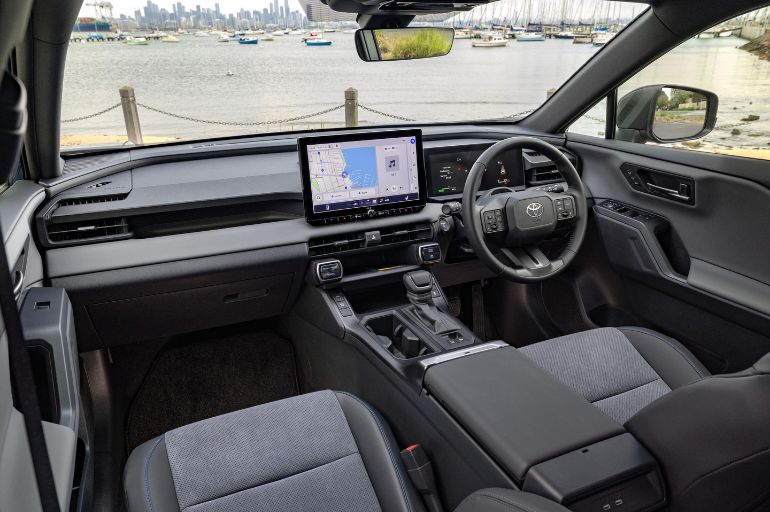
Beyond the noise issue, the cabin environment is well suited to fleet use. Visibility is excellent, seating position is comfortable, and rear passenger space is generous.
Even with the driver’s seat set for a tall driver, rear legroom and headroom remain adequate — an important consideration for pool vehicles and multi-driver fleets.
Standard features on the entry-level GX model include:
- LED headlights
- Satellite navigation
- Dual-zone climate control
- 10.5-inch multimedia display
- 12.3-inch digital instrument cluster
These features are now baseline expectations in fleet vehicles and contribute to driver comfort and usability.
Practical features support operational use
Several small design details reflect a practical understanding of how vehicles are used in real environments.
Examples include:
- A reversible cargo floor surface for dirty equipment
- A standard spare wheel instead of a repair kit
- A centre armrest that converts into a flat work surface
- Integrated camera recording functionality
These features may appear minor, but they align well with the daily realities of fleet operations.
The fleet perspective
From a fleet management standpoint, the new RAV4 represents a solid evolution rather than a radical redesign. The vehicle delivers:
- Improved ride and handling stability
- Stronger hybrid performance
- Lower fuel consumption and emissions
- Practical interior and cargo features
But it also introduces a new consideration.
Cabin noise levels — particularly from the rear — deserve close attention during evaluation.
Bottom line
The new Toyota RAV4 is more capable, more efficient and more stable than the model it replaces.
The chassis improvements are evident. The hybrid system is stronger and more refined. The handling is confident across a wide range of conditions.
But the vehicle is not perfect.
And the persistence of cargo area road noise is a reminder that even well-engineered updates can leave room for refinement — particularly in vehicles expected to spend long hours on the road.