
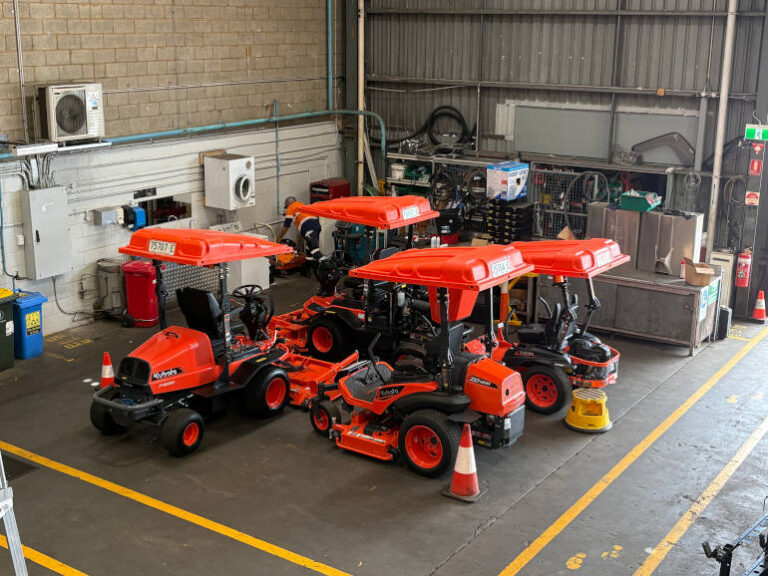
Sutherland Shire Council has transformed the way its fleet is managed by integrating fleet operations into the council’s OneCouncil Enterprise Asset Management (EAM) system. The initiative replaced a standalone fleet platform that required duplicate data entry, spreadsheet reporting and delayed financial reconciliation, creating a fully integrated environment linking vehicles, maintenance history, labour, parts and financial data in a single system.
By re-engineering the EAM platform to support fleet lifecycle management, the council shifted fleet information from retrospective reporting to real-time operational intelligence. The new structure allows the fleet team and executive leadership to see asset performance, maintenance history and costs in near real time, supporting faster and more informed decision-making across the organisation.
From standalone system to enterprise intelligence
Prior to the transformation, Sutherland Shire Council operated its fleet within a standalone system that was disconnected from the broader enterprise environment. This fragmentation created several operational challenges including duplicate data entry, manual financial reconciliation and limited visibility of asset performance across the organisation.
For the fleet team, the impact was significant. Financial information could take more than 30 days to become visible, workshop job data had to be re-entered into multiple systems, and inventory was managed across separate platforms. These gaps made it difficult to link labour, parts and asset condition data to understand true lifecycle costs or support long-term fleet planning.
Rather than replacing systems, the council took a different approach. Fleet became the proving ground for Stage 2 of the OneCouncil transformation, demonstrating how the enterprise asset platform could support the complex lifecycle requirements of fleet assets.
Re-engineering the platform for fleet
Because the EAM system did not include a dedicated fleet module, the fleet team designed and configured the necessary architecture within the enterprise framework. This included creating multi-level asset hierarchies for vehicles and components, preventative maintenance templates and structured defect categories for different asset types.
The new system introduced odometer and hour-based maintenance triggers, integrated labour allocation directly to asset records and consolidated automotive stores management with electronic stocktakes. Funding sources and capital attribution were also embedded within asset records, allowing the system to support both operational management and financial governance.
Maintenance data was also redesigned. Instead of narrative workshop notes, maintenance events are now captured in structured datasets that can be analysed for trend modelling and repair-versus-replace decisions.
Measurable operational benefits
The new enterprise approach has delivered measurable improvements in fleet management performance. Financial visibility has improved from more than 30 days to less than 24 hours, while automation and improved workflows have generated annual productivity savings of approximately 3,655 hours and $234,800.
Operationally, the system has strengthened governance and asset reliability. Planned maintenance levels have increased to around 65 percent, helping reduce reactive repairs and improving availability for frontline services such as waste collection, parks operations and civil works.
The integrated data environment also provides improved insight into fleet utilisation, fuel consumption and lifecycle performance, supporting more accurate asset planning and capital replacement decisions.
A model for enterprise fleet governance
Sutherland Shire Council’s experience demonstrates how fleet can act as a proving ground for broader enterprise asset management transformation. By embedding fleet into the council’s enterprise systems, the organisation has created a single source of asset intelligence that supports operational decision-making, financial governance and long-term infrastructure planning.
The project also highlights the importance of workforce involvement in system design. Fleet staff played a key role in configuring maintenance templates, defect categories and lifecycle logic, ensuring the system reflected real operational workflows and encouraging strong adoption across the team.
For other councils and large fleet operators, the case study illustrates the value of integrating fleet into enterprise asset management platforms rather than treating it as a standalone system. The result is a more mature fleet management model that improves visibility, strengthens governance and turns operational data into actionable intelligence.
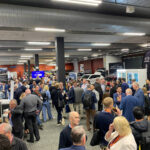
The case study was shared at the 2026 IPWEA Fleet Conference in Melbourne.
- How BYD plans to protect fleet resale values
 Residual values have become a key part of BYD’s fleet strategy as the brand works to build confidence among Fleet Managers considering whole-of-life cost rather than simply purchase price. Marcus Walker, National Fleet Sales Manager at BYD Australia and New Zealand, told the Fleet News Group podcast that protecting resale values has been an important
 - AfMA’s new board signals a stronger voice for membersAfMA’s new board has signalled a shift towards greater member participation, clearer professional development pathways and more visible communication about the Association’s direction. In a statement published following its Strategy Day in September, AfMA outlined three areas for action: constitutional changes to support member participation, expanded training and development, and stronger career pathways and recognition
- NARVA Reverse Alarm Earns Australian FirstNARVA has secured what it says is Australia’s first Component Type Approval (CTA) for a reverse alarm, providing clearer compliance documentation for body builders and fleets specifying vehicle-warning equipment. The approval covers the reverse alarm integrated into the NARVA AeroTech Multi-Function Light Box. It is certified to Australian Design Rule ADR 42/05 clause 23.2 under
- Chery Stockman Ute Adds a New TwistChery has revealed further specifications for its upcoming Stockman ute, combining diesel power with plug-in hybrid technology in a new option for Australian fleet buyers. Customer deliveries are scheduled to begin on 1 February 2027. The indicative specifications include all-wheel drive, 350kW of combined power, 800Nm of torque and a braked towing capacity of 3,495kg.
- Can Ford Reduce Fleet Downtime?Ford is taking a more active role in managing vehicle downtime for major fleet customers, with its Uptime Command Centre designed to identify vehicles that are off the road and help dealers get them back into service faster. The approach moves part of the downtime-management process beyond the individual dealership, giving Ford an OEM-level view