
The latest round of safety testing from ANCAP Safety in December 2025 delivered a clear message for Fleet Managers: the shift to electric vans no longer requires a compromise on safety.
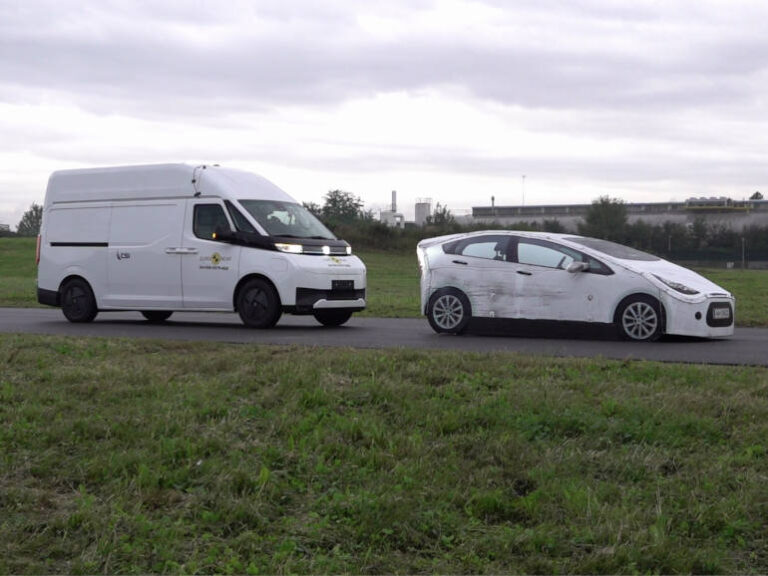
Diesel stalwarts like the Toyota HiAce and Ford Transit both achieved top-tier results — but the real headline was the performance of the new all-electric Farizon SV, a brand-new entrant to the Australian market that secured a PLATINUM safety grading on debut.
For fleets under pressure to reduce CO₂ emissions and decarbonise operations, the result removes one of the last perceived barriers to adopting electric vans.
Electric Newcomer Farizon SV Makes a Confident First Impression
The standout result from the December 2025 testing was the strong performance of the Farizon SV — particularly given it is both a new brand and a battery-electric vehicle entering a competitive segment dominated by long-established diesel models.
The Farizon SV achieved:
- 84% overall collision avoidance score
- PLATINUM safety grading
- Strong performance across most active safety technologies
According to the ANCAP media release, the Farizon delivered high levels of overall performance, though some limitations were identified — specifically the absence of autonomous emergency braking (AEB) when reversing and a speed assistance system.
That context matters. For a first entry into the Australian market, the result signals that new electric brands are arriving with safety systems that meet fleet expectations from day one.
ANCAP noted that the Farizon’s debut performance reflects the high safety standard expected by Australian fleets and adds to the growing range of safe electric vans now available.
Diesel Benchmarks Still Strong — But the Gap Is Closing
The December testing also confirmed that traditional diesel vans continue to deliver strong safety outcomes — which is important for fleets still operating mixed powertrains.
Key results included:
| Vehicle | Powertrain | Collision Avoidance Score | ANCAP Safety Grading |
|---|---|---|---|
| Ford Transit | Diesel | 93% | PLATINUM |
| Toyota HiAce | Diesel | 90% | PLATINUM |
| Farizon SV | Electric | 84% | PLATINUM |
The Ford Transit set a new benchmark among large vans with a 93% score, while the updated HiAce improved on its previous rating following upgrades to its driver assistance systems.
For Fleet Managers, the takeaway is straightforward: safety parity between diesel and electric vans is now largely established.
Why This Matters for Fleet Decarbonisation Plans
For many organisations, safety compliance is a non-negotiable procurement requirement — often sitting alongside whole-of-life cost and operational fit-for-purpose in tender evaluations.
Historically, concerns about safety technology maturity in early EV models slowed adoption. That argument is becoming harder to sustain.
The Farizon SV result demonstrates three practical realities for fleet decision-makers:
1. New electric brands are arriving fleet-ready – Safety performance is no longer limited to established OEMs.
2. EV adoption decisions can focus on operations and cost – With safety standards aligned, the conversation shifts to range, payload, charging infrastructure and utilisation — the issues Fleet Managers are already working through.
3. Compliance risk is reducing – Meeting internal safety policies and Chain of Responsibility obligations is increasingly achievable with electric vehicles.
This aligns with a broader trend the fleet sector has been watching closely — commercial vans are emerging as one of the easiest vehicle categories to electrify because they typically operate predictable routes and return to base each day.
The Next Step: Enter the Farizon V7E
The timing of the ANCAP result is significant because Farizon has recently expanded its local lineup with the launch of the Farizon V7E — a medium electric van positioned as a lower-cost entry point for fleets considering electrification.
That model is attracting attention for a simple reason: it brings electric capability into a price band traditionally dominated by diesel vans.
For fleets running urban delivery, service technicians or trade operations, the V7E and SV combination gives procurement teams a clearer pathway to reduce emissions without fundamentally changing how vehicles are used.

Bottom Line for Fleet Buyers
The December 2025 ANCAP results mark a quiet but important milestone. Electric vans are no longer an experimental option. They are now achieving the same safety outcomes as the diesel models that have dominated Australian fleets for decades.
For Fleet Managers planning their next replacement cycle, the decision is becoming less about whether electric vans are ready — and more about when the organisation is ready to support them.
- Before buying an EV, Allianz asks if it needs the vehicle
 Replacing a petrol vehicle with an electric vehicle can reduce fleet emissions. Not replacing the vehicle at all can reduce them even further. That’s part of the thinking behind Allianz’s fleet transition as the insurer combines electrification with a detailed review of vehicle utilisation. Speaking during the Fleet News Group Awards finalists panel at Everything
 - Buying the EV is the easy part, says awards finalistFleet Managers under pressure to reduce emissions might be tempted to start looking through vehicle catalogues. Kris Nair from Blacktown City Council has different advice. Get the data right first. Speaking during the Fleet News Group Awards finalists panel at Everything Electric Sydney, the Blacktown City Council representative argued that purchasing an electric car or
- Inside the NRMA fleet team: managing diversity, data and the EV transitionManaging fleet at the NRMA involves much more than keeping roadside patrol vehicles moving. Fleet Manager Jai O’Keefe and his small team are responsible for approximately 450 vehicles supporting businesses across New South Wales, South Australia and Tasmania. The majority are roadside patrol vehicles, supported by tilt-tray and cradle tow trucks. However, the fleet also
- IVECO S-Way Takes the ReinsSafety, driver comfort and ease of operation are proving just as important in specialist transport as they are in large commercial fleets, with amateur show jumper Peter Carcary choosing an IVECO S-Way AS 550 to move valuable horses around Australia. Carcary travels to around 25 equestrian events each year, towing a 48-foot Premier horse float
- Novated Leasing Becomes a New Battleground for Car BrandsMcMillan Shakespeare Group (MMS) is expanding its relationships with major automotive brands as novated leasing becomes an increasingly important sales channel for new vehicles, particularly electric vehicles. The salary packaging and fleet services group has strengthened partnerships with BYD, Denza, GWM, MG Motor and GAC Group, alongside finance relationships with Volkswagen Financial Services Australia covering