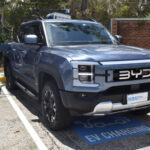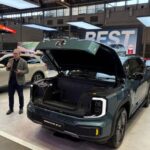

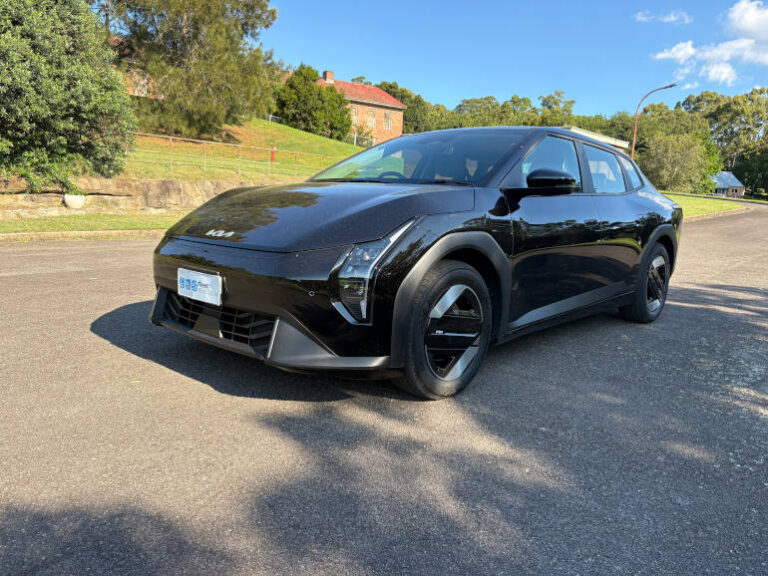
There was a time when every fleet yard had rows of medium sedans lined up ready for duty. Today, those spaces are mostly filled with SUVs. But the arrival of the Kia EV4 suggests the traditional sedan might still have a role to play — especially as organisations look for practical ways to reduce emissions without blowing out budgets.
At first glance, the EV4 feels familiar. It’s about the same size as a Toyota Camry, with a long wheelbase and a generous boot that makes it well suited to sales teams, pool vehicles and novated lease drivers who still prefer a sedan shape. The difference, of course, is what sits under the floor.
This is a fully electric vehicle, and Kia has positioned it as a practical step into zero-emission motoring rather than a high-performance showpiece.
And that’s exactly why fleet buyers should pay attention.

Range and Battery: Practical Numbers for Everyday Fleet Use
The entry-level EV4 Air Standard Range uses a 58.3 kWh battery delivering a claimed 456 km driving range (WLTP), while the long-range version steps up to an 81.4 kWh battery with up to 612 km of range.
Those figures put the EV4 comfortably within the operating envelope for most fleet applications. For a typical organisation running vehicles around 20,000 kilometres per year, overnight charging at home or the depot should be more than sufficient.
Charging times are also predictable. On a fast charger, the battery can be replenished from 10 to 80 per cent in around 29 to 31 minutes, depending on the battery size.
In practical terms, that means less downtime and fewer operational headaches — two things fleet managers care about far more than headline performance numbers.
WOLC: The Camry Still Sets the Benchmark
When it comes to Whole-of-Life Cost (WOLC), the medium sedan segment still revolves around one vehicle — the Toyota Camry.
That dominance shows up clearly in the numbers.
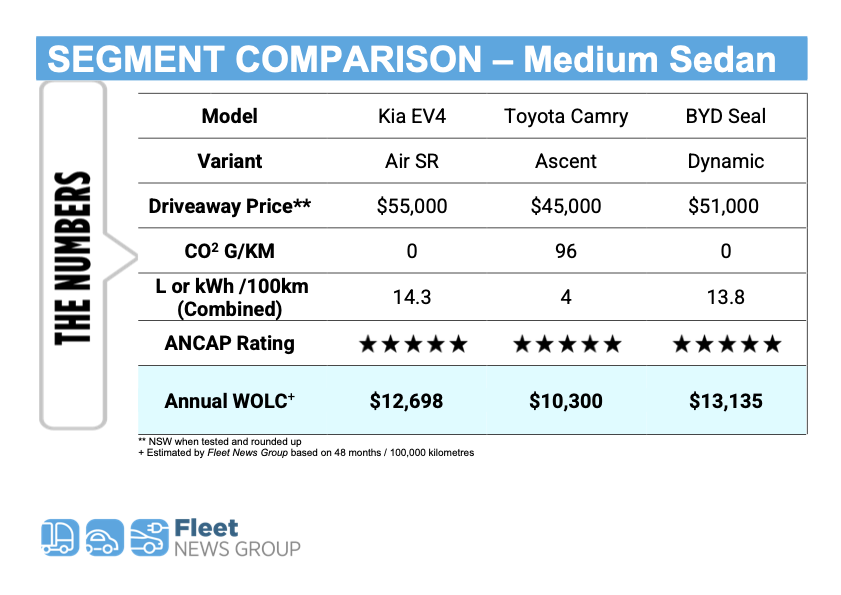
Based on a typical four-year / 100,000 kilometre operating cycle, the estimated annual WOLC looks like this:
- Toyota Camry — $10,300
- Kia EV4 — $12,698
- BYD Seal — $13,135
So the EV4 isn’t the cheapest vehicle in the segment. But cost is only part of the story.
The EV4 produces zero tailpipe emissions, compared with 96 g/km of CO₂ for the hybrid Camry.
For organisations facing emissions targets — or employees considering a novated lease — that difference can outweigh the higher purchase price. In many cases, tax incentives and lower running costs can bring the real-world ownership cost much closer than the headline numbers suggest.
That’s why the EV4 deserves serious consideration, particularly for fleets transitioning toward electrification.
Interior: Comfortable, Familiar and Built for Work
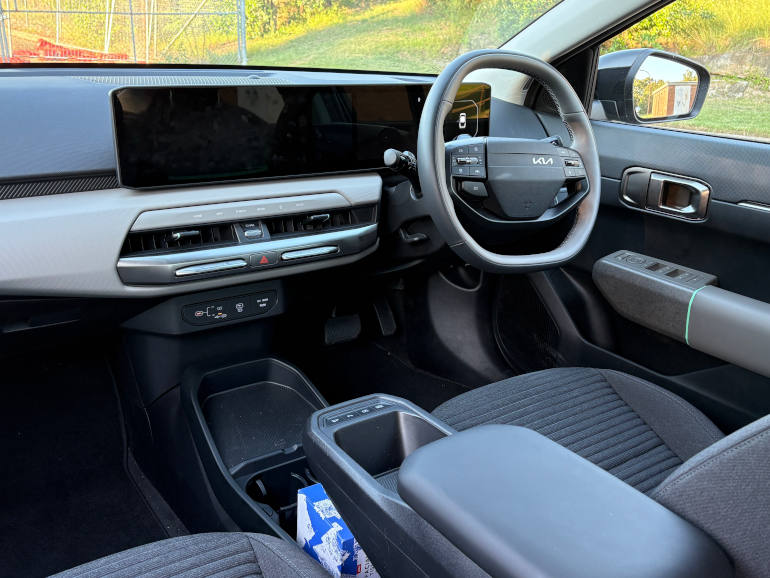
Step inside the EV4 and you’ll find exactly what most drivers expect from a modern Kia — a practical layout, intuitive controls and a focus on everyday usability.
The dashboard is dominated by a wide digital display combining a 12.3-inch instrument cluster, climate monitor and infotainment screen, creating a clean, modern workspace for drivers.
From a fleet perspective, the standout features are the small details that make daily driving easier:
- Comfortable seating and good driving position
- Logical control layout
- Plenty of storage space
- Vehicle-to-Load (V2L) power outlet for laptops or tools
- Smooth ride and well-tuned suspension
That last point is worth emphasising. The EV4 absorbs bumps and rough surfaces surprisingly well, making it comfortable for long days behind the wheel — something drivers notice immediately.
Rear seat space is adequate for most passengers, although taller occupants may find headroom slightly restricted due to the sloping roofline. For typical fleet use, however, it’s unlikely to be a deal-breaker.
Most importantly, the EV4 meets the minimum safety expectations for fleet procurement, with a full suite of driver assistance systems including autonomous emergency braking, lane keeping assist and blind spot monitoring.
Overall, the interior feels dependable rather than flashy — and that’s exactly what many fleets want.
Exterior: A Sedan in an SUV World
The EV4’s styling is modern and distinctive, but it also highlights the challenge facing any new sedan entering today’s market.
From some angles the design looks sharp and futuristic. From others, it’s more conservative. The rear styling, in particular, may divide opinion.
That said, appearance is only one part of what we call car park and driveway appeal. Fleet buyers also consider practical factors such as:
- Ease of access
- Visibility
- Brand reputation
- Model lifecycle
- Residual value stability
On those measures, Kia performs well. The brand has built strong credibility with fleet customers in Australia, supported by a reliable dealer network and competitive warranty coverage.
The bigger risk for the EV4 isn’t the design — it’s the changing market.
Medium sedans are no longer the default fleet vehicle. SUVs dominate sales, and electric SUVs are likely to capture most future demand.
That reality will influence resale values over time, and fleet buyers should keep that in mind when planning replacement cycles.
Best Value Analysis: Where the EV4 Stands
If we apply the Fleet News Group Best Value Analysis framework, the Kia EV4 delivers a balanced result.
Strengths
- Zero tailpipe emissions
- Strong safety and driver assistance technology
- Comfortable and practical interior
- Competitive range for everyday fleet use
- Proven manufacturer support for fleet customers
Challenges
- Higher Whole-of-Life Cost than the segment leader
- Medium sedan segment in long-term decline
- Styling that may not appeal to all drivers
So where does that leave the EV4? It’s not the cheapest vehicle in the segment. It’s not the most exciting vehicle either. But it might be one of the most important.
For organisations looking to reduce emissions without dramatically changing vehicle operations, the EV4 represents a practical and achievable step forward. And for employees considering a novated lease, it offers a realistic pathway into electric driving with manageable running costs and familiar usability.
That combination makes the Kia EV4 a genuine contender for Fleet EV of the Year — and a vehicle worth watching closely as fleets continue their transition toward zero-emission transport.

- Connected vehicles put data security on the fleet agenda
 The recent Four Corners program examining connected vehicle security may have been eye-opening for many motorists, but for Fleet Managers it should reinforce an issue that has been developing for years: a modern vehicle is increasingly a connected device as well as a transport asset. Connectivity is becoming standard across the automotive industry. Vehicles can communicate
 - EV sales surge exposes a growing gap in Australia’s new-car market dataAustralia’s new-car market edged higher in September, but the headline result masks a much more significant change taking place underneath: almost one in four new vehicles sold during the month was battery electric. According to the Federal Chamber of Automotive Industries (FCAI), 102,924 new vehicles were sold in September 2026, an increase of 0.9 per
- MG sees EV interest rise as Australian range expandsMG Motor Australia says its electric vehicle sales are accelerating as the company prepares to expand the choice of vehicles and powertrains available to Australian buyers. Speaking during the media tour at Everything Electric in Sydney, MG Motor Australia Marketing Director Dimitri Andreatidis said changing Australian buying patterns are being reflected in MG’s own results.
- FleetPartners takeover race narrows to three as Sumitomo joins the huntThe FleetPartners takeover contest has entered a more serious phase, and the latest update confirms something the market already suspected: there is real strategic value in this business. SG Fleet, ORIX and the Sumitomo Consortium have all returned with higher offers after getting access to FleetPartners’ books, while Element Fleet Management has decided not to
- Novated leasing growth pushes Smartgroup past 91,000 vehiclesSmartgroup has reported continued growth in its novated leasing business, with the number of leases under management reaching 91,600 at the end of June 2026. The total was up 11,600 vehicles, or 15%, compared with the same period a year earlier. Smartgroup had 80,000 novated leases under management at June 2025 and 64,600 at June