
New Zealand Police have introduced a nationally standardised operating model for police dog vehicles, improving canine welfare, officer safety and fleet lifecycle management while maintaining operational capability.
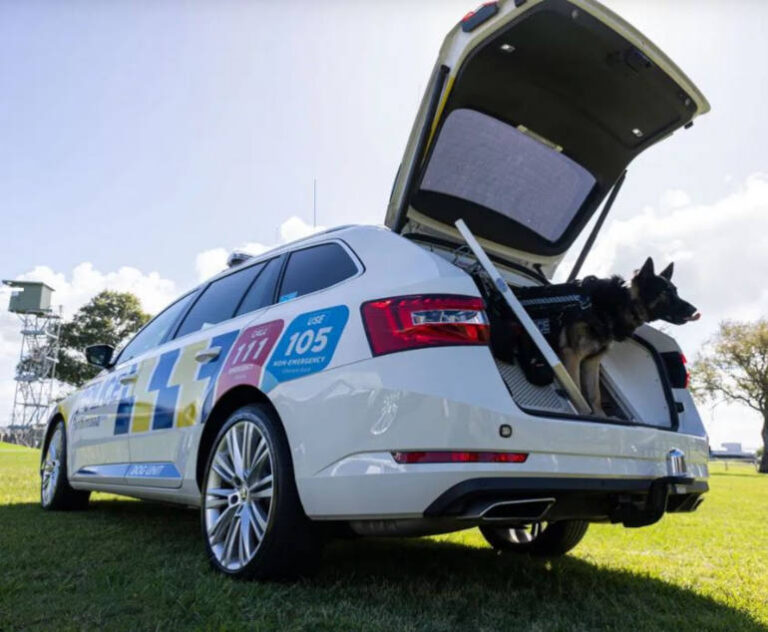
The new Police Dog Vehicle Operating Model, delivered through the Škoda Dog Wagon programme, moves away from the traditional approach of modifying general fleet vehicles at a local level. Instead, the initiative establishes a centrally governed design and specification that embeds safety, welfare and fleet management principles into the vehicle from the outset.
Police dog vehicles are mission-critical assets. They are not simply transport for working dogs; they also function as deployment platforms and welfare systems that must perform reliably in volatile and time-critical situations. Recognising the limitations of previous builds, NZ Police developed a new approach that standardises design across the national fleet while improving operational readiness.
Moving away from inconsistent builds
Historically, dog vehicles were adapted from general fleet platforms and modified locally. This resulted in inconsistent vehicle layouts, varying ventilation systems and different electrical installations between districts.
These variations increased maintenance complexity and created operational risk. They also made it difficult to guarantee consistent canine welfare standards across the national fleet. Vehicles often relied on procedural controls to manage risks such as heat exposure, particularly during stationary deployments.
At the same time, expectations around workplace safety and animal welfare have continued to rise. NZ Police needed a solution that could strengthen safety and welfare outcomes without introducing an expensive specialist vehicle platform or increasing fleet complexity.
A nationally standardised design
The solution was a nationally governed operating model based on the Škoda Superb platform, which was already supported within the NZ Police fleet.
Each vehicle includes a purpose-built canine compartment engineered specifically for operational use. The design incorporates active climate control systems, real-time temperature monitoring and automated alarms to manage welfare risks. Redundant ventilation and power systems are also included to reduce the risk of failure.
These systems shift canine welfare management from reliance on procedures to engineered controls that provide continuous monitoring and protection.
A key safety feature is a handler-activated emergency deployment system. Dog handlers carry a vest-mounted safety button connected to the vehicle. If activated, the system automatically releases the canine compartment door and lowers the front window, enabling immediate canine deployment or external access if the handler cannot reach the vehicle controls.
This capability provides an additional layer of protection in high-risk operational situations where handlers may be injured, restrained or otherwise unable to access the vehicle.
Delivering operational and fleet benefits
By standardising the design nationally, NZ Police have also improved fleet governance and lifecycle efficiency.
A single specification simplifies maintenance and reduces the complexity that previously came from multiple local build variations. It also supports stronger asset management practices, improves reliability and strengthens residual values by aligning with an established fleet platform.
Operationally, the vehicles are designed to improve availability and readiness. The simplified design reduces downtime and supports faster maintenance, ensuring dog units remain available for frontline deployment.
Implementation through operational collaboration
Development of the new operating model involved structured engagement with police dog units to capture operational requirements and identify real-world risks.
Handlers provided direct feedback throughout the design and testing process, ensuring the final specification addressed operational needs rather than theoretical scenarios. Fleet governance teams were also involved to ensure the design aligned with whole-of-life fleet management principles.
The operating model has now been implemented nationally and embedded as standard practice within NZ Police’s specialist fleet portfolio.
Key lessons from the project
One of the major insights from the programme was the value of engineering safety controls rather than relying solely on procedural compliance.
Engineered systems provide more reliable and auditable outcomes, particularly in environments where operational conditions can change rapidly. They also provide stronger governance assurance for organisations responsible for managing risk.
The project also reinforced the importance of engaging frontline users early in the design process. Operational insight from dog handlers helped ensure the vehicle design addressed genuine operational challenges.
Future programmes could benefit from earlier national standardisation of specifications and earlier documentation of safety and welfare assurance to support governance approvals.
A model for specialist fleet design
The NZ Police Police Dog Vehicle Operating Model demonstrates how specialist fleet requirements can be delivered without increasing fleet complexity or capital costs.
By combining operational engagement, engineered safety systems and national fleet governance, the programme provides a scalable model for managing specialised vehicles within a large public-sector fleet.
For fleet managers, the project highlights a broader lesson: specialist operational requirements can be successfully integrated into mainstream fleet platforms when supported by disciplined design, strong governance and a focus on whole-of-life outcomes.
The case study was an entry in the 2026 IPWEA Fleet Innovation Award.
- EV sales surge exposes a growing gap in Australia’s new-car market data
 Australia’s new-car market edged higher in September, but the headline result masks a much more significant change taking place underneath: almost one in four new vehicles sold during the month was battery electric. According to the Federal Chamber of Automotive Industries (FCAI), 102,924 new vehicles were sold in September 2026, an increase of 0.9 per
 - MG sees EV interest rise as Australian range expandsMG Motor Australia says its electric vehicle sales are accelerating as the company prepares to expand the choice of vehicles and powertrains available to Australian buyers. Speaking during the media tour at Everything Electric in Sydney, MG Motor Australia Marketing Director Dimitri Andreatidis said changing Australian buying patterns are being reflected in MG’s own results.
- FleetPartners takeover race narrows to three as Sumitomo joins the huntThe FleetPartners takeover contest has entered a more serious phase, and the latest update confirms something the market already suspected: there is real strategic value in this business. SG Fleet, ORIX and the Sumitomo Consortium have all returned with higher offers after getting access to FleetPartners’ books, while Element Fleet Management has decided not to
- Novated leasing growth pushes Smartgroup past 91,000 vehiclesSmartgroup has reported continued growth in its novated leasing business, with the number of leases under management reaching 91,600 at the end of June 2026. The total was up 11,600 vehicles, or 15%, compared with the same period a year earlier. Smartgroup had 80,000 novated leases under management at June 2025 and 64,600 at June
- Everything Electric Gives Fleets a Chance to Put EVs to the TestFleet managers weighing up electric vehicles will have an opportunity to compare a growing range of models in one place when Everything Electric returns to Sydney Showground from 18–20 September 2026. More than 100 electric vehicle models are expected to feature at this year’s event, spanning passenger cars, vans, trucks and other forms of electric