

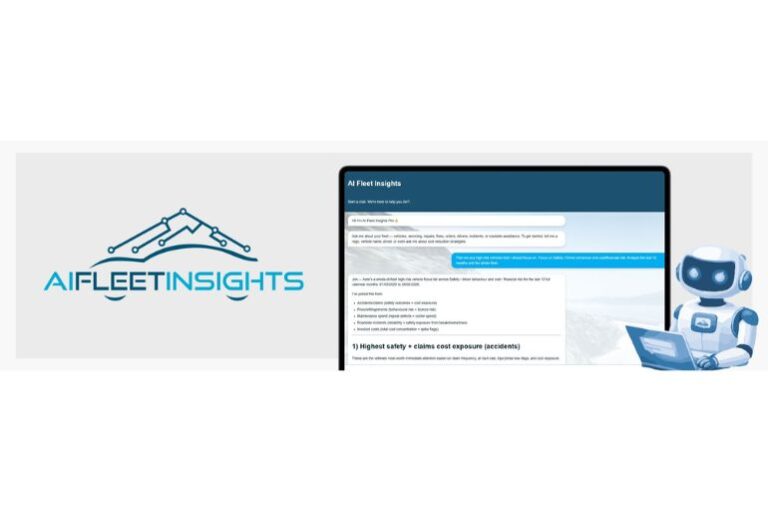
Summit Fleet Leasing and Management has launched the next evolution of AI Fleet Insights™, introducing a conversational AI capability designed to make fleet data easier to access, understand and act on.
The upgraded platform is embedded directly within Summit Online™, giving fleet customers and Summit Fleet experts a faster way to identify issues, interpret data and support operational decision-making.
Building on the original AI Fleet Insights™ solution, the new enhancement allows authorised users to ask natural-language questions about their fleet and receive clear explanations based on their available fleet data. The aim is to reduce reliance on manual reporting requests and shorten the time between identifying a problem and taking action.
For Fleet Managers and Fleet Coordinators, this could mean faster access to information on cost drivers, compliance exceptions, overdue servicing, vehicle performance trends and other operational issues that can affect fleet efficiency.
Rather than searching through reports or waiting for follow-up analysis, users can ask questions through the conversational interface and receive responses in minutes. Summit Fleet says this will help customers identify issues earlier, understand what is driving them and make informed decisions before problems escalate.
The upgraded AI Fleet Insights™ has also been developed to support stronger collaboration between customers and Summit Fleet experts. Routine questions can be handled through the AI interface, while more complex matters can be directed through Summit Fleet’s existing service channels for review, oversight and resolution.
This approach is designed to give customers faster answers for common fleet queries while allowing Summit Fleet experts to focus on more complex problem-solving and strategic support.
A key part of the enhancement is transparency around what the AI can and cannot provide. If a request cannot be completed because the required data is unavailable or the user is not authorised to access it, AI Fleet Insights™ will explain why the information cannot be provided rather than generating an incomplete response.
For fleet operators, this matters because confidence in AI tools depends on trust, data governance and clear boundaries. Fleet data often includes sensitive operational, financial and driver-related information, so customers need assurance that insights are drawn only from authorised data and that more complex issues are still supported by accountable service processes.
The launch reflects the growing role of AI in fleet management, particularly as organisations look for better ways to manage rising costs, compliance obligations, vehicle downtime and reporting expectations. While fleet systems already hold large volumes of data, the challenge for many organisations is turning that information into timely decisions.