

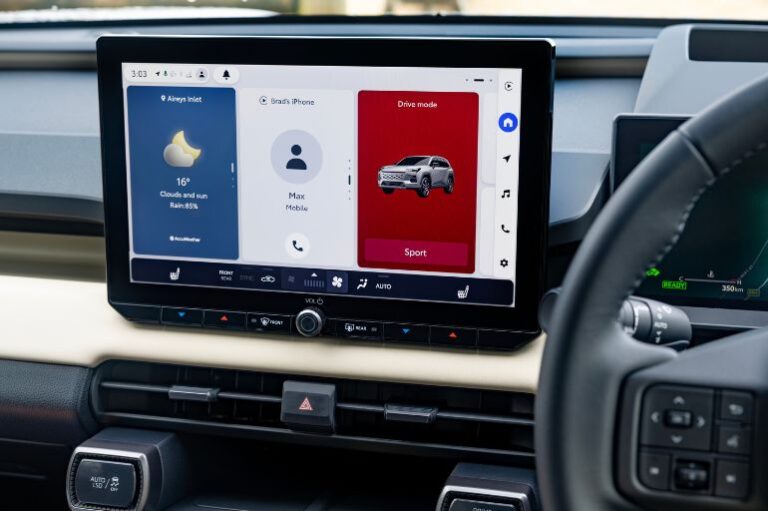
As vehicles become more connected and software-driven, Toyota is positioning itself not just as a manufacturer, but as a trusted partner to help fleets and private customers navigate the transition safely — particularly when it comes to managing vehicle data.
At the launch of the sixth-generation Toyota RAV4, John Pappas, Vice President of Sales, Marketing & Franchise Operations at Toyota Motor Corporation Australia, emphasised that trust, reliability and data security are central to the company’s strategy as the industry moves into the connected vehicle era.
In practical terms, Toyota wants to be seen as the safe pair of hands guiding customers through a period of rapid technological change.
Trust becomes the foundation of connected vehicles
Connected technology promises safer driving, improved maintenance and better operational efficiency. But it also raises new questions about data privacy and security — particularly for government and corporate fleets operating under strict compliance requirements.
Speaking at the launch event, Pappas said trust remains the cornerstone of Toyota’s relationship with customers, even as the company moves deeper into digital services and connected technology.
“At times of uncertainty, consumers turn to brands they trust,” said Pappas. “This is a position built on trust — trust in our brand, trust in our product, and trust in our dealers.”
For Fleet Managers, that message resonates because reliability in the connected vehicle era extends beyond mechanical performance. It now includes software stability, cybersecurity and long-term support.
Australian data stored under Australian rules
One of the most important commitments highlighted during the launch was Toyota’s approach to data sovereignty — ensuring that customer information generated by connected vehicles is stored and managed locally.
This is particularly relevant for government and large corporate fleets, where compliance with national privacy regulations is mandatory.
“Australian customer and connected data stays protected within highly governed environments,” Pappas said. “Toyota systems use Australian-based servers for the majority of services.”
That assurance addresses a growing concern among fleet operators as vehicles become more connected and reliant on digital infrastructure.

Privacy-first design becomes part of the vehicle
Toyota is also highlighting privacy protection as a core feature of its connected vehicle systems, rather than a secondary consideration.
The company has adopted what it describes as a “privacy-first” engineering approach — ensuring that only essential information is collected automatically.
“Our connected vehicle systems are designed with privacy-first engineering principles,” Pappas said.
“Only the data required for core safety services is activated by default.”
For Fleet Managers responsible for protecting employee and customer information, this design philosophy reduces risk and simplifies compliance with workplace privacy obligations.
A familiar brand stepping into a digital future
Toyota’s strategy reflects a broader shift in the automotive industry. Vehicles are evolving from mechanical machines into connected platforms capable of continuous software updates and remote diagnostics.
That transition requires a different kind of confidence from customers. It is no longer just about engine reliability or service intervals. It is about:
- Data security
- Software reliability
- System transparency
- Long-term support
Toyota believes its long-standing reputation for reliability gives it a natural advantage in this new environment.
The company’s nationwide dealer and service network — one of the largest in Australia — remains a key part of that value proposition, now supported by digital infrastructure designed to manage connected vehicle operations.
Guiding fleets through the transition
Toyota recognises that adoption of connected technology will vary across the fleet market. Some organisations are moving quickly toward digital integration, while others are taking a more cautious approach.
“We will continue to pursue our multi-pathway strategy, ensuring customers have access to the right technologies and leave no one behind,” Pappas said.
That approach reflects the reality of fleet operations, where technology transitions must balance innovation with operational reliability.