

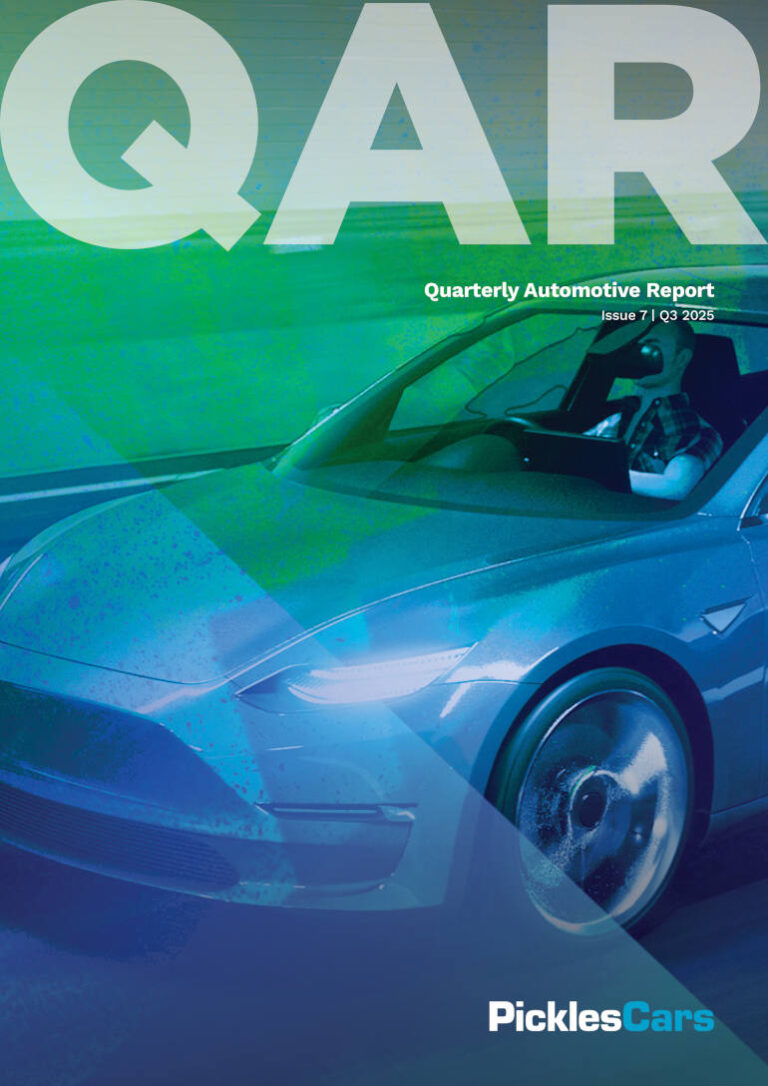
Pickles’ latest Quarterly Automotive Report (Issue 7) reveals that battery-certified electric vehicles (EVs) are outperforming the broader used market, attracting more bidders, higher sale prices, and faster turnover times. The findings mark a turning point in buyer confidence as EVs enter the mainstream of Australia’s used vehicle market.
According to the report, vehicles with Pickles’ Battery State of Health (SoH) certificates are seeing a 15%+ increase in bidder numbers, 10%+ more bids per vehicle, and an average price uplift of 6% compared to similar models without certification.
“Battery health is one of the top drivers influencing used EV value,” said Brendon Green, General Manager – Automotive Solutions at Pickles. “With SoH certification, buyers know exactly what they’re getting – and that transparency is driving stronger results for sellers.”
Transparency Fuelling Market Confidence
Launched nationally in July 2025, Pickles’ SoH certification program uses diagnostic testing to measure a battery’s condition against its brand-new equivalent. Buyers receive a report and certificate showing the remaining capacity, charging performance, and real-world range retention — giving confidence to both private and business buyers assessing used EVs.
The impact is already visible. The Datium Used Car Index shows EV values climbing from 106% in June to 108% in Q1 FY26, while internal combustion engine (ICE) vehicles fell from 125% to 121% over the same period. Once considered risky, used EVs are now holding firm against a softening ICE market.
“Battery scorecards don’t just help buyers feel more confident,” Green added. “They are unlocking tangible commercial benefits across the board – lifting values, accelerating time to sale, and expanding the buyer base.”
Implications for Fleet and Novated Lease Markets
The timing aligns with the next phase of Australia’s EV transition. As the first wave of novated lease EVs signed under the FBT exemption begin to mature from mid-2025, Pickles forecasts up to 15,000 ex-lease EVs entering the used market annually by late 2026. For corporate and government fleets, the ability to provide a verified battery health report could become a key part of end-of-lease processes and resale value protection.
Used EV demand is also being supported by increased dealer participation, which has lifted from 40% to 45% since the SoH certificates launched. According to Pickles, the program is helping traditional used-car dealers gain confidence in handling EVs, previously seen as unfamiliar or high-risk stock.
Beyond Passenger Cars
The report highlights other trends shaping the broader used vehicle landscape. In the salvage sector, EV volumes jumped 95% year-on-year to around 300 vehicles in the quarter, while ICE salvage values remained buoyant due to high parts demand in commercial models. Pickles also showcased a successful case study in the electric motorcycle segment, where more than 400 units were cleared within five days through a multi-channel sales strategy.
Strengthening the Circular EV Economy
As Australia accelerates its shift to electrification, second-hand EVs will play a vital role in making the technology more accessible. Certification tools like Pickles’ battery health program help de-risk purchases, ensuring used EVs are evaluated on objective data rather than assumptions about degradation.
By quantifying the battery’s true condition — the most valuable component in any EV — the SoH certificate supports better pricing, financing confidence, and consumer trust. For fleets, it offers a measurable way to report on asset condition, performance, and total cost of ownership over time.