Fleet Managers know the challenge: keeping workshops fully staffed with skilled, motivated technicians is harder than ever. Attracting new apprentices, retaining talent, and creating a diverse and supportive culture are now essential to keeping vehicles on the road.
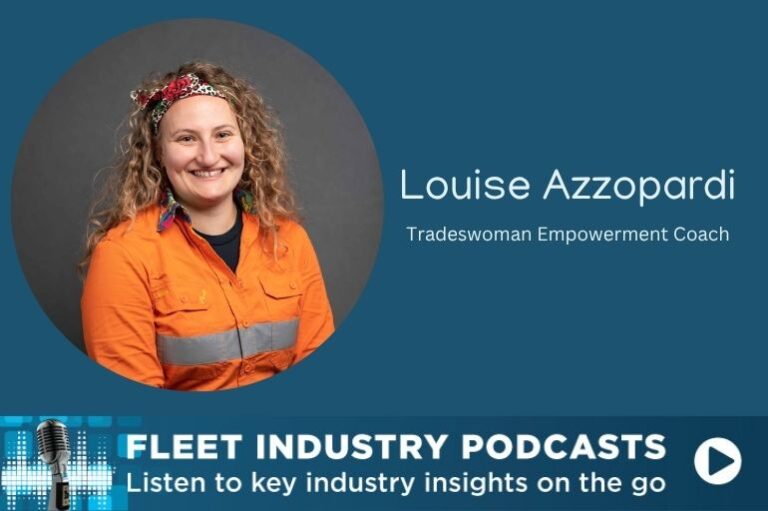
In a recent Fleet News Group podcast, life coach, mentor, keynote speaker and industry ambassador Louise Azzopardi shared her story and practical advice for workshop leaders.
From Torch Holder to Trailblazer
Louise’s journey began on a tomato farm in regional New South Wales, where she spent time fixing machinery with her dad and racing dirt bikes. By Year 10 she knew school wasn’t for her.
“I wanted out ASAP,” she recalled. “I enjoyed tinkering, I enjoyed knowing how things worked… I hadn’t quite secured a job, so I did work experience at all of my school holidays and then went to a careers expo.”
That expo nearly put her off the trade. One employer told her bluntly, “we wouldn’t want our daughters working here,”while another argued she was too small to be a motorcycle mechanic. What kept her going was meeting Sarah, a first-year apprentice at Cummins South Pacific. “Her existence literally disproved everything that guy had been telling me and my dad,” Louise said.
Louise went on to become the first female to win Gold in the Australian National Heavy Vehicle competition, before representing Australia internationally with the Skillaroos.
Why Work Experience Matters
When it comes to attracting new talent, Louise’s message to Fleet Managers is clear: give young people a chance.
“Work experience is something that I recommend to businesses… it works for both sides,” she explained. “You get to prove that you can rock up on time, that you’re polite, that you can learn… and for the employer, it’s better than a résumé and an interview.”
Creating a Shame-Free Learning Environment
For retention, Louise emphasises how workshops manage mistakes.
“An apprenticeship is pretty much four years of making mistakes, and that’s how you learn,” she said. “Being able to create a shame-free environment where people can openly and honestly talk about the mistakes they’ve made means they can reflect and improve.”
Too often, she sees what she calls “bully teaching,” where apprentices are belittled instead of coached. “Accountability and shaming get blended, and that can really get under people’s skin.”
Diversity is More Than a Box to Tick
Louise is also passionate about the benefits of diversity.
“Ticking a box… that defeats the whole purpose,” she said. “The idea of diversity is to have different ideas and different experiences. Even in my apprenticeship, the bigger guys would ask us smaller people for help because we could fit between the fuel tank and the cab. Diversity works in so many different ways.”
She’s seen employers who were hesitant to hire women change their perspective completely: “After a year or two, they’re like, awesome, we only want women. People’s minds change, but everyone has something to offer.”
Growing Your Own Talent
With skills shortages biting, Louise urges managers to invest in leadership training and clear pathways.
“If you want people to step up into leadership roles, give them some type of leadership training,” she advised. “And for apprentices, set milestones—three months in, we want you to be able to service a vehicle; six months in, rewire a bit of test equipment. If you’re expected to improve but don’t know what you’re improving to, it’s hard to know if you’re on the right track.”
Even the tough jobs can be shared fairly. “At Cummins we had five apprentices, so we rostered wash bay duties. Everyone had a turn, but we also had time to learn technically.”
Endless Opportunities to Learn
Despite the challenges, Louise believes the workshop trade offers lifelong development.
“You’re never going to know everything,” she said. “There’s always going to be a brand inventing something new. There’s always going to be something old that pops up that you haven’t seen. It keeps it really interesting.”
Takeaway for Fleet Managers
Louise’s story is proof that with the right mentoring, support, and workplace culture, fleet workshops can not only attract but retain the next generation of talent.
As she put it: “Everyone has something to offer. The key is creating an environment where people feel safe to learn, valued for their differences, and supported to grow.”

- No Mobile Coverage? Council Keeps its Fleet in Sight
 MacDonnell Regional Council has strengthened oversight of its remote fleet with satellite-connected telematics, helping protect employees travelling up to 700 kilometres a day while improving vehicle utilisation and maintenance planning. The Northern Territory council operates approximately 340 vehicles and assets across 13 remote communities in a region comparable in size to Victoria. Its teams deliver
 - EVs are changing the Fleet Manager’s jobBuying vehicles has always been part of fleet management. Electrification is making everything around the purchase increasingly important. Data analysis, employee engagement, charging infrastructure, change management, executive support and long-term planning were recurring themes when four Fleet News Group Awards finalists joined a panel discussion at Everything Electric Sydney. Representatives from Allianz, Ausgrid, Blacktown City
- Before buying an EV, Allianz asks if it needs the vehicleReplacing a petrol vehicle with an electric vehicle can reduce fleet emissions. Not replacing the vehicle at all can reduce them even further. That’s part of the thinking behind Allianz’s fleet transition as the insurer combines electrification with a detailed review of vehicle utilisation. Speaking during the Fleet News Group Awards finalists panel at Everything
- Buying the EV is the easy part, says awards finalistFleet Managers under pressure to reduce emissions might be tempted to start looking through vehicle catalogues. Kris Nair from Blacktown City Council has different advice. Get the data right first. Speaking during the Fleet News Group Awards finalists panel at Everything Electric Sydney, the Blacktown City Council representative argued that purchasing an electric car or
- Inside the NRMA fleet team: managing diversity, data and the EV transitionManaging fleet at the NRMA involves much more than keeping roadside patrol vehicles moving. Fleet Manager Jai O’Keefe and his small team are responsible for approximately 450 vehicles supporting businesses across New South Wales, South Australia and Tasmania. The majority are roadside patrol vehicles, supported by tilt-tray and cradle tow trucks. However, the fleet also