

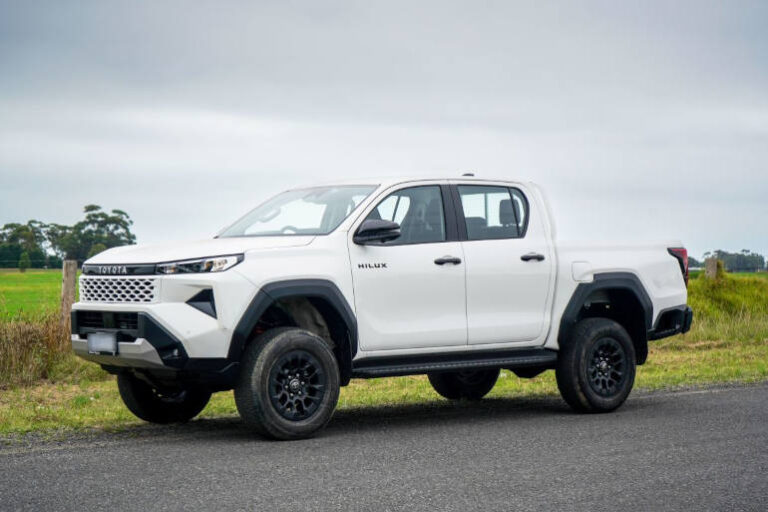
Pedders Suspension & Brakes has launched a full range of GVM+ Upgrade Kits for the ninth-generation Toyota Hilux, giving fleet operators and trade users additional legal payload capacity to better support towing and load-carrying tasks.
The new kits have been developed specifically for the latest Hilux platform and are available in multiple ratings designed to suit different operational needs. According to the company, the upgrades are intended to ensure fleets can maximise the capability of the vehicle from the start of its lifecycle while remaining compliant with safety and regulatory requirements.
Multiple GVM Options to Match Operational Demands
The range includes four Gross Vehicle Mass (GVM) upgrade options:
- 3220 kg
- 3500 kg
- 3620 kg
- 3800 kg (4×4 variants only)
These configurations provide flexibility for fleets operating in different environments, from light service work to heavier applications such as mining, utilities, and civil construction. The availability of an NB Category option—where GVM exceeds 3,500 kg—is a notable addition for operators needing higher payload capacity within legal limits.
The announcement highlights that the kits are designed to support vehicles used across a broad range of industries and roles. These include fleet vehicles in service environments, trade vehicles carrying tools and equipment, and vehicles fitted with accessories such as canopies, toolboxes, winches, and bull bars.
For many fleet buyers, particularly those working in regional or infrastructure sectors, these additional payload options can influence procurement decisions by improving productivity and reducing the risk of operating vehicles outside legal weight limits.
Focus on Compliance and Whole-of-Vehicle Performance
A key point in the product positioning is that the upgrade kits are engineered as complete vehicle systems rather than individual suspension components. This approach is intended to maintain vehicle dynamics and safety performance when operating at higher loads.
Each kit is Federal Government approved and complies with Australian Design Rules (ADR), enabling operators to legally increase payload capacity while maintaining predictable handling and braking performance.
From a fleet management perspective, compliance is often the primary consideration when evaluating GVM upgrades. Ensuring the vehicle remains road-legal and safe under load supports Chain of Responsibility obligations and reduces operational risk, particularly for organisations managing vehicles in regulated environments.
The engineering focus also extends beyond simply increasing spring rates or ride height. The system design aims to balance suspension geometry, damping characteristics, and load control to maintain stability and ride comfort under heavier loads.
Practical Implications for Fleet Buyers
For Fleet Managers and Procurement Managers, GVM upgrades typically form part of a broader strategy to improve utilisation and extend the functional capability of existing vehicle platforms. Rather than moving to a larger vehicle class, upgrading the GVM of a light commercial vehicle can deliver operational flexibility while managing acquisition and running costs.
In practical terms, higher legal payload capacity can help fleets:
- Carry additional equipment without breaching weight limits
- Improve productivity by reducing the number of trips required
- Support towing requirements for trailers and specialised equipment
- Maintain compliance with safety and regulatory frameworks
These considerations align closely with best-practice fleet management principles, particularly when balancing utilisation, safety, and Whole-of-Life Cost outcomes.
Supporting the Lifecycle of a High-Volume Fleet Vehicle
The timing of the launch also reflects the strong demand for the Toyota Hilux in Australian fleet operations. Introducing compliant upgrade options early in the model lifecycle allows organisations to specify vehicles with the required capability from the outset, rather than retrofitting solutions later.
For fleets operating in demanding environments, the availability of engineered and approved GVM upgrades provides an additional tool to match vehicle capability with operational requirements. It also supports risk management by ensuring modifications are integrated into the vehicle system rather than applied as isolated components.
As vehicle payload requirements continue to evolve—particularly with the addition of accessories, safety equipment, and specialised tools—solutions that maintain compliance while improving capability are likely to remain an important consideration in fleet specification decisions.