
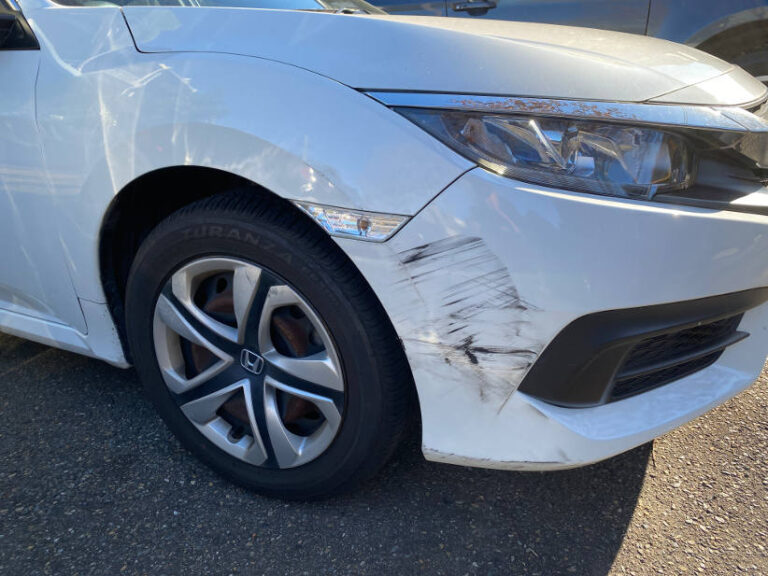
In many fleet environments, minor damage is treated as an inconvenience rather than a measurable cost. A scratched door, dented bumper or scuffed wheel rarely takes a vehicle off the road, so it is often deferred or handled informally. Over time, however, these small incidents can become one of the most underestimated cost drivers in a fleet.
According to Shaun Janks, Co-Founder and Chief DingGo at DingGo, minor damage is a persistent blind spot because it frequently falls outside structured reporting and cost controls.
“Minor damage is rarely minor by the time a vehicle exits the fleet,” Janks says. “The cost hasn’t disappeared — it’s just been delayed.”
In many organisations, incident reporting is closely tied to insurance claims. If the damage does not exceed the excess or require immediate repair, it may never be formally logged. While this can feel efficient in the short term, it undermines long-term cost visibility.
“If it’s not recorded, it doesn’t show up in your data,” Janks explains. “And if it’s not in your data, you can’t manage it properly.”
The financial consequences often surface at the end of a vehicle’s lifecycle. When assets are returned at lease end or prepared for resale, accumulated cosmetic and panel damage can result in unexpected reconditioning costs or reduced residual values.
“We regularly see fleets surprised by lease-end bills,” Janks says. “When you trace it back, it’s typically years of small, unmanaged incidents coming together at once.”
Beyond direct financial impact, visible wear and tear can affect brand perception. For customer-facing fleets, vehicle condition reflects organisational standards. Even mechanically sound vehicles can project the wrong message if cosmetic damage is left unattended.
Minor damage also creates governance challenges, particularly in shared or pool fleets. If incidents are not logged when they occur, determining timing and responsibility becomes difficult.
“In shared fleets, unreported damage quickly becomes a governance issue,” Janks says. “If no one knows when it happened, you lose the ability to manage accountability fairly.”
There is also a safety dimension. While many minor incidents appear cosmetic, some can conceal deeper issues — misaligned panels, sensor disruptions or structural impacts — that may worsen if left unchecked.
Janks is clear that the solution is not to repair every scratch immediately, but to consistently record every incident.
“Logging an incident doesn’t mean you have to fix it straight away,” he says. “It means you have visibility and can make a deliberate decision.”
When fleets capture all damage — regardless of severity — they build a more accurate picture of vehicle condition and repair frequency over time. That insight enables better budgeting, smarter repair timing and fewer end-of-life surprises.
“Once fleets start recording minor damage properly, they’re often surprised at how common it is,” Janks says. “That awareness alone can change behaviour.”
Digitised reporting systems play a central role. Manual processes, paper forms and informal emails discourage reporting, particularly for low-level incidents. Digital tools reduce friction and make it easier for drivers to report damage promptly and accurately.
“When reporting is simple, compliance improves,” Janks says. “That’s when data quality starts to lift.”
Better minor damage data also informs procurement decisions. Vehicles that appear similar on paper can have very different repair profiles once deployed in real-world conditions.
“Two vehicles may look comparable at purchase,” Janks notes, “but their repair frequency and severity over time can differ significantly. Minor damage data helps reveal that difference.”
As vehicle costs rise and governance expectations tighten, overlooking minor damage is increasingly difficult to justify. What once seemed inconsequential can quietly erode margins, residual value and operational control.
“Minor damage isn’t just cosmetic,” Janks concludes. “It’s a cost issue, a data issue and, ultimately, a fleet maturity issue.”
For fleets aiming to improve oversight, manage lifecycle costs and maintain professional standards, the discipline is straightforward: record every incident. With consistent visibility, minor damage shifts from a hidden cost to a manageable one.
- Why Buying the Truck Is Only the Beginning
 Tristar Group (Daimler Trucks Canberra) says its role does not end at vehicle delivery, with tailored maintenance, preventative support, finance and buy-back options forming part of a whole-of-life approach to fleet customers. Daimler Trucks Canberra is a finalist in the 2026 Fleet News Group Fleet Supplier of the Year Award. For fleet operators, purchasing a
 - Connected vehicles put data security on the fleet agendaThe recent Four Corners program examining connected vehicle security may have been eye-opening for many motorists, but for Fleet Managers it should reinforce an issue that has been developing for years: a modern vehicle is increasingly a connected device as well as a transport asset. Connectivity is becoming standard across the automotive industry. Vehicles can communicate
- Toyota supply improves—but fleets still need to plan aheadToyota says increased vehicle supply is helping reduce delivery wait times across its Australian range, giving Fleet Managers more scope to progress replacement programmes as the manufacturer targets a record final quarter of 2026. However, shipping constraints, stock processing and commercial vehicle body builds remain factors in delivery timing. For fleet buyers, the improving outlook
- Kia PV5 review: An electric van that feels ready for workThe Kia PV5 arrives with an unusual job to do. It has to convince businesses that an electric van can deliver the practicality expected from a commercial vehicle while also offering the quieter, smoother driving experience that comes with an EV. After driving the PV5 at its Australian launch, the first impression is that Kia
- Hyundai Reveals a Bold New Chapter for TucsonHyundai’s next-generation Tucson will arrive in Australia in mid-2027 with a hybrid-only line-up, bringing a larger body, redesigned cabin and new digital technology to the SUV market. Unveiled globally in New York, the all-new Tucson introduces Hyundai’s next-generation hybrid system and a design direction the company calls “Art of Steel”. For fleet managers planning replacements