

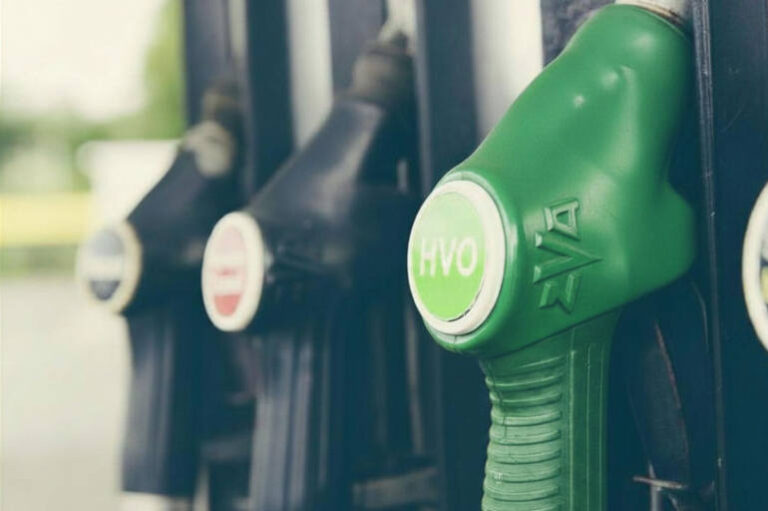
Melbourne Airport has provided a practical example of how fleets can reduce emissions from existing diesel vehicles without waiting for a full transition to electric vehicles.
The airport has been testing Hydrotreated Vegetable Oil, known as HVO or renewable diesel, across its Ford diesel fleet, including Rangers, Everests and Transits. Following a successful trial supported by Ford engineers, Melbourne Airport has now transitioned its entire Ford diesel fleet to HVO.
The move highlights an important lesson for Fleet Managers and Sustainability Managers developing emissions reduction plans. While electric vehicles are an important part of the long-term fleet transition, not every application can be electrified immediately. For organisations with mixed fleets, high utilisation, operational constraints or onsite fuelling, renewable diesel may provide an immediate pathway to lower emissions using assets already in service.
HVO is a second-generation renewable diesel made from waste products including used cooking oils, animal fats and agricultural waste. Unlike traditional biodiesel, it can be used as a direct substitute for diesel in compatible vehicles without changes to engines, tanks or filters.
For Melbourne Airport, that compatibility was critical.
“We run a mixed fleet. Initially, everyone wanted to get on the EV and hybrid bandwagon, but it isn’t that simple for us,” said Chris White, who oversees the fuelling needs for Melbourne Airport’s fleet. “To electrify our whole fleet would have required a massive investment in charging infrastructure, even 8 superchargers for 50 units isn’t enough based on usage patterns.”
That challenge will be familiar to many fleet operators. Electrification requires more than vehicle availability. It also requires charging capacity, depot planning, grid connection, vehicle scheduling and operational flexibility. For assets that work across long shifts, remote locations, secure sites or specialised applications, the transition can be complex.
At Melbourne Airport, HVO offered a simpler interim step.
“Using renewable diesel is so much easier; there’s no new infrastructure required, just swapping diesel for HVO in the onsite tank. We now run all our Fords and industrial equipment with HVO – it’s brilliant,” said White.
Ford says a 30,000-litre HVO tank and bowser is expected to be installed onsite at Melbourne Airport, supporting the ongoing use of renewable diesel across the airport’s fleet and industrial equipment.
One of the biggest operational benefits is fuel stability. Some airport equipment can sit unused for months, which creates issues when using conventional diesel. HVO has a shelf life of up to 10 years, making it attractive for fleets operating backup equipment, emergency response assets, seasonal machinery or low-use industrial vehicles.
White said the difference was also noticeable in enclosed or semi-enclosed environments.
“Conventional diesel fuel in a running vehicle in a semi-enclosed space is smelly, but with HVO it just smells a bit like a fish and chips shop,” said White.
The fuel is currently more expensive than conventional diesel. Melbourne Airport estimated the premium at around $0.50 to $0.70 per litre when delivered to site. However, White said the broader benefits outweighed the additional fuel cost.
“We don’t need to replace our existing equipment and vehicles to lower our emissions, and we no longer need the additives we used to add to diesel to improve fuel combustion,” said White.
For Finance Managers, this is where the HVO business case becomes relevant. A fleet transition is not only about fuel price. It is also about capital expenditure, asset life, infrastructure investment, operational disruption, maintenance requirements and the timing of replacement cycles.
For some fleets, HVO may provide a way to reduce emissions from existing vehicles while electric vehicle charging infrastructure is planned, funded and installed. It may also help organisations lower emissions from diesel assets that do not yet have a suitable battery electric replacement.
Ford Australia says several of its commercial diesel vehicles are already compatible with HVO, including the Next-Gen Ranger and Everest from Model Year 2022, Transit and Transit Custom from Model Year 19.75 with Euro 6.2 emissions, and the newly launched Ranger Super Duty.
The limitation in Australia is availability. HVO is not yet widely available through local retail fuel pumps, which means the best use case today is likely to be fleets with onsite tanks, bulk fuel arrangements or controlled depot-based operations.
That makes Melbourne Airport a useful example for other organisations. It has a mixed fleet, operational complexity, onsite fuelling and equipment that cannot simply be replaced overnight. Rather than wait for every vehicle and use case to be ready for electrification, the airport has adopted a lower-emission fuel that works with compatible vehicles already in the fleet.
The lesson for other fleet operators is not that HVO replaces electric vehicles. It is that fleet emissions reduction should include a range of practical steps matched to each asset class and operating environment.
For organisations beginning their transition, the first step is to understand the fleet: what vehicles are used for, where they operate, how often they return to base, how much fuel they consume and which assets can realistically be electrified now. From there, alternatives such as hybrids, plug-in hybrids, battery electric vehicles and renewable fuels can be matched to the right applications.
Melbourne Airport’s experience shows that reducing emissions does not always require a complete fleet replacement. Sometimes the most practical first move is to use existing assets better, change the fuel, and build momentum while the broader transition plan takes shape.