

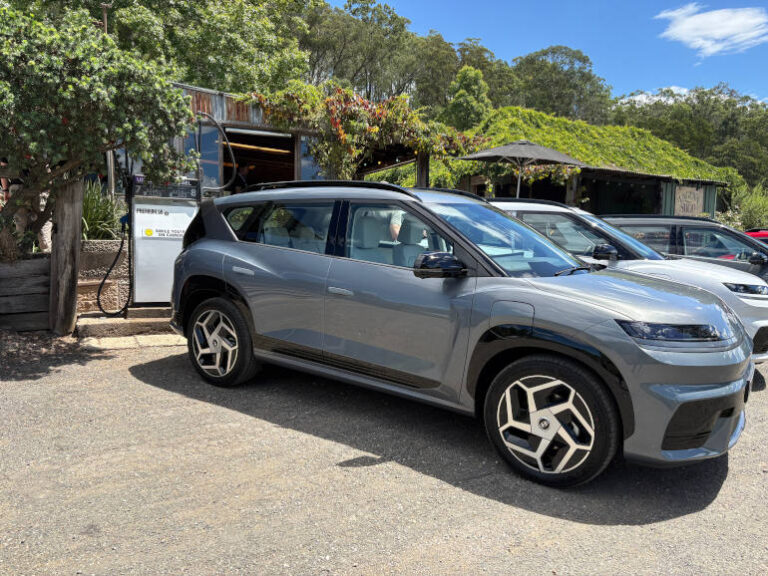
Hyundai says the new Hyundai Elexio has been built specifically for Australian families. But for fleet buyers, there’s a bigger question hanging over the latest EV from Hyundai.
Is this the sweet spot between the futuristic styling of the Hyundai IONIQ 5 and the more conservative appeal of the Hyundai Kona Hybrid? And can it deliver the whole-of-life costs that Fleet Managers need while helping organisations transition towards lower emissions?
The Elexio is available in two trims with the Elite at a sharp introductory driveaway price of $59,990 (base model is cheaper) and it enters one of the most competitive segments in the Australian market with a 160kW electric motor, 88.1kWh LFP battery and up to 546km of WLTP range.
For Hyundai, this vehicle feels important. The brand has been talking more seriously about fleet customers over the last 12 months, and the Elexio could become the mainstream EV option that finally appeals to organisations still sitting on the fence.
WOLC: Where The Elexio Finds Its Advantage
The medium electric SUV segment is now crowded with strong competitors, so Whole of Life Cost (WOLC) analysis becomes critical. Compared against mainstream rivals like the Kia EV5 and Toyota bZ4X, the Elexio lands in a very competitive position.
Fleet News Group’s WOLC comparison estimates annual operating costs of:
- Hyundai Elexio Elite — $15,490
- Kia EV5 Air LR — $15,630
- Toyota bZ4X 2WD — $15,610
The differences are small, but important.
The Toyota bZ4X delivers impressive efficiency with lower energy consumption, but its higher driveway pricing pushes the overall WOLC higher. The Elexio manages to beat the EV5 despite sharing much of the same underlying technology, thanks to slightly better energy efficiency figures.
The interesting part of this comparison is how close the numbers have become. We’re now at a point where mainstream electric SUVs are all sitting around the same WOLC range, meaning future resale value and battery condition could become the real differentiators over the next three to five years.
That’s where Hyundai’s reputation could become an advantage. The brand has spent two decades building trust with Australian buyers, and the Elexio’s conservative styling should help it age better than some more polarising EV designs currently on the market.
But Hyundai’s biggest challenge might not come from Kia or Toyota. It comes from inside its own showroom.
The Kona And Tucson Problem
The Elexio doesn’t just compete against electric SUVs. It also competes against the Hyundai Tucson Hybrid and Kona Hybrid — two vehicles that still make enormous sense for fleet buyers.
Fleet News Group’s analysis estimates annual WOLC figures of:
- Hyundai Tucson Hybrid — $12,260
- Hyundai Kona Hybrid — $10,630
- Hyundai Elexio Elite — $15,490
That’s a sizeable gap.
The hybrids benefit from lower purchase prices and stronger forecast resale values, which offset their higher fuel and servicing costs. For fleets early in their emissions reduction journey, these hybrid models still represent a very practical step towards lower CO2 emissions without the operational changes required for full EV adoption.
This is where the Elexio becomes a strategic decision rather than simply a financial one.
If an organisation’s primary objective is emissions reduction at the lowest possible cost, the Kona Hybrid or Tucson Hybrid probably win the argument.
But if the objective is genuine EV adoption, then Hyundai now offers a complete pathway. From the affordable Hyundai Inster through to the Kona Electric, Elexio and the premium IONIQ range, the brand now has one of the most complete EV portfolios available to Australian fleets.
Interior: Hyundai’s Quiet Strength
Step inside the Elexio and there’s an immediate sense that Hyundai’s designers understand how people actually use vehicles.
There’s plenty of storage, comfortable seating and practical layout decisions that make this SUV feel ready for daily fleet life. It feels less experimental than some other EV interiors and more like a polished workspace.
Then there’s the feature that initially feels completely wrong. The infotainment screen placement.
At first glance it appears awkward and unconventional, almost like Hyundai made a mistake. But after spending time behind the wheel, the logic becomes clearer.
The driver gets a clean heads-up display with the information they actually need, while many secondary controls and media functions sit further away from the driver’s direct focus area. The idea is simple — reduce distractions and keep attention on the road.
Combined with physical steering wheel controls and intuitive climate settings, the layout starts to make sense surprisingly quickly. It’s one of those interiors that improves the longer you spend with it.
Exterior: Finally, A Normal Hyundai EV
One of the Elexio’s biggest strengths might be how little attention it demands.
The IONIQ 5 looks futuristic. The Kona Electric has a rounded, quirky personality. The Inster leans heavily into fun urban styling. The Elexio does none of that.
Instead, it looks like a mainstream medium SUV designed to quietly blend into suburban Australia. Shopping centres, school drop-off zones and corporate carparks are exactly where this vehicle feels at home. That matters more than people think.
Fleet buyers understand that resale values are heavily influenced by broad market appeal. Polarising design can age badly. Conservative design usually survives longer.
The Elexio doesn’t try to make a statement about your lifestyle or personality. It simply looks like a modern SUV — and that’s probably exactly what Hyundai intended.
Final Verdict
The Elexio arrives at an interesting moment for the Australian fleet market.
EV adoption is accelerating, but many organisations are still struggling with infrastructure planning, driver acceptance and replacement timing. The Elexio feels like Hyundai’s attempt to reduce those barriers with an EV that behaves more like a traditional SUV.
Against other electric SUVs, it performs strongly on WOLC and delivers competitive range, practical interior design and broad mainstream appeal.
Against Hyundai’s own hybrid models, however, the financial argument becomes much harder.
Ultimately, the success of the Elexio won’t depend on the vehicle itself. It will depend on how serious Hyundai is about supporting fleet customers beyond novated leasing and early EV adopters.
Because if Hyundai can combine this product with genuine fleet support, the Elexio could become one of the most important mainstream EV launches of 2026.