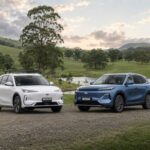

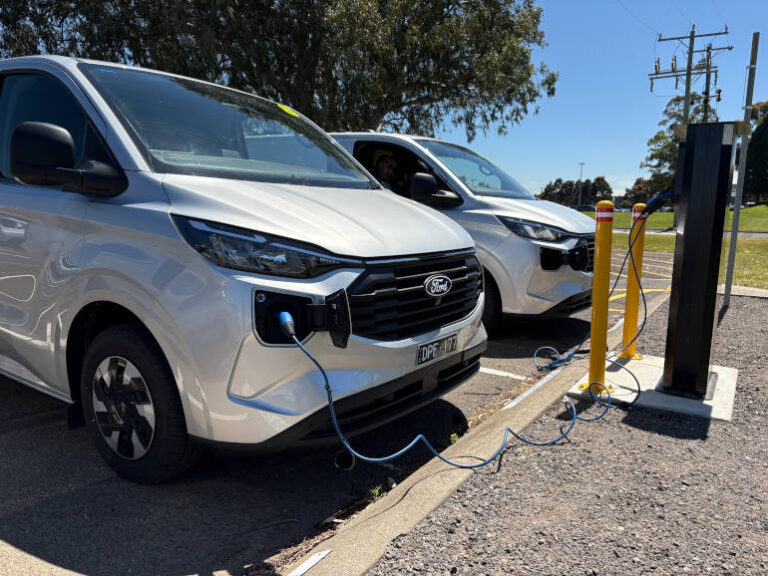
Fleet Managers in New South Wales now have another opportunity to reduce emissions and operating costs, with the NSW Government opening its latest round of EV Fleet Kick-Start funding.
Aimed squarely at businesses and organisations that are new to electric vehicles — or looking to pilot EVs before scaling — the program provides co-funding for both battery electric vehicles (BEVs) and smart charging infrastructure, helping fleets overcome one of the biggest barriers to electrification: upfront cost.
For companies operating passenger, light commercial or heavy vehicle fleets, the guidelines make it clear this is a practical, fleet-first program, not a theoretical policy exercise.
What is Kick-Start funding?
Kick-Start funding is part of the broader NSW Electric Vehicle Fleets Incentive, designed to support early-stage fleet electrification.
Under the program, eligible organisations can receive funding for:
- Up to 15 new battery electric vehicles (across all funding rounds combined), and
- Up to 15 smart charging ports to support those vehicles.
The funding is first-come, first-served, with allocations released annually and remaining open until funds are exhausted.
Who is eligible?
The program is open to a wide range of fleet operators, provided they hold a valid ABN. Eligible applicants include:
- Private businesses
- Not-for-profit organisations
- Local councils
- State-owned corporations
- Federal government agencies operating in NSW
- Car rental, rideshare, taxi and subscription companies
- Truck operators, including single-truck businesses
To qualify, organisations must already be operating:
- At least three fleet vehicles in NSW, or
- At least one registered taxi or truck, and those vehicles must have been in service for at least six months.
Importantly for national fleets, organisations can be headquartered outside NSW — as long as the incentivised vehicles are registered and used predominantly in NSW.
Which vehicles are covered?
Only brand-new battery electric vehicles are eligible. Hybrids, plug-in hybrids, fuel-cell vehicles and converted vehicles are excluded.
Eligible categories include:
- Passenger vehicles and SUVs
- Light commercial vehicles up to 3.5 tonnes GVM
- Heavy commercial vehicles from 3.5 tonnes up to 23 tonnes GVM
For the 2025–26 funding year, incentives range from:
- $5,000 for passenger vehicles and SUVs
- Up to $8,000 for light commercial vehicles
- $10,000 to $50,000 for heavy vehicles, depending on GVM
Passenger vehicles and SUVs must meet minimum and maximum price thresholds, while no price caps apply to light or heavy commercial EVs.
Charging infrastructure support
Kick-Start funding also supports the installation of smart charging infrastructure, which can often be as challenging as sourcing the vehicles themselves.
Fleets can claim:
- Up to 50 per cent of eligible charging costs per port,
- Support for AC or DC chargers,
- Installation, electrical upgrades and associated works, and
- Charge-as-a-Service (CaaS) solutions.
Each incentivised vehicle can be linked to one charging port, and incentives vary based on charger type and vehicle category. All chargers must meet approved technical standards and be installed within NSW.
How the process works
The application process is deliberately structured and predictable:
- Apply online via the NSW grants platform
- Eligibility assessed (typically within 20 business days)
- Funding deed issued and signed
- Vehicles purchased or leased and chargers installed
- Evidence submitted within 100 business days
- Incentive payment made following invoice approval
While vehicles do not need to be delivered before applying, orders must not be placed before the funding round opens, and fleets should be confident they can meet the delivery and evidence timelines.
Why this matters for Fleet Managers
For the NSW Government, Kick-Start funding is not about wholesale fleet replacement — it’s about:
- Testing EVs in real operating conditions
- Understanding duty cycles, charging and driver acceptance
- Building internal confidence and data for future decisions
With heavy vehicles now included, the program also creates opportunities for councils, utilities, construction, waste and service fleets to trial electric trucks in suitable applications.
As fleet electrification accelerates, this NSW program provides a measured, low-risk entry point — one that recognises the operational realities Fleet Managers deal with every day.
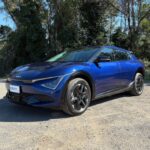
- Kia EV6 Air review: My heart says yes, but my fleet brain says no
 The Kia EV6 is one of those cars I had almost forgotten about. That sounds harsh, because when the EV6 arrived in Australia in 2022 it was one of the most interesting electric cars on the market. It looked different, it drove properly, and when the EV6 GT started lining up against supercars in drag
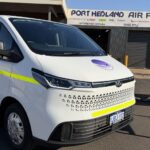
 - LDV Deliver 7 LWB Review: After The First 1,890kmWhen Port Hedland Air Freight Director Dominic Barlow needed another van for the business, he wasn’t looking for something to impress on a short test drive. He needed a vehicle that could earn its keep. After buying an LDV Deliver 7 LWB in Perth and driving it 1,890 kilometres north to Port Hedland, he shared
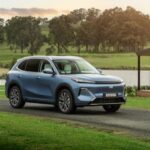
- Geely Starray EM-i review: Big on space, strong on value and easy to live withThe Geely Starray EM-i arrives in Australia with a fairly simple proposition: give buyers the smoothness and convenience of electric driving around town, add a petrol engine for longer journeys, wrap it all in a roomy SUV and keep the price within reach of mainstream buyers. After spending time with the Starray EM-i around Sydney
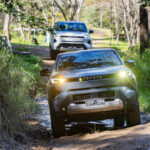
- Toyota HiLux BEV off-road review: The quiet achiever goes bushThere is something faintly suspicious about climbing a rocky hill in a HiLux and hearing almost nothing. Normally, a serious off-road climb has a soundtrack. There is diesel revving, tyres scrabbling, a little gravel being aggressively relocated and someone in the passenger seat asking whether that rock was meant to be there. The Toyota HiLux
- Geely Starray EM-i vs EX5: Similar SUVs, similar prices — but novated leasing changes the mathsIf you walked into a Geely showroom and compared the Starray EM-i with the fully electric EX5, the decision might initially look fairly straightforward. Both are five-seat, front-wheel-drive SUVs from the same brand. Both offer generous interior space, modern technology, extensive safety equipment and electrified powertrains. And, importantly, they’re sitting within a few thousand dollars