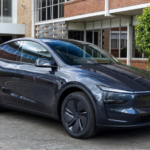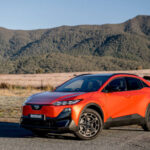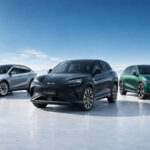

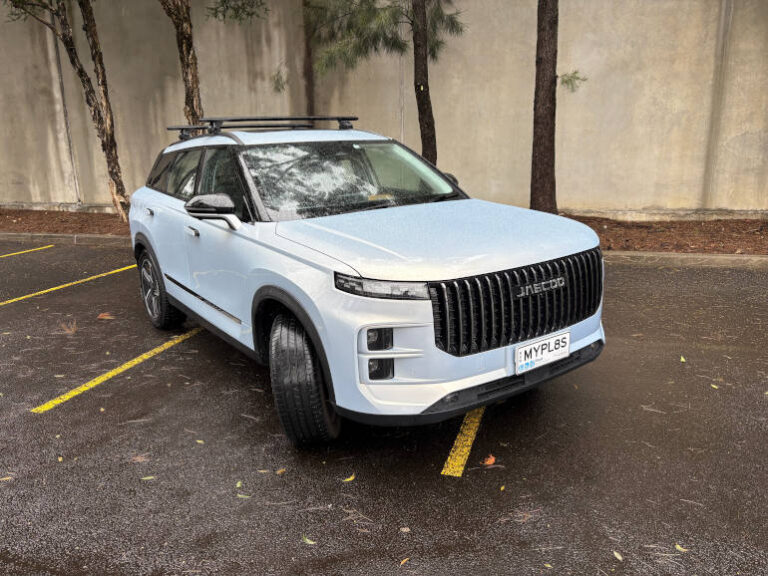
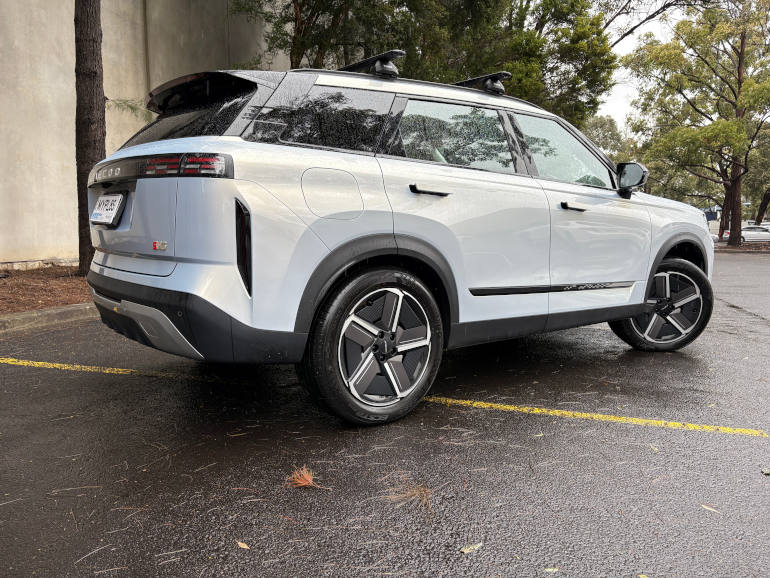
The Jaecoo J7 SHS is the brand’s medium SUV entry for Australia, aiming to lure buyers with sleek styling, long electric driving range, and an impressive list of features. On paper, it’s a compelling mix. On the road, it delivers a smooth and efficient drive. But once you step inside, the comfort and usability don’t quite match the promise.
Driving Dynamics – Hybrid Done Right
The J7 SHS pairs a 1.5-litre turbo petrol engine (105 kW/215 Nm) with a powerful electric motor (150 kW/310 Nm) and an 18.3 kWh battery. Together, they give you up to 90 km of pure electric range (WLTP), and a theoretical 1,200 km combined driving range when using both petrol and electric power.
Charging is quick by PHEV standards – around 2 hours 40 minutes on AC (6.6 kW) or just 20 minutes on DC (40 kW) from 30–80%.
On the road, the J7 SHS feels polished. It glides in EV mode, and the regenerative braking is tuned to feel natural, not jerky. Suspension balance is good, giving you confidence in corners without punishing you on rougher roads. In many ways, the J7 drives better than some established rivals – a real highlight.
Interior – High Tech, Low Comfort
Inside, the J7 SHS is packed with tech. The 14.8-inch infotainment screen, wireless Apple CarPlay/Android Auto, Sony 8-speaker sound system, wireless charging, and even a head-up display are all standard. You also get heated and ventilated seats, a panoramic sunroof, a digital driver’s display, and built-in dashcam functionality.
But the driving experience is let down by seat comfort and trim quality. The driver’s seat lacks long-distance support, and some of the soft-touch materials feel cheap compared to rivals. While storage is excellent (including a clever floating centre console), there’s no sunglasses holder – an odd omission in an otherwise practical cabin.
The infotainment screen is crisp and responsive, but climate controls are buried in menus, forcing drivers to take eyes off the road. Worse, the driver monitoring system is oversensitive and loud – the beeping quickly becomes infuriating. Add quirks like indicators that get louder as you increase the stereo volume, and the interior experience feels half-baked.
Whole of Life Costs (WOLC)
For fleets and novated lease buyers, the J7 SHS has some appealing numbers:
- Fuel economy: just 1.0 L/100km combined (NEDC) when the battery is regularly charged.
- CO₂ emissions: 31 g/km combined.
- Servicing: capped for 8 years.
- Warranty: 8 years/unlimited km, plus up to 8 years roadside assist.
These make budgeting simple and attractive, but residual values remain uncertain given Jaecoo’s newcomer status in Australia.
Competitors to Consider
The J7 SHS enters a crowded medium SUV space where:
- Toyota RAV4 Hybrid dominates fleets and has unbeatable resale.
- Mitsubishi Outlander PHEV offers proven plug-in hybrid tech with strong practicality.
- Hyundai Tucson Hybrid and Kia Sportage Hybrid deliver comfort and refinement.
The J7’s long EV range gives it an edge on paper, but the Toyota and Mitsubishi hold the trust advantage with fleets.
Verdict
The Jaecoo J7 SHS is a stylish, well-equipped PHEV SUV that nails the driving dynamics and offers outstanding range for the price. Its long warranty and servicing plan sweeten the deal. But step inside, and you’ll notice its weak points – average seat comfort, distracting tech quirks, and trim that lacks polish.
For private buyers seeking something different, it’s worth a look. For fleets, the numbers stack up, but driver satisfaction may be mixed.
Overall verdict
✅ Great looks and smooth hybrid drive
✅ Long EV range (90 km) and strong warranty
❌ Seats lack comfort, interior trim feels cheap
❌ Driver assistance and infotainment quirks frustrate
- Tesla Model Y tops novated lease market to claim 2026 award
 The Tesla Model Y has been named the 2026 Fleet News Group Novated Lease Car of the Year, after emerging as the most popular vehicle among novated lease customers represented by NALSPA members. The award was determined by actual novated lease volumes rather than a judging score or public vote, giving the result a direct connection
 - Chery sees EV growth through novated leasingChery believes novated leasing will become an increasingly important sales channel as its Australian EV range expands across more vehicle segments and brands. Speaking with Fleet News Group at Everything Electric in Sydney, Lucas Harris, Chief Operating Officer at Chery Motor Australia & New Zealand, said the company was already seeing encouraging demand for its
- Subaru Uncharted review: The novated lease numbers make this EV worth a closer lookThe Subaru Uncharted is one of those electric vehicles that makes more sense once you look beyond the purchase price. On the road, it feels like a Subaru first and an EV second. The steering and handling are settled and predictable, the cabin is practical, and Subaru hasn’t abandoned physical controls in favour of putting
- MMS novated lease portfolio reaches 90,000 as sales growth continuesMcMillan Shakespeare (MMS) has expanded its novated lease portfolio to 90,000 vehicles after another year of growth, with the company reporting continued sales momentum heading into FY27. Novated leases under management increased 13.5% during FY26, while group novated lease sales rose 8.4% despite what MMS described as a highly competitive market. For one of Australia’s larger salary packaging
- EVs now account for 80% of Novated Lease Australia’s new leasesElectric vehicles have rapidly shifted from a niche choice to the dominant vehicle type for customers at Novated Lease Australia, with EVs accounting for around 80 per cent of the company’s new leases during the most recent quarter. That compares with an EV share of around 55 per cent as recently as February, highlighting how