

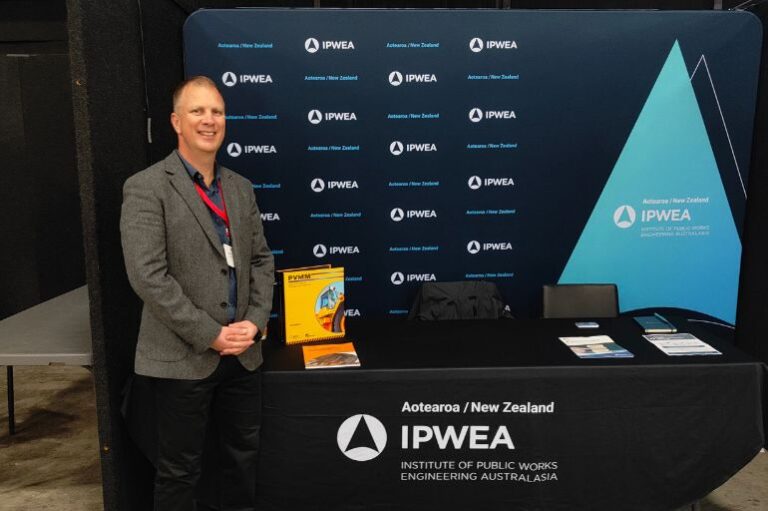
At the 2025 EROAD Fleet Day, Marc Sibbald, Director of IPWEA Fleet, took the stage to deliver a presentation that resonated deeply with local government and corporate fleet professionals alike. Titled “From Workshop to the Boardroom”, his session explored a challenge many Fleet Managers face: how to elevate the role of fleet within their organisation and earn a seat at the executive table.
It Starts With Education and Ends With Influence
Sibbald opened with a nod to the growing professionalism within the fleet community, highlighting that many past participants of IPWEA’s Fleet Management Certificate are now not only managing fleets but also presenting at industry events. This, he said, is proof that fleet management maturity is on the rise—and education is a driving force behind it.
“We don’t just teach people how to run a fleet. We give them the tools to build influence and capability,” Sibbald said.
Disruption Is Here—And So Are New Stakeholders
Sibbald challenged the audience to recognise that the traditional “wrench-turning” view of fleet is outdated. Today’s fleet professionals are increasingly working across departments—collaborating with sustainability teams, IT, safety, and marketing.
“Fleet is no longer an isolated function,” he said. “We’re being forced to speak with ‘fleet-adjacent’ departments, and that’s a good thing.”
But with that shift comes the need for a new mindset. Fleet is strategic. Vehicles aren’t just tools—they’re enablers of service delivery, revenue generation, and community outcomes.
Strategic vs Operational: The Power of Procurement Planning
A key takeaway was Sibbald’s breakdown of the procurement lifecycle. He presented six steps and colour-coded them to distinguish between strategic and operational focus.
“Most Fleet Managers spend their time on the operational tasks—buying, using, and selling,” said Sibbald. “But if you want to be heard at the boardroom table, you need to spend more on the strategic aspects. That’s where executives live.”
Speaking the C-Suite Language
One of the most practical parts of Sibbald’s talk was his advice on communicating with executives. He reminded the audience that everyone in the C-suite drives a car—so they assume managing a fleet is easy.
An assumption—often made by executives—is that all fleet assets are the same. Sibbald pushed back against this, explaining that a car is not the same as a truck, and a ute with a custom body is not the same as a standard tub. Every asset type comes with its own risks, compliance requirements, and cost profile. Some need specific driver licences; others require training and verification of competency. And what looks like a regular SUV might actually be a highly customised dog unit, as demonstrated in one of the day’s earlier presentations. Understanding and communicating this complexity is critical if Fleet Managers want their executives to see beyond the registration papers.
To counter this, he said Fleet Managers need to frame the conversation around three things the C-suite cares about:
- Cost
- Risk
- People
That means going beyond anecdotes and talking in ratios, benchmarks, and strategic frameworks. Sibbald recommended the ISO 55000 asset management standard as a powerful reference point.
“When you talk ratios, you’re speaking finance’s language. That’s how you stop sounding emotional and start sounding credible.”
He shared three simple ratios that require minimal data to calculate but deliver maximum impact:
- Renewal Ratio: Depreciation vs replacement spend
- Backlog Ratio: Outstanding renewals vs total fleet value
- Maintenance Ratio: Budgeted vs actual spend
The Four Pillars: A Framework for Fleet Maturity
To close, Sibbald reinforced the four pillars of strategic fleet management:
- Policy – A current, reviewed, and endorsed fleet policy that reflects the organisation’s needs.
- Staff Engagement – Talking to end users, earning internal relevance, and supporting service delivery.
- Procedure – Documenting processes, often with the help of AI tools, to demonstrate control and continuity.
- Performance – Reporting KPIs and outcomes that executives understand and respect.
“If you can pull a folder off the shelf with all your procedures documented—or better yet, send them a link to the intranet—suddenly, you’re strategic,” Sibbald said.
Sibbald’s presentation was a call to action. Not just to manage fleets—but to lead them. To engage staff, influence policy, and translate data into strategic conversations that matter.
“Fleet might not be your CEO’s top priority today,” he said. “But hide the keys for a day—and see what happens.”
For those ready to move beyond compliance and into strategy, this presentation provided both a roadmap and the motivation to take the next step.