

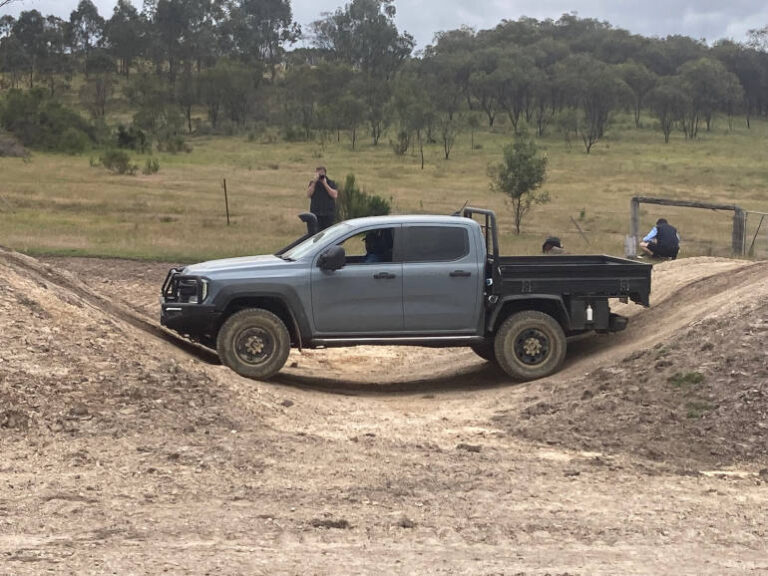
On paper, the Ford Ranger Super Duty looks almost unreal. A 4.5-tonne GVM. Class-leading towing. Heavy-duty underpinnings. And a promise that it can replace everything from heavily modified utes to some light trucks.
But fleet buyers know better than anyone that spec sheets don’t move freight or deliver services. Driving does. So the real question is simple: does the Ranger Super Duty actually live up to the hype once you’re behind the wheel?
After spending time driving it on-road and across a demanding off-road course in country Victoria, the short answer is: yes — and in ways that matter to fleets.
First Impressions: Big Numbers, Surprisingly Easy to Live With
There’s no hiding what this thing is. The Ranger Super Duty is a big, heavy vehicle designed to carry serious loads. A 4.5-tonne GVM isn’t something you gloss over.
And yet, the first surprise comes quickly.
Despite the mass and capability, the ride quality is outstanding. On sealed roads heading out to the test course, it feels composed, stable and far more comfortable than many aftermarket-upgraded utes that claim similar capability.
That’s important for fleets. Vehicles like this don’t just live on worksites — they spend hours on highways, regional roads and connecting stretches between jobs. Comfort matters, because fatigue matters.
The Super Duty doesn’t feel like a compromise.
Suspension and Control: Confidence Where It Counts
Off-road is where the Ranger Super Duty really starts to show its intent.
Suspension travel is substantial, and on a steep, man-made 4WD course the vehicle remained calm, controlled and predictable. It climbs and descends angles that genuinely don’t look comfortable from the driver’s seat — yet the vehicle never feels out of its depth.
The Trail Control system stands out here. Once set, it locks the vehicle at a constant speed — uphill or downhill — without touching the accelerator or brake.
It’s one of those systems that sounds like a gimmick until you use it. Then you realise it reduces driver workload significantly, especially in low-speed, high-risk environments.
For fleet drivers operating in unfamiliar terrain or variable conditions, that matters.
Comfort: Why Shouldn’t the Worker Get It Too?
Cab-chassis vehicles have traditionally been the poor cousin when it comes to interior comfort and technology. That’s not the case here.
Even in base specification, the Ranger Super Duty comes with:
- climate control air-conditioning
- a large 12-inch touchscreen
- Apple CarPlay and Android Auto
- modern cabin layout and ergonomics
There’s a genuine philosophical shift behind this.
Why shouldn’t the worker on the farm, the council driver, or the utility technician have the same level of comfort as the owner or supervisor? Ford clearly decided they should — and engineered the Super Duty accordingly.
For fleets, this translates to better driver acceptance, easier recruitment and reduced pushback when introducing heavier-duty vehicles.
Driver Assistance Tech: A Big Win for Cab-Chassis Fleets
This is where the Ranger Super Duty really separates itself from tradition. Cab-chassis vehicles have historically missed out on driver assistance technology — often because aftermarket bodies break the system logic. Ford tackled this head-on.
The Super Duty offers what Ford calls DAT (Driver Assistance Technology), including:
- full rear-view camera
- 360-degree camera system
- blind-spot monitoring
- front and rear parking sensors
For drivers who regularly hitch trailers, this is a game changer. Being able to reverse up safely, see exactly what’s happening and avoid low-speed incidents reduces damage, downtime and stress.
Add in Tow Assist, which allows drivers to steer a trailer using a simple rotary controller while reversing, and it’s clear this vehicle was designed for real-world fleet tasks — not showroom demos.
Onboard Scales: A Quiet Revolution for Fleets
Perhaps the most fleet-relevant feature of all is the onboard scales. This system tells drivers whether they’re overloaded — clearly and unambiguously. In fleet operations, that’s huge.
There’s no guessing. No excuses. You’re either legal or you’re not.
Better still, the system shows how weight is distributed and where it should be placed to be most effective. For drivers, it becomes an everyday decision-making tool:
Can I carry that extra drum? That sack of fertiliser? That additional tool?
Fleet Managers will immediately recognise the value here. Overloading isn’t just a safety issue — it’s a legal and reputational one. Onboard scales bring transparency into the cab, before the vehicle even leaves site.
Driving Verdict: A New Benchmark
After time behind the wheel, one thing becomes clear: the Ranger Super Duty isn’t trying to be everything to everyone — but it does fill a gap that’s existed for a long time.
It sits neatly between:
- traditional utes
- heavily modified aftermarket solutions
- and entry-level light trucks
In doing so, it delivers:
- exceptional ride quality
- serious load-carrying ability
- off-road confidence
- and class-leading technology for a cab-chassis platform
There are very few genuine alternatives. Some may point to legacy heavy-duty wagons or trucks, but in terms of combining comfort, capability and compliance in one factory-engineered package, the Ranger Super Duty is in a class of its own.
Does It Live Up to the Hype?
Yes — because the hype isn’t about numbers. It’s about solving real fleet problems. The Ranger Super Duty doesn’t just carry more. It makes carrying more safer, easier and more predictable.
For fleet buyers reassessing replacement strategies in 2026 — especially those juggling aftermarket upgrades, compliance risk and rising utilisation — this vehicle deserves serious attention.
It’s not just a great drive. It’s a smart fleet tool. And if you get the chance? You really should drive one.