

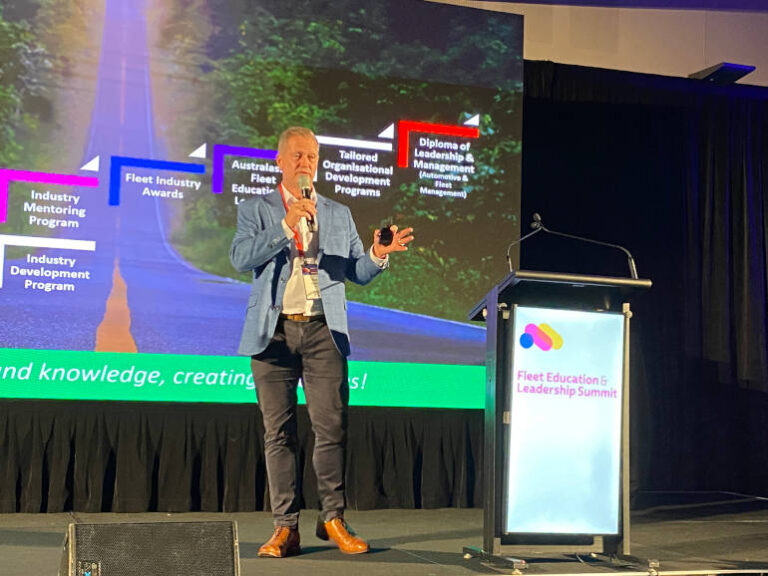
The Australasian Fleet Management Association (AfMA) positions itself as the peak body for fleet professionals across Australia and New Zealand. Its 2025 Annual Report provides useful insight into how the organisation generates income, where it spends money, and whether it operates primarily in the interests of members.
Is AfMA a Not-for-Profit?
AfMA is an incorporated association governed under Victorian legislation. The notes to the financial statements confirm:
“The Association is exempt from income tax under Section 50-45 of Income Tax Assessment Act 1997.”
This confirms its not-for-profit tax status. The financial statements were audited, and the auditor reported:
“In our opinion, the accompanying financial report gives a true and fair view of the financial position of the entity as at 30 June 2025.”
No audit adjustments were made, according to the Treasurer’s Report.
2025 Financial Snapshot
For the year ended 30 June 2025:
- Total income: $2,511,569
- Total expenditure: $2,514,079
- Operating result: ($2,510) deficit
- Net assets: $670,754
- Cash: $337,693
- Term deposits: $600,000
AfMA reported:
“In the Financial Year just concluded AfMA reported an operating loss of $2,510…”
The deficit is minor relative to turnover (0.1%), indicating operations broadly broke even.
Revenue Mix
Income sources were diversified:
- Events income: $1,818,619
- Membership subscriptions: $350,038
- Sponsorships: $310,593
- Other income: $32,319
Events account for the majority of revenue (around 72%). Membership subscriptions represent roughly 14%, with sponsorships around 12%.
For fleet professionals, this indicates AfMA is primarily an events-driven organisation, with the Summit and professional development forums forming the core commercial engine.
Where Does the Money Go?
Expenditure in 2025 was:
- Events expenses: $784,481
- Management fees: $1,406,479
- Other expenditure: $323,119
Management fees represent approximately 56% of total expenditure. The management fee arrangement is material and central to the financial model. More than half of all expenditure flows through that contract. Whether that represents strong outsourced efficiency or over-reliance on a related entity depends on governance scrutiny and member confidence.
The Treasurer explains:
“Financial year 2025 total expenses were $2,514,079… reflecting mainly increased management fees and events expenses. Management fees being a percentage of total income and events expenses being volume related.”
This is significant. The largest single expense category is not venue hire or program delivery, but management services.
The Related Party Question
The Annual Report discloses a related party arrangement:
“The Australasian Fleet Management Association Inc has a continuing contract with Success Group Trust, for whom Mace Hartley is a beneficiary, to provide management services. During the year $1,406,479 was payable to Success Group Trust as management fees.”
AfMA outsources management services under contract to an entity linked to its Executive Director. The amount paid in 2025 was $1.406 million.
From a governance perspective, the critical questions for members are:
- Is the fee commercially benchmarked?
- Is it performance-based?
- Is it reviewed independently by the Board?
- Does the structure deliver value for members relative to alternatives?
The financial statements do not provide comparative benchmarking data, but the disclosure itself is clear and unambiguous.
What Should AfMA Members Ask?
For the AfMA members and board, the practical governance questions are:
- How is the management fee calculated?
- Is there competitive tendering or benchmarking?
- What KPIs are attached to the management contract?
- How does the cost compare to running an internal executive team?
- What succession planning exists for leadership continuity?
These are reasonable governance questions in any member-funded association.
Conclusion
AfMA is clearly a not-for-profit association under Australian law. Its 2025 financials show:
- Break-even operations
- Healthy but not excessive reserves
- Transparent disclosure of related party transactions
- A strong events-driven revenue model
The association is not generating large profits. It is, however, highly dependent on a related party management contract that accounts for the majority of expenditure.
Whether AfMA is primarily industry-focused or structurally designed around its management model is ultimately a governance and member confidence question.
For fleet professionals who rely on AfMA for advocacy, education and networking, the key is continued transparency — and active member engagement in ensuring the association remains aligned with its stated purpose: elevating the fleet profession.