
In many fleet environments, incident reporting is closely tied to repairs and insurance claims. If the damage is serious enough to require immediate attention, it gets logged. If it is minor and the vehicle remains roadworthy, it is often overlooked or handled informally. While that may seem efficient in the short term, it creates significant blind spots over time.
According to Shaun Janks, Co-Founder and Chief DingGo at DingGo, consistently lodging every incident — regardless of whether a repair follows — is one of the clearest indicators of fleet management maturity.
“Recording an incident doesn’t automatically mean repairing it,” Janks says. “It means acknowledging that something has occurred and preserving the information so it can be managed properly.”
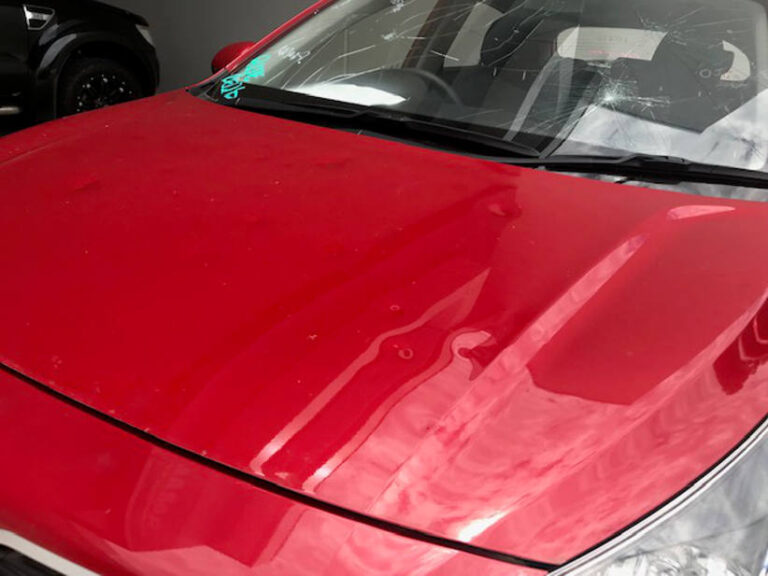
Minor scrapes, cosmetic damage and low-speed impacts may appear insignificant, particularly when reporting processes are manual or time-consuming. But when incidents go unreported, fleets lose valuable data that supports cost control, accountability and planning.
“If an incident isn’t logged at the time it happens, the details fade quickly,” Janks explains. “Drivers forget specifics, timelines blur and it becomes harder to establish what actually occurred.”
These gaps often resurface at the end of a vehicle’s lifecycle. Damage that was never formally recorded can reappear during lease returns or resale inspections, leading to unexpected charges.
“End-of-lease costs rarely come out of nowhere,” Janks says. “They’re usually linked to incidents that were never captured properly.”
By lodging incidents early — even when repairs are deferred — fleets gain visibility of potential future costs. That visibility supports more accurate whole-of-life cost modelling, which is increasingly important as vehicle prices and operating expenses rise.

Beyond cost, complete incident reporting is essential for safety and risk management. Without full data, fleets struggle to identify recurring patterns, high-risk locations or behaviours that may require intervention.
“You can’t improve what you can’t see,” Janks says. “Every incident adds another data point that helps you understand risk.”
The importance of consistent reporting becomes even greater in shared or pool vehicle environments. When multiple drivers use the same asset, unreported damage can quickly turn into a governance issue.
“If damage is discovered weeks later and no one knows when it happened or who was driving, that creates frustration and undermines trust,” Janks says. “Clear records protect both the organisation and the driver.”
A key principle, Janks notes, is separating the act of logging an incident from the decision about what to do next.
“Logging is step one,” he explains. “Whether you repair immediately, defer the work or address it at end of lease is a separate operational decision.”
Digitised reporting systems make this discipline easier to embed. Paper forms, spreadsheets and email chains discourage reporting, particularly for minor incidents. Digital platforms reduce friction, improve compliance and ensure information is securely stored and accessible across the organisation.
“When reporting is simple and mobile-friendly, compliance improves,” Janks says. “That’s when fleets start building reliable, complete datasets.”
Consistent incident logging also supports more effective insurance strategy. By distinguishing between minor damage and insurable events, fleets can avoid unnecessary claims while maintaining a full view of their risk profile.
“It’s not about avoiding insurance,” Janks says. “It’s about using it appropriately and protecting affordability over the long term.”
As governance expectations rise and fleets become more complex, informal approaches to incident reporting are no longer sufficient. Recording every incident — regardless of repair outcome — provides the foundation for stronger planning, risk management and financial control.
“The most disciplined fleets treat incident data as an asset,” Janks says. “That discipline reduces surprises and gives them far greater control.”
For organisations seeking greater visibility and maturity, the message is straightforward: if an incident happens, log it. Even if no repair follows today, the information will matter tomorrow.
- New Patrol Boosts Space and Towing Muscle
 Nissan has revealed further details of the next-generation Patrol ahead of its Australian launch, with the new model receiving significant changes to its interior packaging, load-carrying ability and towing capacity. The new Patrol will offer up to 2,749 litres of cargo space with the rear seats folded, while maximum braked towing capacity increases to 3,700kg
 - Hyundai STARIA Load vs Toyota HiAce: Which van suits fleet operations?The Hyundai STARIA Load and Toyota HiAce are two established choices for fleets requiring a practical commercial van with close to a one-tonne payload. The STARIA Load offers diesel and petrol-hybrid powertrains, relatively compact exterior dimensions and car-like driving characteristics. The HiAce provides a larger cargo area, a higher Gross Vehicle Mass and a strong
- Pajero Is Back: Mitsubishi Revives an Australian 4WD IconMitsubishi has confirmed the Australian range and specifications for the all-new Pajero, with the returning nameplate bringing a 2.4-litre turbo-diesel engine, seven drive modes, a 3.5-tonne towing capacity and a choice of five- and seven-seat configurations. The Mitsubishi Pajero will return to Australian showrooms in December 2026, reviving one of the brand’s best-known nameplates after
- Jaecoo Strengthens the J7 Line-UpJaecoo Australia is rolling out its MY27 J7 range, with the midsize SUV continuing to offer both petrol and plug-in hybrid powertrains as the brand broadens its appeal to Australian buyers. The updated line-up includes the petrol-powered Ridge AWD alongside three Super Hybrid System – PHEV variants: the Track SHS-P, Summit SHS-P 2WD and Summit
- Nissan Patrol Enters a New EraNissan has confirmed key Australian specifications for the new-generation Y63 Patrol, with the large SUV gaining a new twin-turbo V6, increased towing capacity, a revised chassis and a broader six-grade line-up. The new Patrol will arrive in Australia in early 2027, replacing the long-serving Y62 and introducing significant changes to the powertrain, suspension, cabin technology