

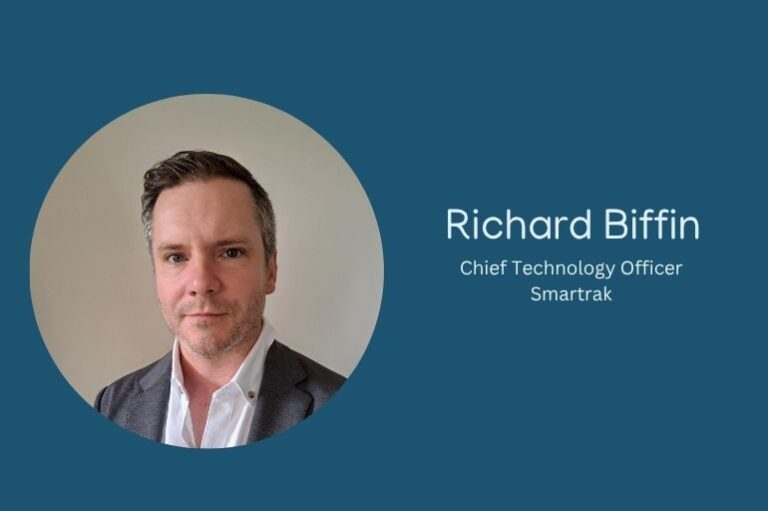
For Richard Biffin, joining Smartrak after a career in consumer software and media tech startups offered a stark contrast. Where earlier platforms were often convenience-focused – a missed CRM update being more of a nuisance than a crisis – fleet management was something else entirely: “mission critical.”
“You’re dealing with driver safety, crash detection, even lone worker beacons — so if your system goes down, it’s not just an inconvenience,” said Biffin. “It could literally be the difference in someone getting help or not.”
That’s a reality many Fleet Managers know intuitively. What’s less understood — both inside and outside the industry — is just how advanced and demanding the software environment around fleet operations has become. Compliance, resilience, data integration, user experience and now sustainability targets are converging to make fleet tech a much more sophisticated challenge.
From ‘Nice to Have’ to ‘Must Have’
Biffin believes the shift in customer expectations is driving real innovation. “Customers are asking us: how do we manage utilisation better, how do we hit our sustainability targets, how do we make EV workflows seamless?” he said.
That’s led Smartrak to work closely with clients — often before a solution is even built. “We’ve got customers who want a seat at the table early. They’re effectively co-designing with us because they know the payoff is real.”
Return on investment (ROI), he said, isn’t just theoretical. “These organisations are clear about the benefits: less vehicle downtime, better safety outcomes, and progress on carbon reduction. The finance team gets it when you show them those numbers.”
Fleet vs IT — Still Frenemies?
Ask any Fleet Manager about internal roadblocks and you’ll hear a common refrain: IT departments slowing or stopping projects.
Biffin gets it. “A lot of that friction comes down to security and internal system compatibility. But when you’re dealing with local government or enterprise customers like we are, you have to expect that.”
The key, he said, is flexibility. Smartrak systems can be deployed inside or outside a customer’s firewall.
“We meet them where they’re at. Our security documentation, certifications — it’s all there. And we make sure IT doesn’t have to carry the load on integration.”
His advice for Fleet Managers? Start early and bring IT into the loop from day one. “Pre-sales is not just about features. It’s about confidence. If IT sees you’ve done your due diligence, they’re far more likely to support the rollout.”
EVs Are Forcing New Thinking
Biffin also highlighted how the shift to electric vehicles is triggering a rethink of fleet workflows.
“With ICE vehicles, if a driver forgets to fill up, it’s annoying but fixable. With EVs, if it’s not plugged in after a job, the next person might not be able to use it. That has ripple effects across the schedule.”
Managing this needs new software logic — alerts, real-time charge status, and smart booking systems that account for battery levels. “It’s not just about tracking vehicles anymore; it’s about managing energy as a resource.”
The Future? Less Hardware, More Data
Looking ahead, Biffin sees a big change coming in how data is collected.
“Eventually we won’t need separate hardware. The vehicle will already be connected — it’s already streaming data to the manufacturer. The trick will be aggregating that data across different makes and models into one interface.”
It’s already possible with some OEM telematics platforms, but standards and compliance questions still need ironing out. “Where’s the data stored? Who controls access? These are not minor questions — especially for government or enterprise fleets.”
Accuracy First, AI Later
And yes — AI will play a role, but Biffin sounds a note of caution.
“At Smartrak, we’re in the business of helping people make accurate decisions. AI is powerful, but it still needs validation. There’s a risk if you blindly trust it.”
For now, it’s about using AI as a tool, not a replacement. “We’ll see it become part of the day-to-day — but in fleet, the stakes are high. We have to get it right.”
Key Takeaway for Fleet Teams
Modern fleet systems are no longer add-ons. They’re central to safety, compliance, and sustainability — and the tech teams that support them must treat them as mission critical. Engaging early, understanding ROI, and planning for future trends like hardware-free telematics are all part of being a strategic Fleet Manager today.




