

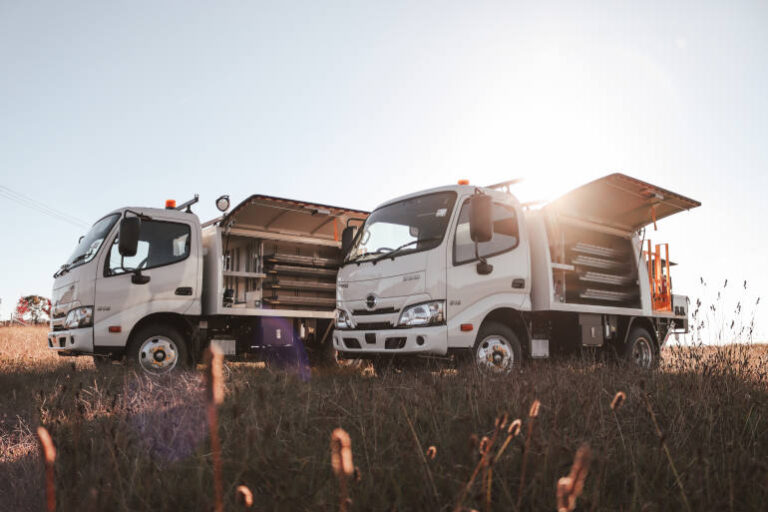
When it comes to building service bodies for utes and trucks, Alex Williams, National Sales Manager at Hidrive, has one key message for Fleet Managers: don’t walk in with a solution—start with the problem you’re trying to solve.
In a candid interview with Fleet News Group, Williams shared insights from years of helping customers design and implement mobile workspaces across Australia. His top advice? Focus on being fit for purpose, not flashy.
Fit for Purpose First
“Everyone wants their stamp on it,” Williams joked, acknowledging the variety of preferences across councils and businesses—even when they’re doing the same job. But he cautions against copying past builds without asking the crucial question: why?
Instead, he recommends Fleet Managers bring their team leaders and end users into early discussions to really understand what the vehicle needs to do. “It’s not about the wants—it’s the needs,” said Williams. “It’s not ‘I want a fridge’, it’s ‘I need space for my battery packs’. You have to understand the day-to-day activities.”
This collaborative approach ensures the final build supports productivity, not just aesthetics. “The point of a service body is to create a functional, safe workspace—not just a showpiece,” he added.
Modular Solutions, Not Custom Nightmares
Williams noted that Hidrive’s modular systems can often meet fleet needs without requiring fully bespoke designs. But that doesn’t mean the Fleet Manager is left on their own. Hidrive’s sales, design and electrical engineering teams work together to recommend practical layouts, configurations and load management options.
“If a fleet doesn’t take that advice, it usually costs them more in the long run,” he warned. “The vehicle gets into the field and suddenly it’s not working. Then it’s no longer fit for purpose—it’s just a box on a ute.”
Safety vs Compliance: Not the Same Thing
A growing focus for many fleets is balancing safety and compliance—especially when different industries bring different requirements to the table.
Williams explained, “We have to ask: are they trying to meet safety outcomes, or are they complying with specific standards, like a mine site spec? It’s not the same conversation. Sometimes it takes a few extra meetings to really unpack what the client needs.”
He cited examples like ensuring three points of contact for roof access and designing tow bars to avoid pinch points. “It’s 2025 thinking. We’re not just ticking boxes—we’re making vehicles safer and easier to work with.”
Investing in Better Builds
Behind the scenes, Hidrive has invested heavily in modernising its manufacturing. The Goulburn factory now uses robotic welders, one-piece flow production, rotating welding benches, and new paint booths to boost quality and safety.
“It might look like the same white box,” Williams said, “but it’s built faster, better, and to a higher standard. We’ve got triple ISO accreditation now, and that’s not just a badge—it’s a system of continual improvement.”
And about that white? “White isn’t white,” he laughed. “We scan every vehicle to match the OEM colour. There’s a big difference between Hilux white and Ranger white.”
EVs: Not Quite There Yet
Williams was frank about electric vehicles in the service body world. “EVs aren’t ready yet—not for us. The payload isn’t there, and there’s no aftermarket support for GVM upgrades.”
That said, Hidrive is preparing. The team scans and reverse-engineers new vehicles as soon as they land, working closely with OEMs to ensure wiring harnesses, electronics, and safety systems integrate seamlessly.
He believes that success depends on transparency from all parties. “OEMs, FMOs, dealers, bodybuilders, and the end user—we all need to be in the room. The best results come when everyone’s talking.”