
For decades, tyre replacement in fleet management followed a simple rule: like-for-like. Whatever came factory-fitted to the vehicle was what went back on. It made budgeting straightforward, procurement easy, and fleet audits predictable.
But in today’s mixed-fleet environment — with electric vehicles (EVs), dual-cab 4X4s, SUVs, and passenger cars all working side by side — the question is no longer “what was on the car originally?” It’s “what’s fit for purpose now?”
Fleet Managers are being asked to extract more value from every asset, while supporting driver safety, reducing emissions, and controlling cost per kilometre. That starts from the ground up — with the right tyre.
From Standardisation to Strategy
When vehicle brands began diversifying tyre sizes and brands in the early 2000s, fleet managers were forced to evolve their tyre replacement policies. The one-size-fits-all approach no longer worked, especially as manufacturers moved to larger rim sizes and varied OEM specifications.
The logical solution was to consolidate around a preferred supplier — usually a market-leading tyre brand that could offer national coverage, consistency of product, and the buying power that comes with volume.
This strategy had real benefits:
- Simpler procurement and administration
- Higher rebates through consolidated volume
- A uniform driver experience across fleet vehicles
- Streamlined data and reporting for replacement and maintenance cycles
And for many fleets, it still works. But with new vehicle technologies and changing duty cycles, this model may now be limiting both performance and value.
Fit for Purpose in the Age of Electrification and SUV-ification
The rise of electric vehicles (EVs) in fleets has introduced new variables. EVs are heavier, have instant torque, and are more sensitive to rolling resistance. A traditional touring tyre might fit the rim, but does it preserve range and grip under load?
Similarly, the growth of 4X4 dual-cab utes and SUVs in novated and operational fleets means more vehicles with off-road capabilities — that rarely, if ever, leave the bitumen. So why default to an aggressive all-terrain tread pattern that adds noise, reduces wet grip, and hurts fuel economy?
This is where ‘fit for purpose’ tyre selection matters most — not just for safety and performance, but for cost and emissions too.
Why Fleet Managers Should Consider Tyre Technology
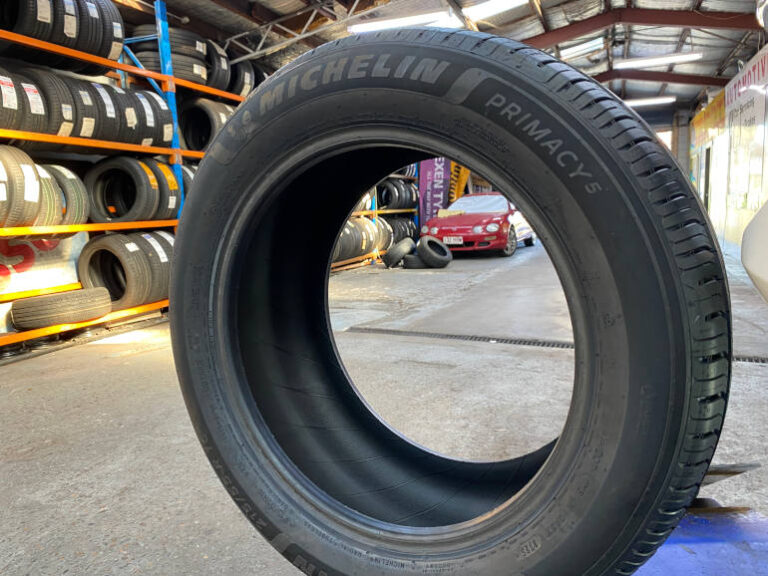
The Michelin Primacy 5, launched in 2025, is an example of a tyre developed to meet the changing requirements — and it’s a tyre that deserves a place in modern fleet strategies.
Key features include:
- Low rolling resistance – Improves energy efficiency in petrol, diesel, hybrid and electric vehicles — helping EVs go further between charges and lowering fuel use in ICE vehicles.
- Exceptional wet weather grip – even when worn – Independent tests show up to 13% shorter braking distance when worn compared to other premium brands — delivering real-world safety over the full life of the tyre.
- Long-lasting performance – Thanks to Michelin’s MaxTouch Construction, the Primacy 5 wears evenly and delivers up to 24% more mileage than leading competitors — reducing whole-of-life cost.
- Quiet, comfortable ride – Fleets with high driver engagement (e.g. sales reps, novated lease users) will appreciate the Silent Rib Gen-3 technology that reduces vibration and road noise, especially on long drives.
- Available in a wide range of sizes – With availability from 16 to 19 inches and more sizes arriving in 2025, the Primacy 5 can support consolidation across mixed vehicle platforms without compromising on performance.
More Than a Tyre — A Fit-for-Purpose Policy Tool
Adopting the Michelin Primacy 5 isn’t just a product decision — it’s a policy enabler. Fleet Managers can:
- Tailor tyre selection to actual vehicle use
- Reduce driver complaints about noise or handling
- Meet EV performance expectations
- Lower emissions and fuel use
- Maximise safety throughout the tyre’s life
It’s also a reminder that tyre technology is constantly evolving. The old habit of defaulting to whatever was fitted at delivery ignores advances in rubber compounds, tread design, and vehicle compatibility. Fit-for-purpose means keeping pace with what’s available — not just what’s familiar.
The Takeaway: Update the Tyre Policy Before the Fleet Does It for You
As fleets grow more diverse, a static tyre policy based on ‘like for like’ becomes a liability. Whether your fleet is 80% ICE with a few EVs, or moving rapidly towards electrification, the right tyres can help you meet multiple objectives — from driver satisfaction and safety to cost control and sustainability.
The Michelin Primacy 5 is a smart fit-for-purpose solution that reflects the changing landscape of modern fleet management — and it’s ready now to support your next tyre policy refresh.