

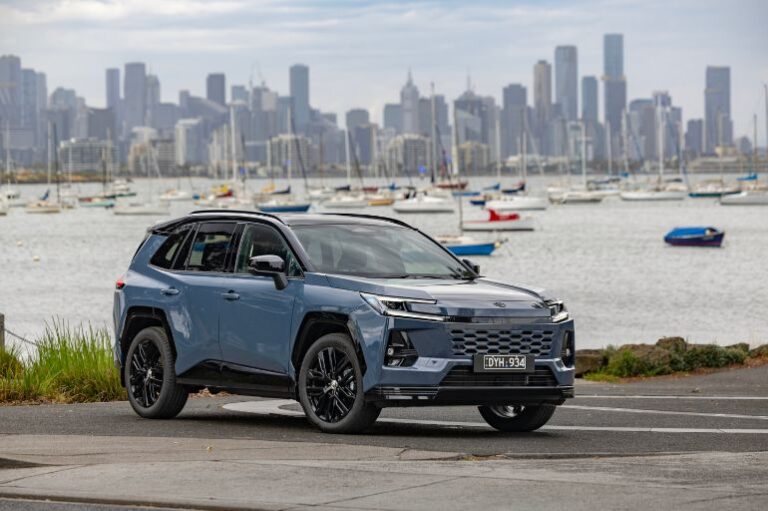
There’s no recall, no safety scare, and no sudden loss of confidence in Toyota. But for the next few months, government fleets across Australia are likely to pause purchases of the new Toyota RAV4.
The reason is simple. Paperwork. More specifically, a missing star rating.
It’s not about safety — it’s about compliance
A Toyota spokesperson has confirmed that the all-new RAV4 has received significant upgrades to both passive and active safety systems compared with the outgoing model. However, an official ANCAP rating will only be confirmed after a product update scheduled for the second half of 2026, designed to meet the latest testing protocol requirements.
The vehicle is expected to be assessed under the European testing program later this year, aligning with the updated 2026 safety standards. That timing matters.
Because many government procurement policies require a current five-star rating from ANCAP before a vehicle can be approved for purchase — regardless of how safe the vehicle may actually be.
Until that rating appears, the order books should be closed. But will they?
Procurement rules don’t bend — even for the best sellers
Government fleets operate under strict procurement frameworks designed to manage risk, ensure transparency and demonstrate due diligence. One of the most common requirements is straightforward: The vehicle must hold a current five-star ANCAP rating.
No rating, no purchase. It’s a binary decision, not a judgement on the vehicle itself.
That means even Australia’s most popular fleet SUV can find itself temporarily sidelined, not because it is unsafe, but because the certification process hasn’t caught up with the production schedule.
Hyundai has already walked this path — and stayed there
The situation might feel temporary for Toyota, but another manufacturer has already demonstrated how long these procurement rules can linger.
When the latest generation Hyundai Kona launched in 2023, Hyundai Motor Company faced the same initial pause while waiting for its safety assessment.
But the outcome was different.
The Kona ultimately received a four-star ANCAP rating, which meant many government fleets still could not purchase it under their procurement policies. The vehicle effectively remained locked out of a significant portion of the government fleet market, despite strong performance, modern safety technology and competitive pricing.
That’s where the irony begins.
While government fleets stood on the sidelines, retail buyers embraced the Kona. It became a genuine sales success story for Hyundai in the private market, proving that consumer demand does not always align with fleet procurement rules.
Why ANCAP matters
Fleet procurement is a bit like dress codes. You can have the best suit in the room — well tailored, reliable and perfectly functional — but if the invitation says black tie and you arrive in business casual, you’re not getting through the door.
The new Toyota RAV4 is still a strong performer, with improved safety systems and updated technology.
But until the five-star badge is stitched onto the lapel, government fleets will be waiting politely at the entrance.