
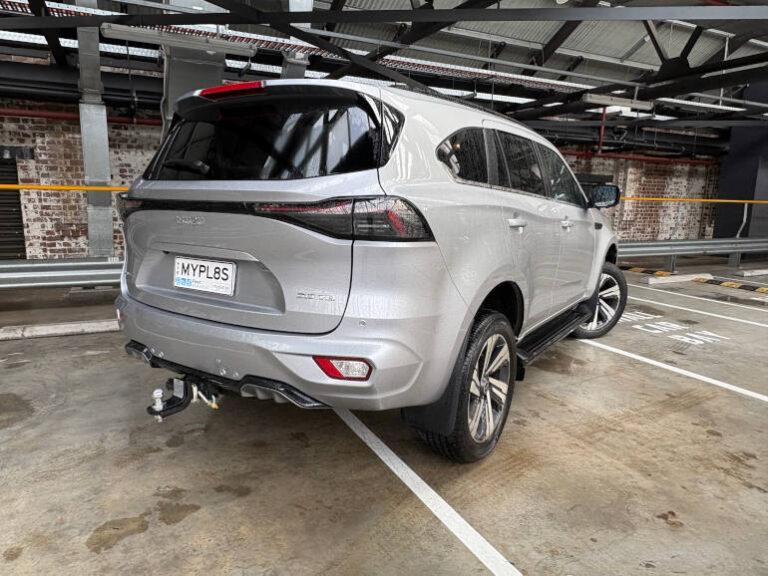
Isuzu Ute Australia (IUA) says its focus over the next 12 months will be on staying closely aligned with fleet customers as the National Vehicle Emissions Standards (NVES) begin to influence purchasing decisions and vehicle choice.
A key part of that plan will be strengthening customer engagement and maintaining a product offering that balances performance, efficiency and practicality.
“IUA plans to stay relevant with Fleet buyers and over the next 12 months we will focus on product – working closely with buyers, providing access to the 2.2-litre engine (now available on D-MAX and MU-X) for extended evaluations,” a company spokesperson said.
The brand is also introducing Client Advisory meetings, designed as round-table discussions to gather feedback on future product planning and ensure upcoming models continue to meet operational needs.
Experience drives fleet success
Isuzu Ute’s national fleet team has been a major factor in its consistent growth.
“Nothing new here. We continue to ensure our fleet customers have access to experienced fleet professionals with IUA Fleet Managers located across all the regions, as well as strong support from our corporate office. None of the fleet sales team have been at IUA for less than eight years and they know their customers and the product extremely well,” the spokesperson said.
Fleet customers appreciate that consistency and expertise, along with the product strengths that underpin the brand’s reputation.
According to Isuzu Ute, the reasons fleets continue to choose D-MAX and MU-X are clear:
- Great Total Cost of Ownership (TCO)
- Fuel economy that exceeds expectations
- Reliability and durability
- Strong safety performance across all variants, with no need to pay extra for safety features
Fuel efficiency and fit-for-purpose remain key
Fleet operators remain focused on reducing emissions, but not at the expense of practicality.
“Fleet customers are telling us that they are focused on reducing CO₂, so fuel economy and CO₂ improvements are welcomed – but at the same time, the vehicles have a job to do and need to be fit for purpose. This is the type of feedback that makes us believe the new 2.2-litre drivetrain will find its way into the carparks of many large fleet operators.”
The new 2.2-litre engine – now available on both D-MAX and MU-X – is central to IUA’s NVES response, offering improved efficiency while maintaining towing and payload capability.
NVES and product planning
While NVES is prompting many brands to rethink their line-ups, IUA is confident in its direction.
“The 2.2-litre drivetrain is a step in the right direction and we know that ISUZU Japan is constantly developing new product for the future. We will work closely with our customers to ensure that we continue to deliver vehicles that make sense in Australia.”
Fleet and novated favourites
The D-MAX SX and MU-X LS-M continue to lead the fleet segment, offering the best TCO and standardised safety. On the novated side, buyers are showing strong interest in the X-TERRAIN grades of both D-MAX and MU-X, as well as the LS-T MU-X.
Isuzu Ute also reports growing demand for the newly introduced 2.2-litre X-RIDER, particularly from younger novated buyers and small business fleets.
Technology and efficiency updates
For the upcoming 25.5 model year, the big change is the introduction of Idle Stop Start (ISS) across the range – a move aimed at improving fuel economy and further reducing CO₂ output.
“This is another step towards improved fuel economy and reduced CO₂ output that we know interests our fleet buyers.”
Electric D-MAX under evaluation
While production of an electric Isuzu pick-up has commenced in Europe, there’s no confirmed timeline for Australia.
“We are currently unable to comment on specifics relating to future model plans. That said, as part of our due diligence, IUA will continue to monitor local needs and evaluate the reception of BEVs locally, and work with the factory to provide a product mix to meet Australian consumer needs.”
“While Isuzu Motors Japan have advised that they started production on an electric pick-up (ute) for European markets in April 2025, we have no further information to share at this point in time.”
Diesel remains dominant – for now
Looking ahead, IUA expects diesel to remain the mainstay for fleets until new technologies deliver equivalent performance and affordability.
“We believe fleets are open to change; however, they also require their vehicles as ‘tools’, and those tools need to be fit for purpose and provide an affordable TCO. As technology advances with alternative powertrains, we believe fleets will make the necessary comparisons and cost analyses.”
Summary
Isuzu Ute’s approach to fleet growth in the NVES era is grounded in collaboration, proven performance, and a gradual transition to more efficient technologies. With strong local expertise and a customer-focused mindset, IUA is ensuring that Australia’s fleet buyers have reliable, fit-for-purpose options – both now and into the low-emission future.
- Connected vehicles put data security on the fleet agenda
 The recent Four Corners program examining connected vehicle security may have been eye-opening for many motorists, but for Fleet Managers it should reinforce an issue that has been developing for years: a modern vehicle is increasingly a connected device as well as a transport asset. Connectivity is becoming standard across the automotive industry. Vehicles can communicate
 - EV sales surge exposes a growing gap in Australia’s new-car market dataAustralia’s new-car market edged higher in September, but the headline result masks a much more significant change taking place underneath: almost one in four new vehicles sold during the month was battery electric. According to the Federal Chamber of Automotive Industries (FCAI), 102,924 new vehicles were sold in September 2026, an increase of 0.9 per
- MG sees EV interest rise as Australian range expandsMG Motor Australia says its electric vehicle sales are accelerating as the company prepares to expand the choice of vehicles and powertrains available to Australian buyers. Speaking during the media tour at Everything Electric in Sydney, MG Motor Australia Marketing Director Dimitri Andreatidis said changing Australian buying patterns are being reflected in MG’s own results.
- FleetPartners takeover race narrows to three as Sumitomo joins the huntThe FleetPartners takeover contest has entered a more serious phase, and the latest update confirms something the market already suspected: there is real strategic value in this business. SG Fleet, ORIX and the Sumitomo Consortium have all returned with higher offers after getting access to FleetPartners’ books, while Element Fleet Management has decided not to
- Novated leasing growth pushes Smartgroup past 91,000 vehiclesSmartgroup has reported continued growth in its novated leasing business, with the number of leases under management reaching 91,600 at the end of June 2026. The total was up 11,600 vehicles, or 15%, compared with the same period a year earlier. Smartgroup had 80,000 novated leases under management at June 2025 and 64,600 at June