

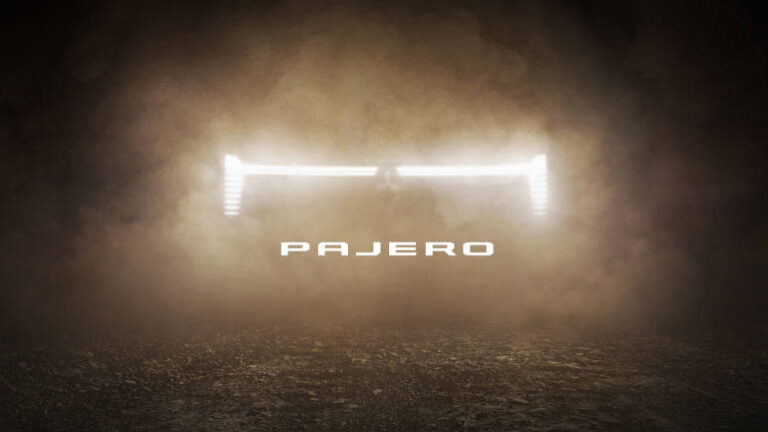
Mitsubishi Motors has officially confirmed the return of the Pajero, announcing that an all-new version of the legendary off-road SUV will be unveiled at a global premiere in autumn 2026. The announcement marks the comeback of a model that has been absent from international markets since 2021.
Few vehicles carry the heritage of the Pajero name. First launched in 1982, the Pajero helped define the modern SUV segment by combining genuine four-wheel-drive capability with passenger car comfort. Over four generations, more than 3.25 million units were sold across 170 countries and regions, making it one of Mitsubishi’s most successful and recognisable vehicles.

The Pajero also built a formidable reputation in motorsport. Its success in the Dakar Rally remains one of the most impressive records in off-road racing, with 12 victories including seven consecutive wins. Mitsubishi said these achievements helped establish the Pajero’s reputation for durability, handling stability and exceptional off-road performance.
For fleet buyers and commercial operators, the most significant detail in the announcement is the vehicle’s platform. The all-new Pajero will be based on the robust ladder-frame architecture used in the latest Triton ute, with Mitsubishi undertaking model-specific development of the cabin, front suspension and rear suspension.
This suggests the new Pajero will retain the heavy-duty credentials that made previous generations popular with government agencies, emergency services, mining operators and regional fleets that require genuine off-road capability.
Mitsubishi said the new model will deliver “outstanding off-road capability” while also offering a refined and comfortable ride. The company is positioning the vehicle as a flagship SUV that embodies its long-standing focus on adventure and challenging driving environments.
The announcement also provides a strong indication of Mitsubishi’s future product direction. While many manufacturers are moving towards monocoque SUV platforms, Mitsubishi is doubling down on a traditional body-on-frame architecture for its largest SUV. This approach should appeal to customers who need towing capability, durability and off-road performance rather than purely urban-focused SUV characteristics.
The return of the Pajero also strengthens Mitsubishi’s SUV portfolio at a time when demand for large, capable family and fleet vehicles remains strong across Australia and many global markets.
At this stage, Mitsubishi has not released technical specifications, powertrain details or market availability information. However, with the vehicle sharing its foundation with the new-generation Triton, industry observers will be watching closely to see whether Mitsubishi introduces diesel, hybrid or other electrified powertrain options as it balances customer demand with increasingly stringent emissions regulations.
More details are expected closer to the world premiere in autumn 2026, but one thing is now certain: the Pajero name is back, and Mitsubishi intends for it to reclaim its place as the brand’s flagship off-road SUV.