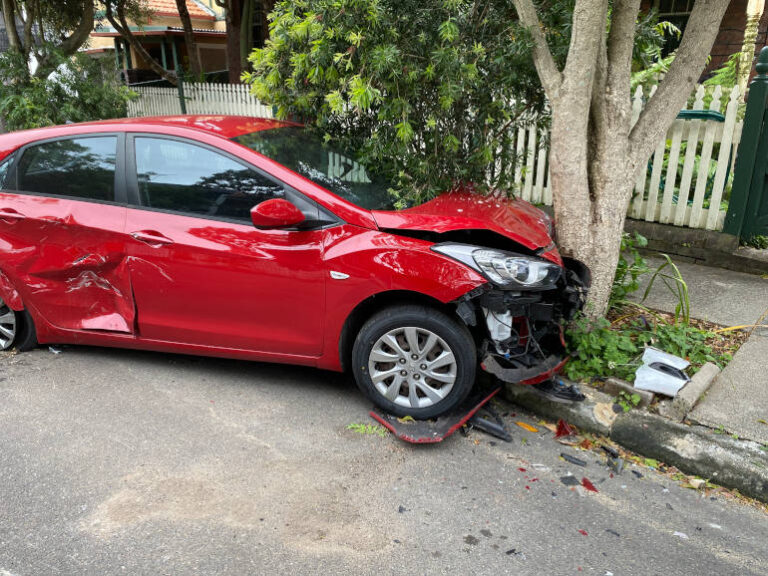
For fleet managers, knowing how much the organisation spends on vehicle repairs should be straightforward. But according to DingGo Co-Founder and Chief DingGo, Shaun Janks, the true cost of accidents can be much harder to identify than many fleets realise.
DingGo operates in the accident management space, using a digital platform to connect the different parties involved when a vehicle is damaged — including fleets, insurers, repairers, assessors, towing providers and replacement vehicle suppliers.
For Janks, one of the biggest opportunities created by digitising accident management is giving fleet managers visibility of costs and performance that may previously have been scattered across different systems, suppliers and processes.
“One of the earliest surprises I had in this space was just how many customers didn’t know the basics,” Janks said.
“The average fleet manager had no way to know their costs, like their true costs — where are we spending money across the whole repair cycle, because so much of it wasn’t being captured.”
For some organisations, information from an insurer may only represent part of the total financial and operational impact of an accident.
There can also be repair costs, replacement vehicles, towing, administrative effort and, importantly for operational fleets, the cost and disruption caused by vehicles being off the road.
Janks said providing visibility was therefore the first step.
“Step one was give visibility to what’s going on, because so many companies didn’t even have a baseline,” he said.
“And then from the baseline, it’s like, all right, give someone a baseline. Now, how can we improve that along the way?”
Moving accident management into one platform
DingGo was created around the idea of providing a digital-first experience for vehicle repairs.
Janks said accident repairs had traditionally involved disconnected pieces of information being exchanged between multiple parties.
“Think emails. Think sometimes that quote from a panel beater on the back of a handkerchief,” he said.
DingGo developed a central platform to bring the participants in the repair process together and capture the transactions digitally.
That approach can provide fleet managers with information including average repair costs, days off road, repair network performance and driver behaviour.
It also means managers can begin asking more detailed questions about the performance of their fleet and suppliers.
“Do I have a good insurer? Am I using a good repair network? Am I paying fair prices?” Janks said.
“What about my drivers? Is my driver behaviour safe? Is it not safe?”
For fleet managers, these questions go beyond simply processing an accident claim. They are part of understanding how effectively the fleet is being managed.
Downtime can be as important as repair cost
One of the metrics Janks believes fleets should closely monitor is vehicle downtime.
“That’s one of the key metrics we look at — vehicle downtime, like days off road, repair days,” he said.
A vehicle sitting at a repairer can have consequences well beyond the repair invoice, particularly where vehicles are required to deliver services or generate revenue.
DingGo uses its network and digital allocation process to help identify repairers with available capacity rather than automatically sending every vehicle to the same supplier.
Janks used the example of two repairers where one may be busy while another has capacity available.
“If you only ever send to repairer B, you’re going to have more downtime,” he said.
“But if you can utilise repairer A in those particular weeks that repairer B is busy, you’re tapping into unused capacity in the marketplace.”
From knowing the cost to managing the cost
For Janks, the value of collecting accident data is not simply producing another report. It is about giving fleet managers enough information to make decisions.
Once an organisation knows its repair costs, downtime and incident trends, it can begin measuring whether changes to suppliers, processes or driver management are delivering an improvement.
That is where data becomes particularly powerful.
“I’m a data nerd at my core, and I think many of us here are,” Janks said. “It’s amazing what the numbers can tell you because they don’t lie.”
DingGo is a sponsor of the Fleet News Group Awards, which recognise organisations and individuals demonstrating excellence across areas including fleet management, technology, safety and sustainability.
The connection between the awards and DingGo’s approach is clear: improvement starts with understanding current performance.
A fleet may believe it has competitive repair costs, good accident processes and acceptable downtime. Having reliable data provides the opportunity to prove it — and identify where there is still room to improve.
For fleet managers looking to increase the maturity of their operation, understanding the true cost of accidents could be a useful place to start.