

Fleet management has become an increasingly complex professional discipline, and Summit Fleet Leasing and Management Managing Director Darren Gore believes the people doing the job deserve greater recognition.
Summit is supporting the inaugural Fleet News Group Awards as a sponsor, with Gore saying the program provides another way for the industry to recognise organisations and individuals delivering strong fleet outcomes.
Speaking on the Fleet News Group podcast, Gore reflected on the breadth of responsibilities carried by fleet professionals and why Summit chose to support the Awards.
While Summit has its own people managing vehicles and customer relationships, Gore also acknowledged the significant role performed by fleet managers inside customer organisations.
“I shouldn’t say ‘just managing’, because that’s a big job.”
It was a brief comment, but one that captures an issue familiar across the industry.
Fleet managers are often responsible for assets worth millions of dollars while simultaneously dealing with vehicle selection, lifecycle costs, maintenance, safety, sustainability, technology, procurement and day-to-day operational requirements.
Yet much of that work can happen quietly in the background.

Recognising fleet management as a profession
Gore said one reason Summit became involved with the Awards was its support for organisations contributing to fleet management education and professional development.
For Summit, that support reflects the role fleet professionals play both within its own business and among its customers.
Fleet management today requires a mixture of technical, commercial and operational skills.
A fleet professional might be evaluating vehicle whole-of-life costs one day, preparing information for a CFO the next and then working on a safety, sustainability or technology project.
Increasingly, they are also expected to interpret growing volumes of vehicle and operational data.
That combination is why recognising fleet management excellence matters.
The best fleets are not simply purchasing vehicles efficiently. They are managing a complex workplace asset while balancing cost, risk, environmental performance and operational requirements.

Excellence can take different forms
The Fleet News Group Awards were created to recognise that breadth.
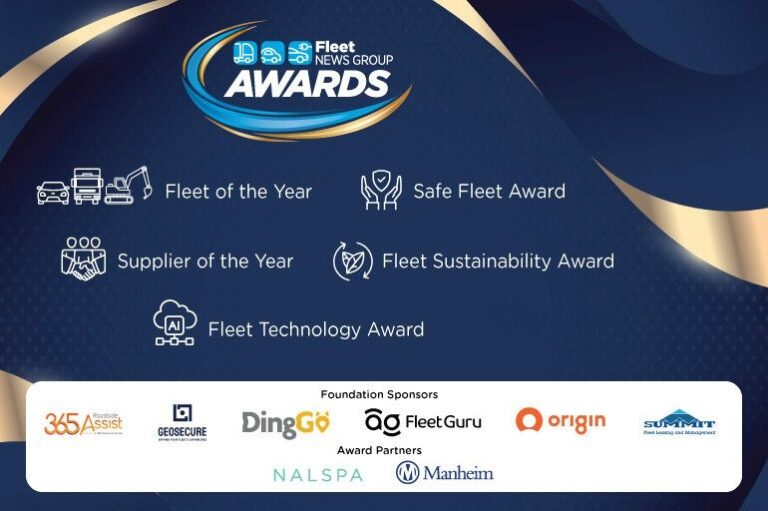
Fleet of the Year considers organisations demonstrating strong overall fleet management performance, while separate categories recognise achievements in sustainability, safety and technology.
Each category reflects a different part of the modern fleet role.
A sustainability project might involve transitioning vehicles to lower-emission technologies while also addressing charging, operational suitability and workforce engagement.
A safety program may combine policy, technology, driver behaviour and leadership.
Technology excellence can involve sophisticated systems, but it can also come from using existing information more effectively to solve an operational problem.
And Fleet of the Year requires an organisation to demonstrate performance across several of these areas at the same time.
For Gore, recognition programs also help bring attention to the work being completed by fleet professionals throughout the industry.
Sharing ideas across the fleet community
Another theme from the podcast conversation was Summit’s willingness to share what it has learned through its own technology development.
The company has invested in business intelligence and AI tools, including its AI Fleet Insights platform, but Gore said the objective is not to keep every idea inside the organisation.
Summit has also assisted customers with their own AI journey. That willingness to share ideas reflects a broader benefit of an industry awards program.
Finalists provide practical examples of what other fleets are doing and allow the wider fleet community to see different approaches to familiar challenges.
An award may ultimately recognise one organisation, but the case studies behind the finalists can provide ideas for many others.
For fleet managers working through similar safety, sustainability or technology challenges, seeing how another organisation approached the problem can be as valuable as the award itself.
Keeping people at the centre
Technology was a major part of Gore’s podcast conversation, particularly the way AI is making fleet information faster and easier to analyse.
However, he repeatedly returned to the importance of people.
Even as technology becomes more capable, Gore believes fleet expertise remains essential.
“The fleet manager, the human, is still the expert.”
That is particularly relevant when considering what fleet excellence looks like.
Technology can produce information. Vehicles can become safer and cleaner. Systems can automate administrative work.
But achieving an operational result still requires people to identify problems, make decisions, engage stakeholders and implement change.
Recognition therefore needs to extend beyond the tool or technology to the fleet teams making those outcomes possible.
Backing the industry
Industry voting is a key part of the Fleet News Group Awards program, giving the broader fleet community an opportunity to review the finalists and recognise the organisations they believe are demonstrating fleet management excellence.
Gore said Summit was interested in seeing the level of engagement the new approach generates.
Summit has operated in the Australian fleet market for close to three decades and forms part of a wider APAC fleet group operating across several countries in the region.
Its decision to sponsor the Awards, Gore said, reflects a continuing commitment to the industry.
“We’re behind the industry.”
For Fleet News Group, the Awards program is intended to make more of the work being done inside fleet organisations visible.
The finalists demonstrate that fleet excellence can take many forms — from safer vehicles and lower emissions to better technology and stronger asset management.
The common element is the people behind those outcomes.
And for an industry that often does much of its best work away from the spotlight, that is worth recognising.