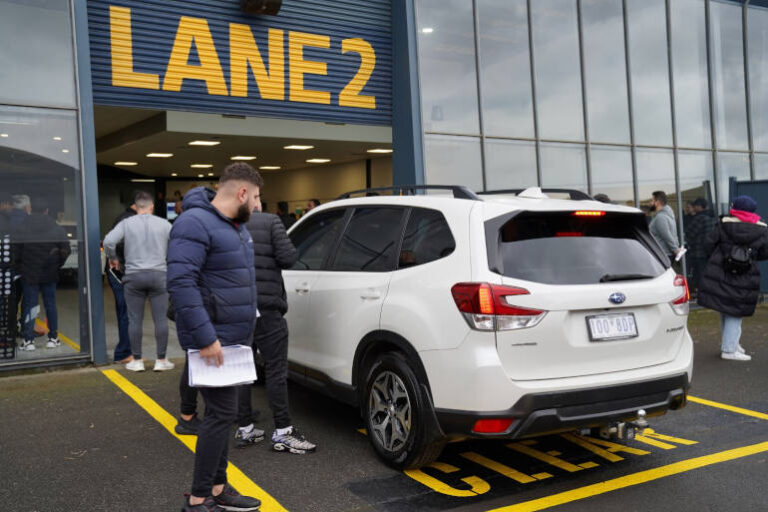
McMillan Shakespeare (MMS) is expecting the changing mix of fleet vehicles to become increasingly visible in the used-vehicle market, with the company forecasting stronger demand for electric vehicles alongside softer demand for internal combustion engine vehicles.
In its FY27 outlook, MMS said “remarketing income [is] to reflect elevated demand for EVs and softer demand for ICE used vehicles”, providing an indication of how the company expects the secondary market to evolve as more electric vehicles enter novated and corporate fleets.
The outlook is relevant for Fleet Managers because resale values remain a major component of whole-of-life cost calculations. A change in used-vehicle demand can affect disposal proceeds, lease pricing and assumptions made when vehicles are first acquired.
MMS has not suggested that demand for used ICE vehicles will disappear, or that the change will occur evenly across every vehicle segment. However, its FY27 outlook indicates the company expects powertrain preference to become a more important factor in remarketing performance.

More EVs are entering the replacement pipeline
The forecast follows rapid growth in electric vehicles across MMS’s novated leasing business.
New BEV sales increased 113% during FY26, with battery electric vehicles accounting for 57% of all new novated lease sales, compared with 31% in FY25. MMS also identified a “shifting vehicle preference towards EVs in novated and fleet” as one of the factors supporting its outlook for FY27.
Rob De Luca, CEO and Managing Director, MMS, said the increase in EV uptake had contributed to the company’s novated leasing performance.
“Growth was further supported by accelerating EV adoption and certainty in the Government’s FBT exemption, with battery electric vehicles accounting for 57% of all new novated lease sales in FY26, up from 31% in FY25.”
For remarketing operations, the effect of that change will build over time. Vehicles being added to fleets and novated lease portfolios today eventually become used vehicles, progressively changing the mix of stock reaching auction and other disposal channels.
That makes the strength of the secondary EV market increasingly important to Fleet Managers assessing residual value risk.
Fleet replacement cycles slowed during FY26
MMS’s Asset Management Services business also experienced slower fleet replacement activity during FY26.
The company said the written-down value of its fleet assets and the number of vehicles being remarketed reflected slowing client fleet replacement cycles. At the same time, MMS reported that remarketing yield benefited from early termination fees during the year.
This distinction is important. The FY26 result does not indicate that all changes in remarketing performance were driven by powertrain choice. Replacement timing was also influencing how many vehicles moved through the disposal process.
MMS finished FY26 with approximately 16,000 fleet units, up 3.3%, while managed-only fleet units grew 30%. The business also secured 20 net new fleet client wins during the year.
Revenue for Asset Management Services increased 1.3% to $188.4 million, although operating income declined 1.7% to $51.7 million and EBITDA fell 4.8% to $27.7 million. MMS also incurred a $0.7 million one-off cost associated with establishing a BPO operation and consolidating car yards for future efficiencies.
Residual assumptions will matter more
For Fleet Managers, the emerging issue is not simply whether an EV or ICE vehicle will attract more demand at disposal. It is how quickly those preferences change during a typical fleet replacement cycle.
A vehicle purchased today may not return to the used market for three, four or five years. By then, the mix of new vehicles, charging availability, government policy and buyer familiarity with used EVs may look quite different.
MMS’s outlook provides one indication that a major fleet and novated leasing provider is already factoring this change into its expectations for remarketing income.
It also creates a more complicated residual-value discussion. While MMS expects elevated demand for used EVs and softer demand for ICE vehicles, its FY26 results show that remarketing outcomes are also influenced by replacement cycles, termination activity and the volume of vehicles actually reaching the secondary market.
For fleet buyers, that reinforces the need to review disposal assumptions alongside acquisition decisions. As the powertrain mix changes, residual value forecasts based primarily on historical ICE vehicle behaviour may become less useful, while the growing number of EVs entering the used market should provide more evidence for setting future replacement and remarketing strategies.