
Imagine if you could look into the future of your vehicles — track wear and tear, predict breakdowns before they happen, and fine-tune performance — all without touching a spanner.
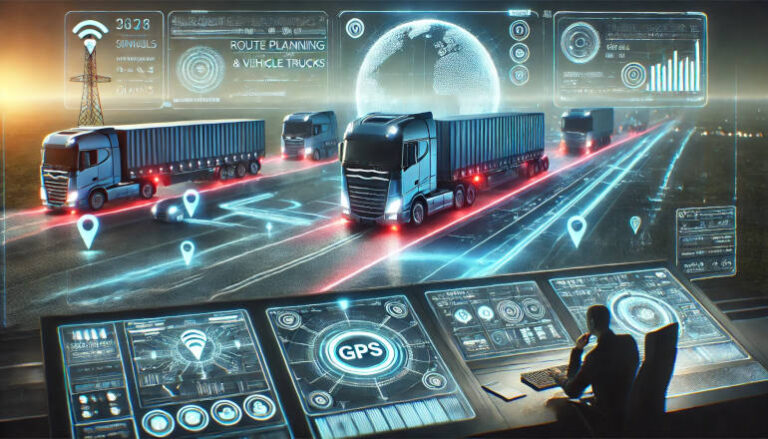
That’s the promise of digital twin modelling: creating a virtual version of your fleet that evolves and adapts in real time with the vehicles on the road. Unlike static simulations, digital twins are continuously updated with live data from the asset they represent, whether that’s a car, truck, or even an entire depot.
For Fleet Managers, this technology could be a game changer, reshaping how fleets plan maintenance, monitor performance, and even model an electric vehicle (EV) transition.
What Is a Digital Twin?
A digital twin is more than a 3D model or simulation. It is a “living” model, constantly fed by telematics and sensor data to reflect the true state of the asset.
Associate Professor Pietro Borghesani, from UNSW’s School of Mechanical and Manufacturing, explains:
“A digital twin doesn’t just simulate, it lives with the machine. You can use the digital history of your machine to control how the asset degradation is evolving and then use that knowledge to streamline your operations. Instead of being reactive to what happens to the asset, it allows us to plan – but with better accuracy.”
In practice, this means a Fleet Manager could see which vehicles are likely to need repair in the next three months, schedule downtime at the least disruptive time, and avoid expensive unplanned breakdowns.
Why Should Fleet Managers Care?
Fleet operations live and die on three fundamentals: safety, reliability, and cost-efficiency. These are exactly the areas where digital twins can deliver value.
- Predictive Maintenance: Instead of relying on manufacturer schedules or waiting for faults, a digital twin can flag issues before they happen. Think of it as condition-based servicing powered by real-time data.
- Optimised Lifecycle Management: By modelling wear and tear, a digital twin can help determine the true replacement point for vehicles, balancing whole-of-life costs with uptime.
- EV Transition Modelling: Perhaps most importantly, digital twins can be used to simulate how electric vehicles would fit into your fleet. By feeding in duty cycle data — routes, loads, energy use — a digital twin can test how EVs would perform before you commit to a purchase.
With the NVES and organisational decarbonisation targets placing pressure on procurement decisions, this ability to test scenarios virtually could save fleets from costly mistakes.
Data + Expertise = Success
The backbone of a digital twin is data, and Fleet Managers are already sitting on a goldmine thanks to telematics, GPS, fuel card data, and maintenance logs. But data alone is not enough.
Professor Zhongxiao Peng from UNSW points out:
“To build a good digital twin, you need both data and strong fundamental knowledge of how the system works.”
This is particularly relevant for Fleet Managers in mixed-vehicle operations. You may not have endless datasets for every type of fault or operating condition — but by combining expert knowledge with the data you do have, a useful and accurate model can still be built.
Embedding Knowledge in the Fleet
Another overlooked benefit is knowledge retention. Digital twins can act as repositories for engineering and operational expertise, ensuring that insights from experienced staff don’t walk out the door when they retire or change roles.
For medium-sized fleets that struggle to retain highly specialised staff, this means the twin can support new Fleet Managers by embedding hard-won knowledge into the system.
The Challenges Ahead
Of course, there are barriers. Cost, data quality, privacy concerns, and the need for skilled people to build and interpret the models all stand in the way of mainstream adoption. Artificial intelligence (AI) is helping reduce some of the workload, but UNSW experts warn of the risks of treating AI as a “black box.”
As A/Prof. Borghesani notes:
“Your AI model might tell you that the system will fail in three months, but without insights into why the algorithm came to this conclusion, engineers and operators would often lack the confidence to take action.”
The likely future is a hybrid approach: physics-based models combined with machine learning, enhancing rather than replacing expertise.
Scaling Up to the Whole Fleet
The real promise for Fleet Managers is scale. It’s not just about monitoring one truck or van, but building a digital twin of the entire fleet.
Imagine:
- A dashboard showing which vehicles are at highest risk of breakdown.
- A model forecasting total maintenance spend for the next 12 months.
- An EV transition scenario showing where charging bottlenecks will occur.
As fleets grow more complex and the push for emissions reduction accelerates, tools like this could become as essential as telematics is today.
Looking Forward
Digital twins are already transforming manufacturing, energy, and healthcare. Fleet management may be next. With pressure mounting to deliver safer, more sustainable, and more cost-effective transport, the ability to test, predict, and optimise in a virtual environment offers clear advantages.
The question for Fleet Managers is no longer what is a digital twin? — it’s how soon will you build one for your fleet?
- Hyundai Reveals a Bold New Chapter for Tucson
 Hyundai’s next-generation Tucson will arrive in Australia in mid-2027 with a hybrid-only line-up, bringing a larger body, redesigned cabin and new digital technology to the SUV market. Unveiled globally in New York, the all-new Tucson introduces Hyundai’s next-generation hybrid system and a design direction the company calls “Art of Steel”. For fleet managers planning replacements
 - Why Euclidic believes fleet telematics shouldn’t be self-serviceFleet telematics platforms have become more capable, but Euclidic Systems believes giving fleet teams more technology does not automatically give them better fleet management. The company’s view is that telematics should not be treated as a self-service software purchase where customers are left to configure the system, interpret the data and maintain the internal knowledge
- Commercial Vehicle Safety Must Become a PriorityAustralia’s improving passenger vehicle safety record is not being matched across commercial vehicles, with new figures highlighting a sharper rise in fatalities involving light and heavy vehicles. ANCAP SAFETY has welcomed the Australian Government’s Mid-term Review of the National Road Safety Strategy 2021–2030, particularly its recognition of the contribution safer vehicles are making to reducing
- From incident to fleet redesign: what City of Gold Coast can teach fleet practitionersA serious workplace incident involving a City of Gold Coast tipper truck provides a powerful example of why fleet safety goes well beyond driver behaviour — and why fleet practitioners have an important role in designing, procuring and managing safer vehicles. The lessons from the incident, and the extensive work undertaken by the City of
- EV sales surge exposes a growing gap in Australia’s new-car market dataAustralia’s new-car market edged higher in September, but the headline result masks a much more significant change taking place underneath: almost one in four new vehicles sold during the month was battery electric. According to the Federal Chamber of Automotive Industries (FCAI), 102,924 new vehicles were sold in September 2026, an increase of 0.9 per