
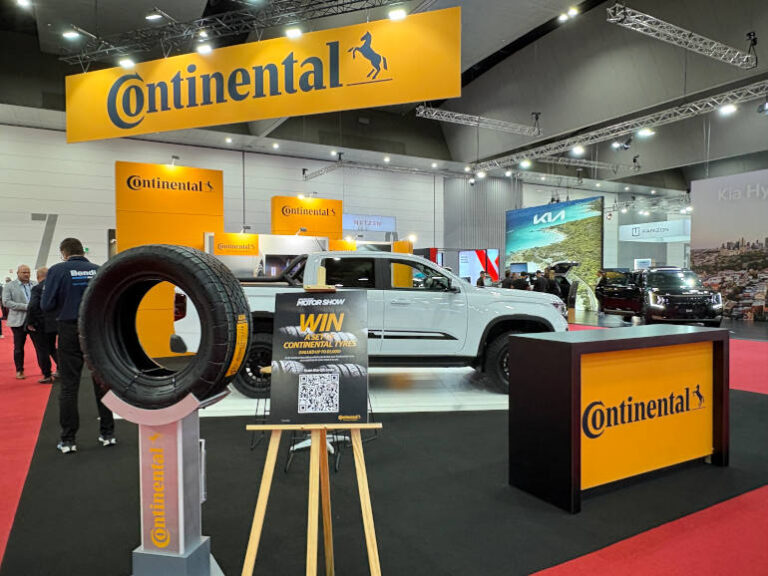
Continental used its presence at the 2026 Melbourne Motor Show to reinforce its long-term commitment to the Australian market while highlighting how tyre technology is adapting to changing vehicle trends, particularly the growth of electric vehicles (EVs).
For fleet buyers and Procurement Managers, tyres are often viewed as a routine operating cost. But as vehicle technology evolves, tyre performance is becoming more closely linked to energy efficiency, safety, and whole-of-life costs—particularly for fleets transitioning to low-emission vehicles.
Building Recognition in a Competitive Market
Speaking at the event, Mitchell Golledge, East Region Asia Pacific – Head at Continental, explained that participation in major automotive events plays a role in strengthening brand recognition in a relatively young market for the company.
Golledge noted that while Continental has a long global history, its direct presence in Australia is more recent.
“We’re 150 year old brand on a global basis in Australia, we’re a relatively newcomer. We’ve only been here for the last 20 years in our own right.”
He said the company has increased investment in brand visibility over recent years, aligning its presence with industries where tyres remain central to vehicle performance and safety.
“The motor show is just one of those that we see as a good synergy with tyres. Motor Cars and tyres, they go hand in hand with each other.”
For fleet operators, this reflects a broader trend where suppliers are focusing more on engagement and education rather than simply product promotion—particularly as vehicle technology becomes more complex.
Retail Pressure and the Cost-of-Living Environment
Golledge also addressed the visibility of tyre promotions in the market, noting that increased marketing activity is less about structural change in the industry and more about competition for customer attention during periods of economic pressure.
“The intensity of those promotions, they become a lot more visible, because retailers put a lot more of those promotions onto the media formats now.”
He explained that the underlying dynamics of the tyre market have remained consistent over time, even as consumer behaviour shifts.
“The promotions have always been there, but they’re not sort of changing between the retailers.”
For fleets managing operating budgets, this reinforces the importance of structured procurement processes and supplier benchmarking rather than relying on short-term promotional pricing.
EV Growth Is Driving New Tyre Requirements
One of the more practical takeaways for Fleet Managers relates to the changing technical requirements of tyres fitted to electric vehicles.
Golledge confirmed that EV-specific tyre development is already well established globally.
“We’re currently on 17 of the top 20 manufacturers electric vehicles on a global basis. So our tyres sit on those cars.”
He explained that the differences in vehicle design—particularly battery weight and torque delivery—create new performance demands that must be considered during vehicle specification.
“There’s a different requirement on a tire. So you can use the same tyre, but if it’s not tuned… it’ll still perform, but it does have better performance if you tune it.”
For fleet teams evaluating electric vans or passenger vehicles, this has direct operational implications. Tyre selection can influence range, energy consumption, and wear rates—factors that feed directly into Whole-of-Life Cost calculations and replacement planning.
Focus on Core Fleet Segments
Golledge also clarified that Continental’s direct focus in Australia remains on passenger vehicles, SUVs, and light commercial vehicles rather than heavy trucks, where distribution partnerships manage the supply chain.
“We’re predominantly into passenger and four by four and white truck vehicles, vans and so forth.”
This aligns closely with the segments currently experiencing the most rapid change as fleets introduce electric and hybrid vehicles into operational roles.
What This Means for Fleet Buyers
The discussion at the Melbourne Motor Show highlights a practical shift in how tyres should be considered within fleet planning.
Historically, tyre selection was largely driven by price and availability. Today, the conversation is expanding to include:
- Energy efficiency and vehicle range
- Safety and braking performance
- Noise and driver comfort
- Durability under higher vehicle weights
- Whole-of-Life Cost implications
As more fleets adopt electric vehicles—particularly vans and passenger vehicles used in urban operations—tyres are becoming part of the broader vehicle optimisation strategy rather than a simple consumable item.
For Fleet Managers and Procurement Managers, the message is straightforward: vehicle technology is changing quickly, and supporting components such as tyres are evolving alongside it. Reviewing specifications, supplier capability, and performance data will become increasingly important as fleets work to balance cost control with safety and sustainability outcomes.