
Fleet sales are predicted to increase from 30 percent to 50 percent of Kia Australia’s total volume from 2026 with the arrival of the Tasman ute in dealerships. With Tasman sales ramping, the following Kias top the fleet sales charts locally:
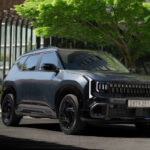
- Sportage midsize SUV
- K4 small car (replaced Cerato)
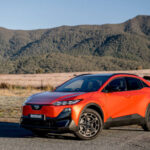
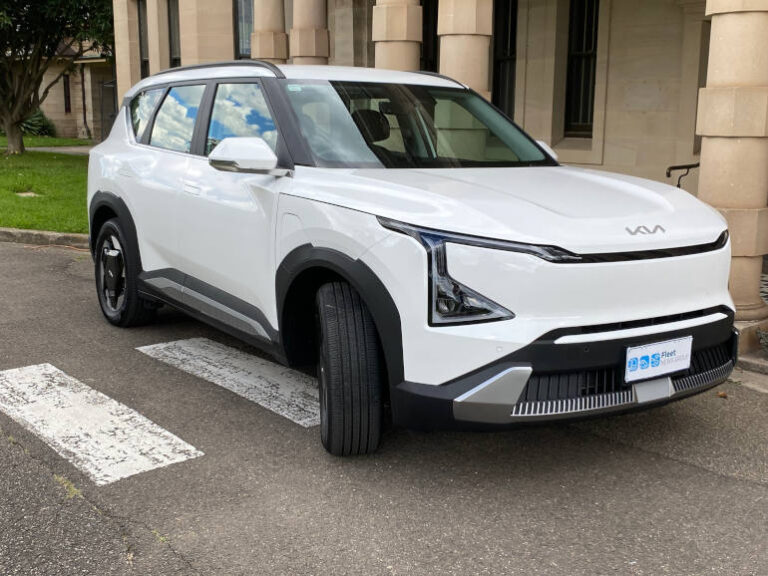
- EV3 and EV5 electric SUVs
With Australia’s New Vehicle Efficiency Standard (NVES) laws now penalising carmakers for selling high-CO2 vehicles, Kia needs to increase fleet sales of its battery electric vehicles (BEVs) and hybrids (HEVs) to compensate.
Fleets have been attracted to Kia’s seven year/unlimited kilometre warranty, extended to government/general fleet operators, while seven years of capped price servicing is afforded by default.
Solid TCO, SMR and RV metrics continue to be conversation starters for Kia Australia’s fleet team, but a range of Kia HEVs/BEVs helping fleets meet their ESG goals is an increasing concentration.
Sportage is Top-Selling Kia to Fleets, More Hybrids Added Recently
Kia expects the Sportage midsize SUV to continue to be its most hotly-demanded model by fleets.
The Sportage lineup was recently broadened to include an all-wheel drive hybrid option, making it more appealing to remote fleets. Previously, the hybrid was front-wheel drive only.
A diesel remains for now, though this may be dropped in future for NVES/CO2 reasons.
Kia fleet boss Chris Forbes explained what fleets buy the Sportage:
“With the introduction of more [Sportage] hybrid models, I think it will continue to be our number-one selling vehicle.”
“Sportage tends to be a lot of government and a bit of corporate [fleet].”
The Sportage hybrid is offered in SX and GT-Line trims, but the HEV powertrain will likely trickle down to cheaper versions in future.
Expected to perform strongly is the K4, which replaced the Cerato in early 2025. Forbes told Fleet News Group the range will soon expand:
“For K4, we have a hatchback [version] coming a little later on this year, and that will give us more opportunity in the fleet space to sell more—along with an upcoming ANCAP result.
“K4 tends to be more in the not-for-profit [fleet] sector.”
Fleet managers take note
Expanded Sportage hybrid offer combines lower CO2 emissions with AWD.
Strong Kia EV Lineup Appreciated By Fleets, Crucial For the Brand
Kia plans to strategically use its lineup of BEVs to generate NVES credits (in order to offset the CO2 emissions of the new Tasman ute, which lacks a HEV or BEV powertrain). Kia sells the following electric cars in Australia:
- EV3 small SUV
- EV5 midsize SUV
- EV6 coupe-SUV
- EV9 large SUV
While Kia’s BEVs are typically dearer than rivals, they are energy efficient and supported by a broad dealer network and long fleet warranty with good ANCAP ratings.
Such TCO/safety/SMR credentials have underpinned demand for Kia EVs but the brand needs to sell electrics in greater numbers in 2026.
Forbes explained:
“We need to sell around 10,000 EVs in 2025 to meet [NVES] targets and fleet will be a big part of that. We are well on track to achieve that, so we haven’t had to go cap-in-hand to customers.
“We have been successful selling [EVs] into Commonwealth Bank, Allianz, IAG and recently Bunnings, which has made a large order of [Kia] EVs…we have worked very closely with those companies to bring on board our EVs to help them with their own ESG strategies.”
Takeaway for fleets
Kia has not deeply discounted its EVs for fleets to hit NVES targets as yet, with large corporates underpinning strong demand for the brand’s electric vehicles for now.
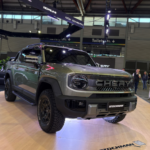
Tasman Ute Could Dethrone Sportage As Most Popular Fleet Kia
Kia Australia has promised its Korean headquarters that it will sell 20,000 Tasmans per year—which will require convincing some fleet managers to switch from HiLux, Ranger, Triton or D-Max:
“Based on our initial conversations with customers, we expect Tasman will be right up there in terms of vehicle sales in the fleet space,” he said.
“Our focus will be to ensure we have the backup, strong residual value and people in place with the knowledge to be able to sell [Tasman] to fleet customers.”
With at least 10,000 sales expected to be generated from fleets per year, Kia will need to quickly convince operators of the merits of its ute.
See our separate article on how Kia plans to make the Tasman a fleet success.
Various strategies have been planned to attain considerable fleet sales for the Tasman to reach the topline number. That could include discounting if sales are not hitting the intended trajectory.
Implication for fleets
Kia Australia has promised Korea it will sell 20,000 Tasmans annually, and fleets could be poised to snatch sharp deals to see this goal met.
Final Word: Kia Fleet Sales Stable, Though Deals Could Emerge
While Kia is satisfied with fleet demand for conventional models like the Sportage, and a number of BEVs, Fleet Managers should be on stand-by for sharp deals on Kias in future where the brand needs certain models to sell in greater numbers.
Not complying with NVES in Australia is expensive for carmakers—meaning Kia needs to sell more HEVs and BEVs, while it is also trying to secure a sustainable role for Tasman. Expect to see considerable fleet action on both lines in 2026.
- Subaru Uncharted review: Familiar Subaru strengths meet a new electric direction
 The Subaru Uncharted arrives at an interesting point in the Australian new-car market. Electric SUVs are no longer unusual, but the challenge for established brands is convincing existing customers that moving to an EV doesn’t mean giving up everything they already like about their current car. That is where the Uncharted makes sense. For people
 - Clarion Puts AI in the Picture for Fleet ClaimsClarion Claims has partnered with RAVIN AI to introduce browser-based vehicle damage capture into its Australian motor claims service, aiming to speed up assessment and reduce delays for fleet operators. The technology allows drivers and fleet managers to photograph exterior vehicle damage using a standard mobile web browser, without downloading an app or using specialist
- Kia Seltos Makes the Hybrid SwitchKia’s all-new Seltos will arrive in Australian showrooms this month with a hybrid-only line-up, a larger footprint and the brand’s first electric all-wheel-drive system for a hybrid model in Australia. The new generation brings a significant change to the Seltos range, with every variant featuring a 1.6-litre hybrid powertrain paired with a six-speed dual-clutch transmission.
- No Mobile Coverage? Council Keeps its Fleet in SightMacDonnell Regional Council has strengthened oversight of its remote fleet with satellite-connected telematics, helping protect employees travelling up to 700 kilometres a day while improving vehicle utilisation and maintenance planning. The Northern Territory council operates approximately 340 vehicles and assets across 13 remote communities in a region comparable in size to Victoria. Its teams deliver
- Chery adds fleet muscle behind its growing vehicle rangeChery is expanding its fleet sales team in Australia, but Chief Operating Officer Lucas Harris says winning fleet business will depend on much more than putting more people on the road. For Fleet Managers, the bigger issue is confidence that the organisation behind the vehicles can support them throughout the ownership cycle. That means fleet