

Fleet managers have more vehicle data available than ever, but turning it into safer operations, lower costs and better decisions remains the real challenge.
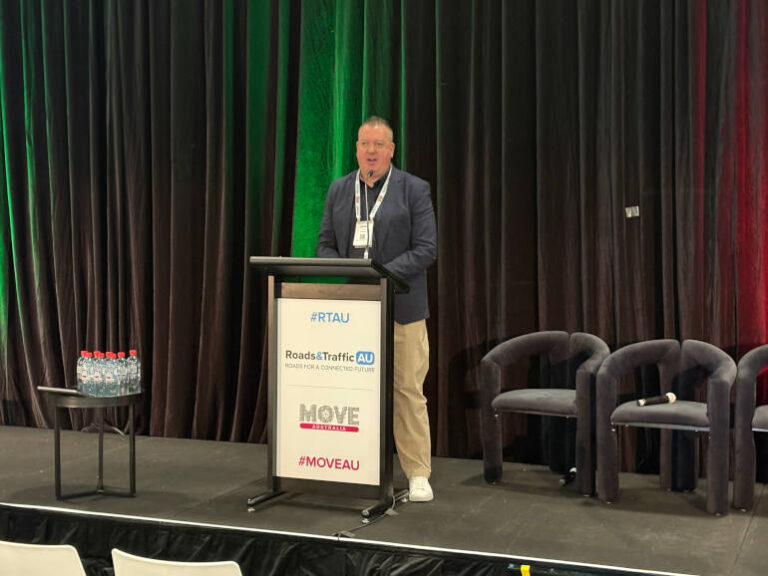
That was a central message from Geotab’s David Brown at MOVE Australia, where he explored how telematics is evolving from a reporting tool into a practical assistant for fleet management.
For readers who missed the session, the takeaway was clear: collecting information is only the beginning. The value comes from understanding what it means and acting on it.
Brown opened with a quick audience check, asking who understood telematics and who had adopted it within their business. The difference in the response highlighted a familiar fleet challenge — awareness of technology does not always translate into implementation.
His presentation provided a useful overview of where the technology is heading, with examples spanning driver safety, maintenance, administration and electric vehicle planning.
From reports to answers
Traditional telematics has often required fleet managers to generate reports, interpret the results and then work out what to do next.
Brown described a shift towards tools that allow users to ask questions directly and receive answers without working through multiple reports.
Geotab’s Ace assistant was one example. A fleet manager could ask which vehicle spent the most time idling during the previous week, then follow up with questions about how the result compared with another period.
The practical benefit is less time spent extracting information and more time available to investigate the cause and take action.
However, Brown stressed that the technology supports the person managing the fleet.
“It is your decision at the end of the day,” he said. “It just gives you that information before you make that decision.”
For fleet managers juggling operational demands, that distinction matters. Faster access to information can support a decision, but understanding the business and its transport requirements remains essential.
Safety needs action in the vehicle
Safety was a strong theme throughout the presentation, with Brown explaining his personal motivation for working in telematics.
“Safety is incredibly important to me,” he said. “Love to see people get home safely.”
He outlined how video telematics can complement vehicle data by identifying behaviours such as tailgating and distracted driving, and providing alerts while the driver is behind the wheel.
Rather than waiting for a manager to review a scorecard, an alert can prompt a driver to adjust their behaviour during the trip.
Brown also described how recorded information can support coaching, helping managers identify the particular behaviours that need attention.
For fleets, the broader lesson is to connect technology with a clear safety process. An alert or recording becomes more useful when someone understands it, responds appropriately and follows through with the driver.
Maintenance information that reaches the right person
Brown also explored how vehicle diagnostic information can support maintenance workflows.
Fault information can be directed to nominated people, with different responses depending on the severity of the issue. He used battery condition as an example of information that could help identify a developing problem before a vehicle becomes stranded.
For fleet teams, this raises a practical question: when a vehicle reports a problem, who receives the information and what happens next?
Building that response into everyday operations can help turn vehicle data into an earlier opportunity to intervene.
Let the work guide EV selection
On electrification, Brown encouraged fleets to take a staged approach informed by their existing operations.
“Our advice has always been not to jump into everything altogether,” he said.
He explained how information from combustion vehicles — including distance travelled, time spent idling and maintenance requirements — can help assess potential electric replacements.
The assessment may identify suitable vehicles for an initial transition, or show that the available options do not yet meet a particular requirement.
For fleet managers, the useful starting point is understanding the work each vehicle performs. That provides a stronger foundation for replacement decisions and charging plans.
Make time for the fleet community
Brown’s session demonstrated why attending fleet events can be valuable, even for experienced practitioners.
A presentation can introduce a different way of approaching a familiar problem. A demonstration can help explain how a tool works. A conversation with another fleet manager can reveal the practical questions to ask before implementation.