

A harsh braking alert can tell a fleet manager that a driver stopped suddenly. What it cannot explain on its own is whether that driver was distracted, following too closely or taking evasive action to protect someone.
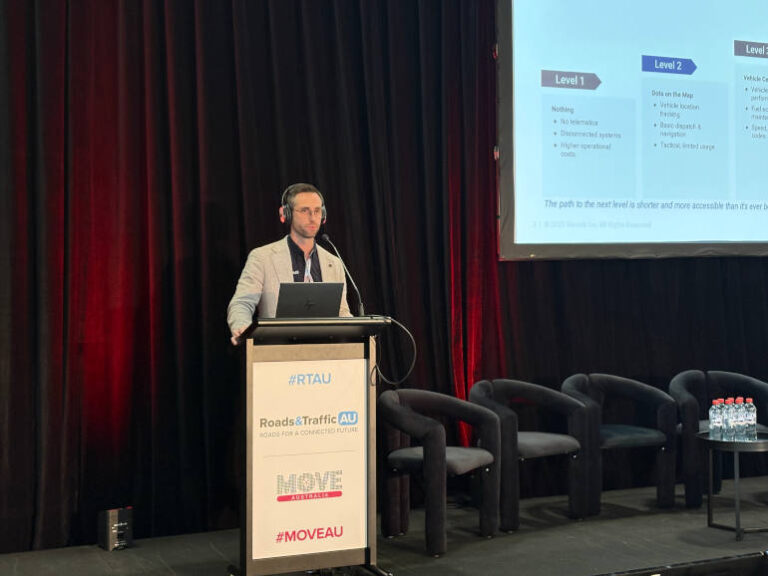
That distinction was at the centre of Geotab’s Will Batty’s presentation to fleet industry attendees, which explored how telematics, video and artificial intelligence can work together to improve driver safety.
For fleet managers who missed the session, the key message was clear: technology can provide better information, but the results depend on how organisations use it to coach drivers and build a stronger safety culture.
“If you don’t have a strong culture and methodology when it comes to this, you get nowhere,” Batty said.
“The culture is absolutely critical to the buy-in from your drivers and your managers.”
Understanding the story behind an alert
One of the most useful examples from the presentation involved a harsh braking event.
Viewed through telematics alone, the event showed a sudden stop and the associated vehicle forces. It was the sort of data point that might appear on a driver scorecard or prompt a coaching conversation.
Video revealed the reason: someone had run in front of the vehicle, and the driver had responded appropriately.
Rather than correcting poor behaviour, the fleet manager had an opportunity to recognise good driving.
“The biggest point to remember is telematics will tell you what happened, but the video will tell you why the event happened in the first place,” Batty said.
For fleet managers, the example highlighted the importance of investigating an event before reaching a conclusion. A safety system should help identify risk while also supporting drivers who make the right decisions in difficult circumstances.
Moving beyond last month’s scorecard
Batty explained that traditional driver scorecards remain an important part of fleet safety management. They help organisations measure behaviour against company policies and identify drivers who may need support.
However, they largely describe events that have already happened.
He outlined how AI can analyse patterns in historical collision data and compare them with behaviour within a fleet, helping managers prioritise potential risks.
According to Batty, factors such as vehicle type, operating conditions and the work being performed provide important context for that analysis.
The practical opportunity is to use historical reporting alongside forward-looking risk indicators. A driver may comply with the rules measured by a scorecard while still displaying patterns that warrant closer attention.
For fleet managers already collecting substantial amounts of data, the value lies in turning that information into a clearer set of priorities for action.
Coaching makes the difference
Batty’s presentation repeatedly returned to the role of coaching.
“What actually changes driver behaviour is the coaching, and without coaching, video is really just surveillance,” he said.
He described two complementary approaches: immediate alerts inside the vehicle and manager-led conversations supported by relevant footage.
In-cab alerts can prompt a driver to increase their following distance or put down a phone at the moment a risk occurs. Coaching gives managers the opportunity to discuss recurring behaviour, explain expectations and recognise improvement.
Batty compared immediate alerts with the familiar seatbelt reminder: feedback linked to an action can help establish a habit.
However, he stressed that alerts alone cannot replace a conversation or acknowledge a driver’s progress.
Start small and learn from the results
A customer example provided attendees with a practical way to think about implementation.
Batty described a 90-day pilot involving 15 vehicles within a much larger fleet. The trial began with cameras collecting baseline information, without alerts or coaching.
That initial phase identified mobile phone use as the priority issue.
The next phase introduced in-cab alerts, followed by manager-led coaching. Batty said the combination helped reduce the behaviour, with coaching strengthening the improvement achieved through immediate feedback.
The example offered a useful lesson for fleet managers considering similar technology: establish a baseline, identify a specific problem and measure how drivers respond as the program develops.
It also demonstrated why implementation deserves as much attention as the equipment itself.
Building driver trust
Privacy and driver acceptance were another important part of the discussion.
Batty described options within Geotab’s offering, including event-based clip uploads, facial blurring and a mode that detects behaviour without providing footage to managers.
He also emphasised the importance of using video to support drivers, including when footage shows they were not at fault.
“It’s not just what went wrong; it’s also acknowledging what has improved as well,” he said.
That approach gives fleet managers a stronger foundation for conversations about safety. Recognising good decisions and explaining how information will be used can help build confidence in the program.
Why being in the room matters
For those attending, the session provided more than an introduction to new technology. It connected the tools with the everyday challenges of managing drivers, interpreting alerts and finding time for meaningful coaching.
The harsh braking example was particularly valuable because it made an abstract discussion about data tangible. Attendees could see how the same event might lead to a very different conversation once the context became clear.
Fleet events create opportunities to explore these questions with presenters and compare experiences with other fleet professionals. A discussion after a session can help a manager understand how another organisation approached driver concerns, structured a pilot or turned information into action.
For Fleet Auto News readers who missed this presentation, the takeaway is to review how safety information is being used within their own organisation. Are alerts prompting useful conversations? Is good driving being recognised? Do managers have enough context to make fair decisions?
Making time to attend fleet events can help answer those questions—and connect fleet managers with a community facing many of the same challenges.