The Kia PV5 arrives with an unusual job to do. It has to convince businesses that an electric van can deliver the practicality expected from a commercial vehicle while also offering the quieter, smoother driving experience that comes with an EV.
After driving the PV5 at its Australian launch, the first impression is that Kia has got much of that balance right.
The PV5 looks distinctive without trying too hard to be futuristic, the cabin is practical, there is plenty of useful storage, and on the road it feels more like a passenger vehicle than a traditional work van.
There are a couple of things that could take some getting used to, particularly the lack of rear windows, but overall the PV5 presents as a well thought-out package for fleets, couriers and trades looking at electrification.
It looks like a van, but not an ordinary one
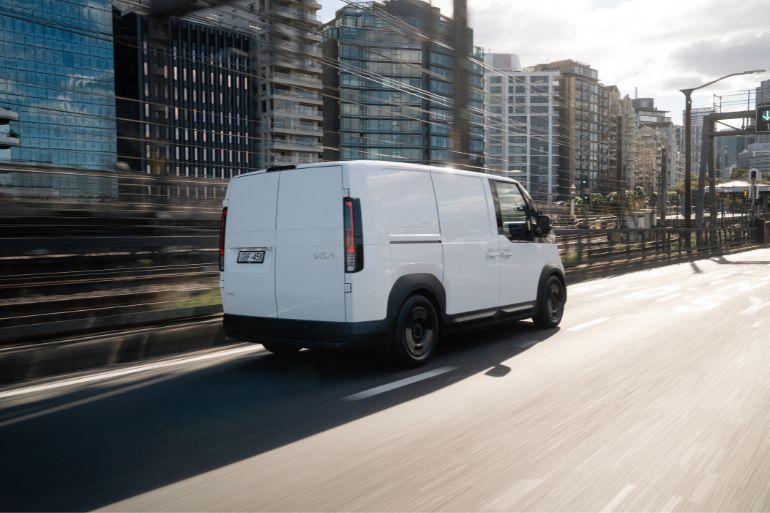
The PV5 has a clean, modern appearance that immediately separates it from the boxier commercial vans already on the road.
The launch vehicle was fitted with steel wheels, although the black aerodynamic wheel covers give them an alloy-style appearance that suits the design.
The Cargo model is offered in white, which makes sense for a commercial vehicle and provides a straightforward base for business signage and fleet branding.
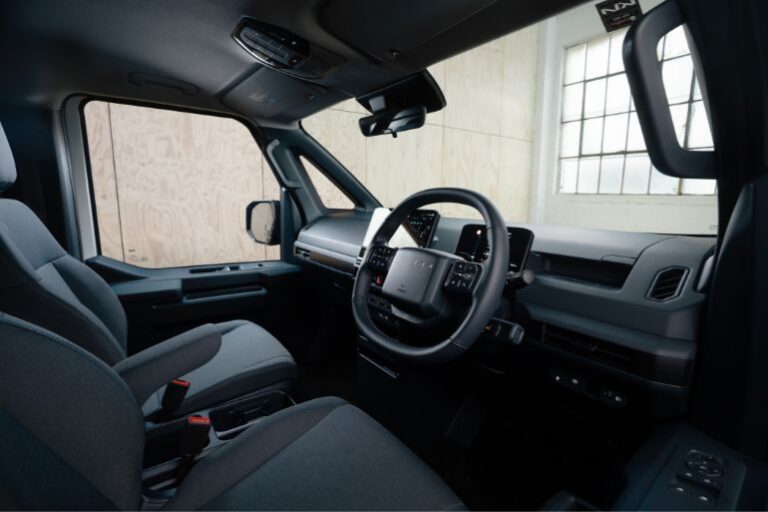
Inside, the first thing that stands out is space.
The cabin feels roomy and there is storage almost everywhere. I counted around six separate storage areas, including compartments beneath the driver and passenger floor areas.
For a driver using the van as a mobile office, that matters. Paperwork, tablets, laptops and other everyday items can be stored without ending up scattered across the passenger seat.
A modern cabin, with one compromise
The dashboard is dominated by the 12.9-inch infotainment screen, with a smaller 7.5-inch digital instrument display positioned in front of the driver.
The driver display initially looks small, but on the road it works well. Speed and other essential information are easy to read and the steering wheel does not obstruct the view.
The infotainment system handles navigation, connectivity and some climate functions. That means there is a degree of touchscreen interaction required for heating and air-conditioning adjustments.
For drivers coming from older commercial vehicles filled with physical switches, that may require some adjustment.
The seats, however, are a highlight.
Both driver and passenger receive height adjustment and two-way lumbar support, while the driver also gets a fold-down armrest. After the launch drive, the seats were comfortable and the overall driving position felt well suited to spending longer periods behind the wheel.
On the road, it feels more car-like than van-like
The launch drive lasted around 45 minutes and included a driver change, with the test vehicle carrying roughly 500kg in the rear.
Even with that weight onboard, the PV5 drove well.
Like most EVs, power delivery is smooth and quiet. There is enough performance for everyday commercial use and the van never felt strained during the drive.
Visibility through the windscreen is good, aided by large side mirrors, and the general road manners make the PV5 easy to place on the road.
This may be one of its biggest advantages for fleet operators.
Drivers who spend all day moving between jobs or making deliveries are likely to appreciate the absence of diesel vibration and engine noise. The PV5 does not feel like a commercial vehicle that happens to have been electrified; it feels more like an EV that was designed from the beginning to work as a van.
Regenerative braking can also be adjusted through three levels using the steering-wheel paddles, allowing drivers to tailor the amount of deceleration to suit their preference.
Rear vision will take some adjustment
The biggest question mark from the drive was rearward visibility.
The Cargo version has no windows in the rear doors, so the driver relies on the vehicle’s camera system.
That is not necessarily unusual for a working van, especially when a cargo area is completely full, but the way Kia has implemented the system may take some getting used to.
Rather than providing a digital image through the conventional rear-view mirror, the rear camera view appears on the main 12.9-inch infotainment screen.
When navigation is operating, the screen can be divided to show both the map and rear camera view, but that makes the rear image considerably smaller.
For younger drivers already accustomed to relying heavily on cameras this may not be an issue, but traditional van drivers could take longer to adjust.
The cargo area is practical, but fleets should test their loads
Access to the cargo area is good. There are sliding doors on both sides and twin-swing rear doors that can open wider when required.
The cargo area itself has a relatively low floor, although the wheel arches do affect the shape of the available space.
A European-sized pallet can be loaded with some manoeuvring, while a standard Australian pallet would be more difficult without raising the cargo floor to wheel-arch height.
That could actually create an opportunity for some fleets. A raised floor could potentially incorporate additional storage underneath while providing a flatter load surface for specific applications.
There are also tie-down points in the cargo area, although a rubber or anti-slip cargo mat is not standard. For fleets regularly carrying loose items, that is something worth considering when specifying the vehicle.
The lower sections of the cargo walls are also protected with lining, which should help reduce damage from tools and equipment moving around during everyday use.
V2L makes sense in a work van
One feature particularly well suited to a commercial EV is vehicle-to-load. The PV5 has an electrical outlet inside the rear cargo area and also comes with an adaptor that allows equipment to be powered externally from the vehicle.
For electricians, mobile service technicians and other trades, the ability to use the vehicle battery to run tools and equipment could become a genuinely useful part of the working day rather than simply an EV party trick.
That is the type of feature that could help a fleet justify electrification on operational grounds rather than simply emissions reduction.
A couple of things Fleet Managers should watch
The front radar is positioned relatively low in the front bumper, which raised some concern at first glance.
In a working vehicle regularly operating around loading zones, tight car parks and other commercial vehicles, that location could potentially leave it vulnerable to damage.
A nudge bar was among the accessories discussed for the vehicle and may provide some additional protection, depending on the application.
The PV5 also comes with a tyre mobility kit rather than a spare wheel, another detail Fleet Managers should consider depending on where the vehicle will operate.
For an urban delivery fleet, that may be acceptable. For vehicles spending significant time in regional areas, the absence of a spare wheel could carry more weight in the purchasing decision.
The verdict
The PV5 makes a strong first impression as a work vehicle.
It is comfortable, quiet and easy to drive, the cabin has been designed with everyday usability in mind, and there is enough cargo flexibility to suit a broad range of fleet applications.
Most importantly, it does not feel like a passenger EV awkwardly adapted for commercial use.
The lack of rear glass and the reliance on the centre screen for rear vision will require some adjustment, while fleets carrying pallets or specialist equipment should test the cargo area carefully before committing.
But neither issue undermines the broader package.
For fleets looking to replace suitable diesel vans with electric vehicles, the PV5 offers something that has been missing from the market: an electric commercial vehicle that feels like it was designed around the working day rather than simply around the battery.
After the launch drive, the overall impression was straightforward: good vehicle, good package, and a van that deserves serious consideration from fleet buyers looking at electrification.