

Australia’s new-car market edged higher in September, but the headline result masks a much more significant change taking place underneath: almost one in four new vehicles sold during the month was battery electric.
According to the Federal Chamber of Automotive Industries (FCAI), 102,924 new vehicles were sold in September 2026, an increase of 0.9 per cent compared with September 2025.
But the powertrain mix is changing much faster than the overall market.
Battery electric vehicles accounted for 24.2 per cent of the Australian new-vehicle market in September, more than double the 11.3 per cent recorded a year earlier. Plug-in hybrid sales increased 122.7 per cent, while conventional hybrids were up 20.7 per cent. Petrol sales fell 36.2 per cent and diesel declined 18.4 per cent.
NALSPA, using combined FCAI and Electric Vehicle Council data, puts September BEV sales at 26,287 vehicles.
The numbers reinforce what has become increasingly apparent during 2026: electrification is no longer sitting on the margins of the Australian new-car market.

The information gap is becoming harder to ignore
There is, however, another story behind September’s sales numbers – and one that matters to fleet buyers.
The FCAI no longer provides media organisations such as Fleet News Group with the comprehensive VFACTS reporting previously available each month.
The change has coincided with a dramatic acceleration in EV adoption during 2026. That makes the reduction in accessible market information particularly problematic because fleet buyers need more data, not less, as they evaluate unfamiliar powertrains, brands and vehicles.
The September FCAI media summary provides overall market results, the top 10 manufacturers and top 10 models, along with broad powertrain trends. It does not provide the detailed model-by-model information previously available through the full monthly VFACTS report.
For Fleet News Group, that limits our ability to tell fleet buyers which EVs Australians are actually purchasing and which manufacturers are building meaningful market share.
It also makes independent analysis of Australia’s rapidly changing vehicle market more difficult.
The timing is important. In June, the Australian market recorded a dramatic lift in electric vehicle sales. By September, BEVs represented 24.2 per cent of the entire market, while their year-to-date share had reached 18.9 per cent, compared with just 8.1 per cent at the same point in 2025.
Greater transparency would help fleets understand that transition and give buyers greater confidence when assessing vehicles for future replacement programs.
EV sales are now reshaping the top 10
Even the limited September data demonstrates how quickly the market is changing.
In the FCAI summary data, the Ford Ranger remained Australia’s highest-selling vehicle with 5,062 sales, followed by the Toyota RAV4 with 4,624 and Toyota HiLux with 4,455.
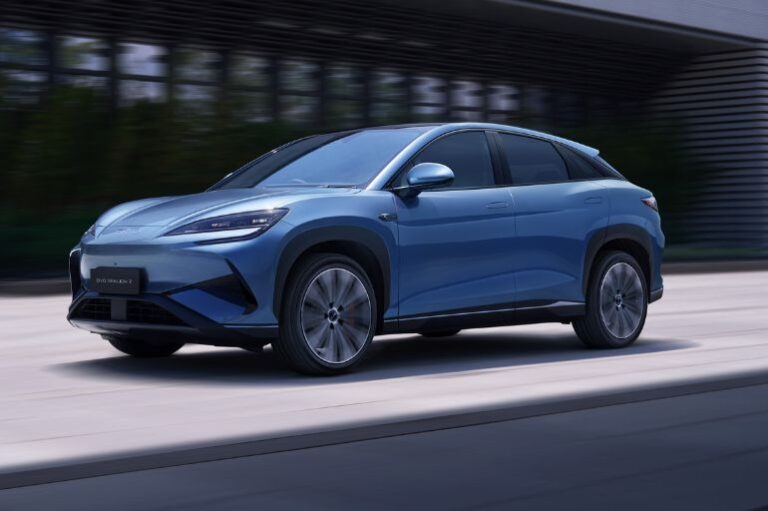
But the BYD Sealion 7 finished fourth nationally with 2,687 sales, while the Geely EX5 recorded 2,008 sales to finish seventh. The top 10 also included the Chery Tiggo 4 Pro, GWM Haval Jolion and MG ZS.
The September results were:
| Rank | Model | September sales |
|---|---|---|
| 1 | Ford Ranger | 5,062 |
| 2 | Toyota RAV4 | 4,624 |
| 3 | Toyota HiLux | 4,455 |
| 4 | BYD Sealion 7 | 2,687 |
| 5 | Chery Tiggo 4 Pro | 2,059 |
| 6 | GWM Haval Jolion | 2,018 |
| 7 | Geely EX5 | 2,008 |
| 8 | Toyota Prado | 2,006 |
| 9 | Isuzu D-Max | 1,866 |
| 10 | MG ZS | 1,805 |
The table on page two of the FCAI September summary shows just how quickly some models are moving. RAV4 sales were 81 per cent higher than September 2025, the Sealion 7 was up 42.4 per cent and the Geely EX5 was up an extraordinary 619.7 per cent from its much smaller base.

BYD moves into second place
The manufacturer rankings are arguably even more significant for fleet managers watching the competitive landscape.
Toyota remained comfortably in first place with 17,682 vehicles, but BYD was Australia’s second-highest-selling manufacturer in September with 8,191 vehicles.
It finished ahead of Ford on 7,592, Kia on 5,901, Mazda on 5,702, GWM on 5,212 and Hyundai on 5,073. MG, Geely and Chery completed the top 10.
China was also the largest source country for new vehicles sold in Australia during September, accounting for 35.5 per cent of the market. Japan accounted for 22.5 per cent, Thailand 17.3 per cent and South Korea 9.6 per cent.
For fleet buyers, these figures are important. They show that the established assumptions about which brands have sufficient market acceptance to be considered for a fleet are changing rapidly.
Electric Vehicle Council attempts to fill the data gap
The Electric Vehicle Council is also publishing its own monthly sales report, although it currently captures only Tesla and Polestar.
Those two brands delivered a combined 5,854 BEVs in September, with the Tesla Model Y accounting for 4,476 vehicles. Tesla Model 3 deliveries reached 1,178, up 60 per cent compared with September last year.
Across the first nine months of 2026, Tesla and Polestar recorded 43,386 deliveries, 77 per cent higher than the corresponding period in 2025.
Importantly, the EVC explicitly says its objective is broader transparency.
Its September report states that all brands are welcome to supply their sales figures for its free public report, saying its aim is for Australian new-vehicle sales data to be publicly available “to enhance transparency and consumer confidence.”
That objective should resonate with fleet buyers.
Why fleet buyers need the complete picture
Fleet procurement decisions are rarely based simply on which vehicle has the longest range or lowest purchase price.
Fleet managers consider whole-of-life costs, residual values, manufacturer support, charging requirements, driver acceptance, utilisation, safety, servicing and operational suitability.
Market acceptance is another piece of that equation.
Knowing whether a model is selling hundreds or thousands of vehicles provides useful context when assessing future used-vehicle demand, servicing networks, parts availability and driver familiarity.
It is particularly important with EVs because many organisations are being asked to evaluate manufacturers and models that did not exist in the Australian market several years ago.
Removing access to detailed market information at precisely the point when the market is becoming more diverse makes those decisions harder.
Cost of living is helping drive the change
NALSPA argues that household economics are also becoming an increasingly important driver of EV adoption.
NALSPA chief executive Rohan Martin said:
“Facing cost-of-living pressures, working Australians are looking for practical ways to make their household budgets go further and protect themselves from volatile petrol prices.”
He said the Electric Car Discount was helping consumers overcome the initial affordability hurdle while gaining access to lower running costs.
NALSPA estimates Australians who purchased an EV through the Electric Car Discount between mid-2022 and mid-2026 will have collectively saved around $609 million on fuel by Christmas.
That consumer behaviour matters to fleets as well. A stronger private EV market creates greater familiarity with the technology and, over time, should help establish a deeper second-hand market for vehicles being remarketed by fleets.
September confirms the transition is accelerating
FCAI acting chief executive Dianne O’Hara acknowledged the changing market in the September release.
“Australian motorists are embracing a broader range of powertrains, following greater model choice offered by manufacturers and growing competition.”
The numbers support that assessment.
BEVs taking almost a quarter of the market, BYD becoming Australia’s second-highest-selling manufacturer for the month, two BEVs appearing among the seven highest-selling vehicles, and China becoming Australia’s largest source of new vehicles are not minor shifts.
They represent a fundamental change in Australia’s automotive market.
For Fleet News Group’s community of fleet managers, procurement professionals and vehicle buyers, access to detailed and independent sales information is therefore becoming more valuable.
At a time when organisations are trying to understand which EV manufacturers and models are gaining acceptance with Australian buyers, less transparency is a move in the wrong direction.