

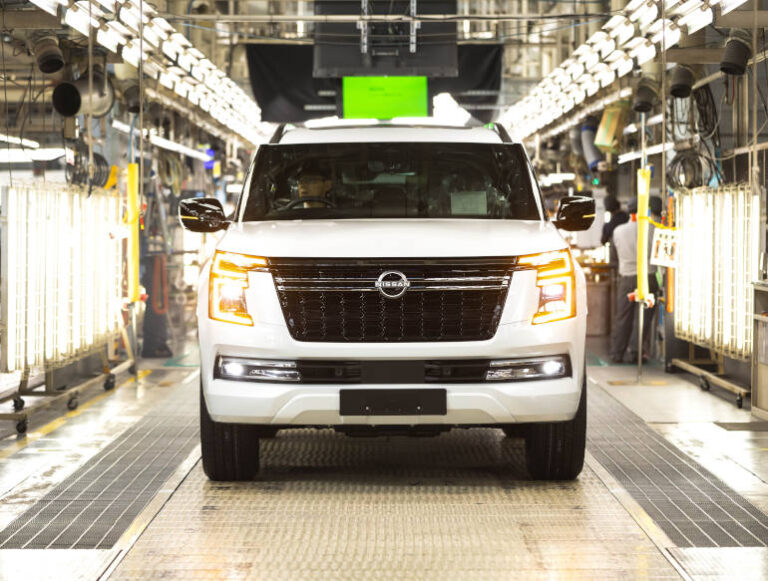
Production of the all-new Nissan Patrol has commenced in Japan, with the first right-hand-drive vehicles destined for Australia rolling off the line at the Nissan Shatai Kyushu plant.
First Australian customer deliveries are scheduled for the first quarter of 2027, giving fleet buyers a timeframe to consider the new-generation SUV in upcoming replacement plans.
For organisations using large four-wheel drives for towing and demanding operating conditions, the key changes include a stronger ladder-frame chassis, increased use of high-strength steel and a maximum braked towing capacity of 3,700kg.
Stronger chassis underpins new Patrol
The new Patrol’s ladder-frame chassis features substantially larger frame side members than the outgoing Y62 model. According to Nissan, these contribute to a 40 per cent increase in torsional rigidity, alongside improvements in noise, vibration and harshness, handling and ride comfort.
For fleet operators, those changes will be worth assessing during vehicle evaluations, particularly where vehicles spend long periods on uneven roads or undertake regular towing duties. Ride comfort and vehicle refinement can influence the experience of employees who spend significant time behind the wheel.
Nissan says the chassis also supports the increased towing capacity and contributes to improved durability across a broad range of driving conditions.
However, the headline towing figure is only one part of the fleet selection process. Buyers will need to assess the vehicle’s laden mass, accessories, towing equipment and towball download against their intended operating requirements.
Nissan’s stated maximum capacity is based on fitment of a Genuine Nissan towbar, with actual towing capacity dependent on those factors and driving conditions.
More high-strength steel in the body
High-strength steel now accounts for 27 per cent of the Patrol’s body structure, an increase of 21 percentage points over the outgoing Y62.
Nissan says the increased use of this material creates a stronger and more rigid body structure, supporting durability and occupant protection while helping optimise overall vehicle weight.
For fleet procurement teams, these structural changes provide useful context for the new model. A full assessment of its suitability will still require Australian specifications, load limits, safety information and operating cost data.
Replacement planning begins
The start of right-hand-drive production marks a significant step towards the Patrol’s Australian introduction. The Kyushu factory also produces the INFINITI QX80 and Nissan Elgrand.
With deliveries scheduled for early 2027, fleets considering a Patrol replacement can begin aligning procurement schedules with the expected arrival.
The next decision point will be the release of detailed Australian specifications and pricing, allowing buyers to assess capability, whole-of-life costs and suitability for their fleet applications.