

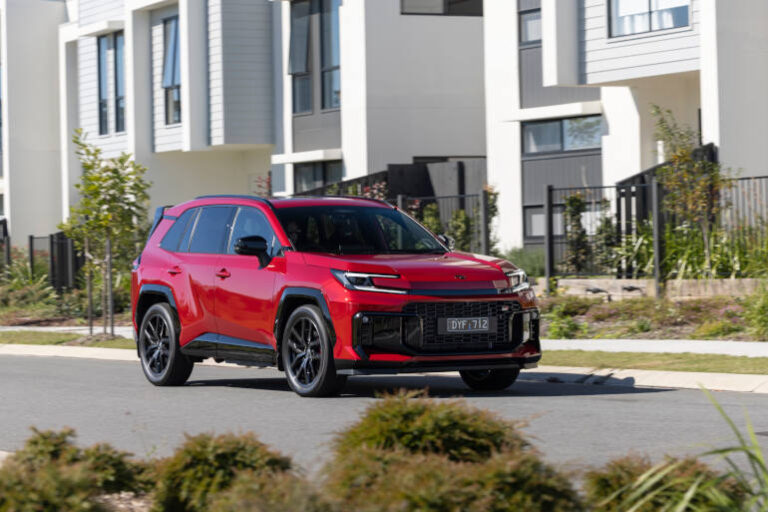
Toyota’s latest sales briefing offered welcome news for fleet buyers: more stock is arriving, delivery times are improving and many models are moving towards a three-month wait.
But it also raises a question. Has supply improved simply because Toyota has secured more vehicles, or is stronger competition changing how hard established manufacturers work to deliver them?
Toyota hasn’t said its supply push is a response to BYD or other emerging competitors. That is an interpretation. However, in a market where challengers are making vehicle availability part of their pitch, it is difficult to separate the supply conversation from the competitive one.
For Fleet Managers, the opportunity is to reconsider what constitutes an acceptable wait.
Availability is becoming a competitive advantage
BYD’s highly publicised arrival of its own vehicle carrier in Australia was more than a shipping story. The June shipment carried thousands of BYD and Denza vehicles, making the company’s effort to meet Australian demand highly visible.
The message was straightforward: vehicles are coming, and the manufacturer is putting resources behind getting them here.
Toyota is now emphasising its own increased supply, shorter lead times and plans for a record fourth quarter.
Vice President of Sales, Marketing and Franchise Operations John Pappas told the briefing:
“You know, we’re now on average anywhere between three and six months, but to be honest, now with the extra stock, a lot of our models are nearing the three-month mark when it comes to wait times, which is good.”
It is good. But three months also looks different when a competing supplier can offer a suitable vehicle from stock.
For a retail buyer who needs a car immediately, availability can determine the purchase. For a fleet, the calculation is more involved, but the value of getting a vehicle into service sooner can be just as significant.
Fleets remember the long wait
The COVID years left a difficult legacy for fleet buyers.
Some waited more than 12 months for popular models such as RAV4. The experience left fleet customers feeling like second-class citizens when retail buyers appeared to receive priority.
The frustration extended beyond the delivery date. Replacement schedules slipped, existing vehicles stayed in service longer and Fleet Coordinators had to keep explaining delays to operational teams.
For some government organisations, procurement arrangements compounded the problem. Where contracts or approved vehicle lists restricted the available choices, switching brands was not a straightforward option. They were effectively required to wait.
That experience should influence how fleets assess suppliers today.
A manufacturer’s historical popularity is relevant. So are its service network, vehicle suitability and ownership costs. But none of those removes the need to examine how reliably it delivers vehicles when customers need them.
An order isn’t an operational vehicle
Toyota says demand remains strong and logistics are its main constraint.
“So it’s not really an issue of demand. It’s actually an issue of getting the cars logistics and getting the cars shipment-wise,” Pappas said.
That explains Toyota’s position. It does not solve the fleet buyer’s problem.
An order sitting in a system cannot transport staff, support a maintenance crew or deliver a community service. Until the vehicle is ready to work, the organisation must keep meeting that requirement another way.
That may mean extending an existing vehicle’s life, retaining a lease, arranging a rental or reallocating vehicles between teams. Those consequences belong in the purchasing assessment.
Delivery certainty has a financial and operational value. It should receive more attention in vehicle comparisons and supplier reviews.
Procurement needs room to respond
Government procurement arrangements serve legitimate purposes, including consistent specifications, purchasing discipline and commercial accountability.
However, arrangements that offer no practical response to prolonged supply delays can undermine those objectives.
An attractive contract price becomes less compelling if the organisation incurs additional costs while waiting for delivery.
Procurement teams should consider whether their arrangements provide access to suitable alternatives, a process for supply exceptions and clear expectations around delivery performance.
This requires planning before a shortage becomes urgent. Fleet Managers and Procurement Managers need to agree on what happens when the preferred vehicle cannot arrive within the required timeframe.
Shorter waits don’t replace proper evaluation
Immediate availability does not automatically make a vehicle the right purchase.
Fleet buyers still need to assess safety, suitability, servicing, parts support, whole-of-life costs and residual value. Commercial vehicles may also require body builds and equipment installation that extend the time before deployment.
The useful comparison is therefore the date a suitable vehicle can enter service, supported by a credible delivery commitment.
A three-month wait may fit perfectly within a planned replacement cycle. A six-month wait may also be manageable. The problem is accepting either automatically because that is what fleet buyers have become accustomed to hearing.
Loyalty should be earned at every replacement
Toyota remains a major fleet supplier, and its improving supply is welcome. Stronger competition may be helping sharpen that focus, even if the company has not identified it as the reason.
Fleet buyers should use the changing market to ask more of every supplier.
How firm is the delivery date? What alternatives are available? What happens if the order is delayed? And what will waiting cost the organisation?
Established manufacturers should expect those questions. Emerging brands should expect the same scrutiny.
Fleets do not need to abandon trusted suppliers. They do need to make sure that trust is supported by current performance—and that a place in the queue is still worth waiting for.