

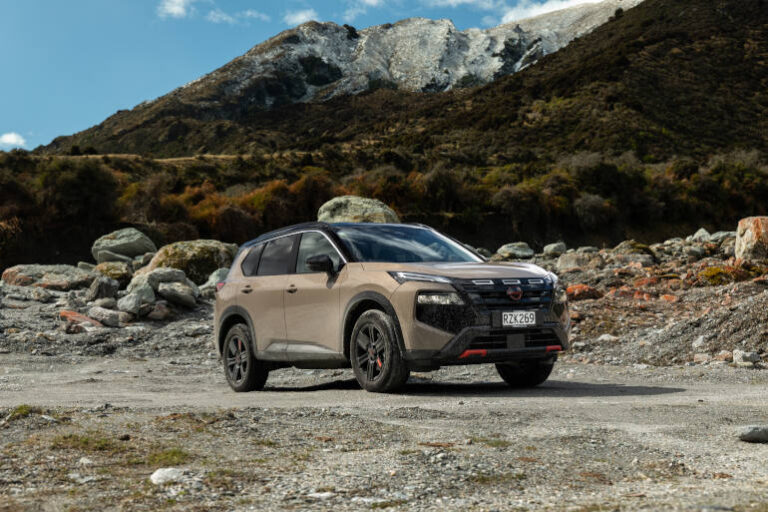
Nissan has expanded its X-TRAIL range with new front-wheel-drive e-POWER hybrid variants and a seven-seat Rock Creek grade as the SUV celebrates 25 years in Australia.
For fleet buyers, the broader hybrid line-up provides more choice where all-wheel drive is not required, while Rock Creek adds another petrol option for organisations needing seven-seat flexibility.
Since arriving in October 2001, the X-TRAIL has recorded 338,508 Australian sales across four generations and remains Nissan’s best-selling local nameplate.
Front-wheel-drive hybrids widen fleet choice
Nissan has doubled its Australian X-TRAIL e-POWER range from three grades to six, adding front-wheel-drive versions of the ST-L, Ti and Ti-L.
The new variants have official combined fuel consumption of 5.4L/100km, approximately 11.5 per cent lower than their all-wheel-drive e-POWER counterparts. Combined CO₂ emissions are quoted at 123g/km.
These figures are measured under ADR testing. Actual results will vary with driving behaviour, operating conditions, vehicle condition and accessories.
Nissan’s e-POWER technology uses an electric motor to drive the wheels, with the petrol engine generating electricity. Drivers do not need to plug the vehicle in.
For fleets operating primarily on sealed roads, the front-wheel-drive option creates another pathway to introduce hybrid vehicles without adding charging infrastructure. Vehicle selection should still reflect each role’s traction, passenger and operating requirements.
“Today, we’re giving Australians more reasons to choose X-TRAIL, with the introduction of front-wheel-drive e-POWER and the new Rock Creek,” said Steve Milette, Managing Director, Nissan Oceania.
Rock Creek adds seven-seat versatility
The new Rock Creek grade is based on the ST-L all-wheel-drive petrol variant and combines seven seats with distinctive exterior styling and additional cabin technology.
Exterior changes include a black grille, black roof rails, gloss-black door mirrors, a unique lower front bumper and exclusive 18-inch alloy wheels.
Orange accents feature on the badging and wheels, while a three-slot horizontal grille treatment draws inspiration from the Nissan D21 ute and current Navara. A new Baja Storm paint finish paired with a black roof is also available.
Inside, ballistic nylon-trimmed seats carry embroidered Rock Creek badging. Orange contrast stitching across the seats and dashboard continues the exterior theme.
Rock Creek also adds a 10.8-inch head-up display and a 12.3-inch digital instrument cluster over the ST-L grade on which it is based.
For fleet managers, the seven-seat layout offers flexibility for passenger transport, while the additional equipment can be assessed against driver needs and vehicle policy.
Four generations on Australian roads
The original T30 X-TRAIL established the nameplate in Australia with its distinctive shape, practical cabin and off-road capability.
The T31 followed in 2008, introducing a larger body and an Australian diesel option. The third-generation T32 arrived in 2014 with a sleeker design and remains the strongest-selling generation locally, accounting for 145,405 sales during its allocated 2014–2022 reporting period.
The current T33 generation introduced e-POWER to the Australian X-TRAIL range, alongside a more spacious cabin and additional safety and convenience technology.
“After 25 years and four generations, X-TRAIL remains Nissan’s best-selling nameplate in Australia,” Milette said.
The latest additions give fleet buyers a wider choice of hybrid and petrol configurations within an established SUV range. The front-wheel-drive e-POWER variants and Rock Creek are available to order now.