

Fleet safety has always involved choosing the right vehicle, maintaining it correctly and making sure drivers understand their responsibilities behind the wheel. But as new vehicles become more sophisticated, there is another part of the safety management system that deserves more attention: driver induction.
Modern cars are arriving with new safety systems, different control layouts, large touchscreens, electronic gear selectors and interfaces that can vary significantly between manufacturers. None of these changes are necessarily negative. In many cases, they improve safety, comfort and usability once the driver understands how the vehicle works.
The challenge for fleets is making sure that understanding happens before the vehicle starts moving, rather than during the first few kilometres of a journey.
Recent time behind the wheel of the Chery Tiggo 7 and Tiggo 9 highlighted just how quickly vehicle design is changing — and why induction should be treated as an important fleet safety process.

A good safety feature can still surprise a new driver
The Tiggo 7 provided a simple example.
After driving the vehicle normally, I later jumped back into it simply to move it around the office car park. I started the vehicle but couldn’t work out why it wouldn’t move.
After several minutes, the answer became clear: the driver’s seatbelt needed to be fastened before the vehicle would drive.
That is a positive safety feature. For an owner who drives the Tiggo 7 every day, it would quickly become completely normal.
But for somebody jumping between vehicles — as fleet drivers often do — it was unexpected.
That’s where the fleet safety lesson sits.
A feature designed to improve safety can create confusion if the driver doesn’t know it exists. A short vehicle handover or induction would eliminate the issue immediately.
The Tiggo 9 shows how interfaces are changing
The Tiggo 9 offered another example.
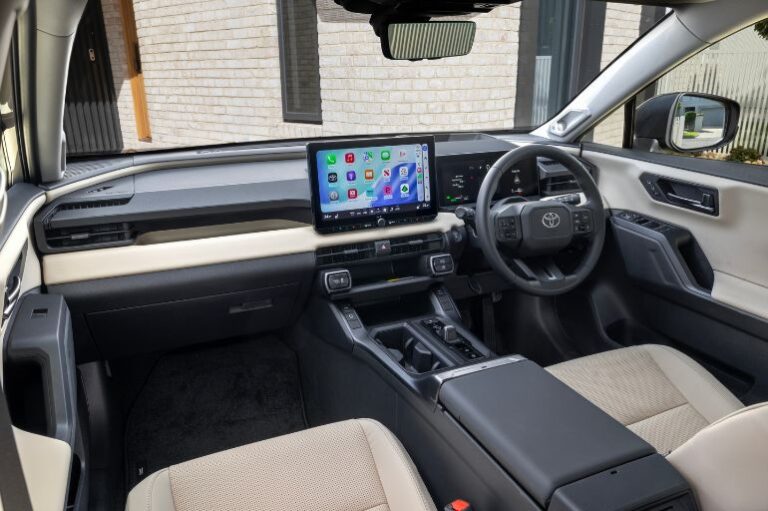
Its cabin is modern and well presented, with a large centre display, digital instrument cluster, phone storage and a mix of touchscreen functions and physical climate-control buttons.
The seat was comfortable and the cabin immediately felt like a contemporary vehicle. The unusual part was working out how to adjust the driver’s seat.
There was no obvious conventional seat adjustment control where many drivers would expect to find one on the side of the seat. The lumbar adjustment was easy enough to locate, but the controls to move the seat forwards, backwards and adjust the seatback weren’t immediately apparent.
Eventually, the answer was found on the driver’s door, near the door handle.
Again, this isn’t a criticism of the vehicle.
Once you know where the controls are located, the system is straightforward. The experience simply demonstrates how manufacturers are approaching interior design in different ways.
And with more new brands entering the Australian market, fleets can no longer assume that every vehicle will operate in broadly the same way.
Fleet drivers don’t always have time to learn by trial and error
A private owner normally becomes familiar with a new vehicle very quickly. After the first few days, unusual controls become second nature.
Fleet vehicles are different.
A pool vehicle may be driven by dozens of people. A replacement vehicle may be allocated to an employee with very little notice. Employees can transfer between departments or locations and suddenly find themselves driving a different vehicle.
Some drivers may also be moving from an older personal vehicle into a fleet car equipped with technology they have never used before.
The first few kilometres should not be spent searching through menus, trying to understand driver assistance systems, adjusting the seat or working out how to change the temperature.
That’s a distraction risk that fleets can manage.
Vehicle induction should be part of the safety management system
Driver induction doesn’t need to become a lengthy training session for every vehicle. But fleet operators should think about the things a driver needs to understand before departure.
That could include:
- starting and shutting down the vehicle;
- selecting Drive, Reverse and Park;
- seat and steering-wheel adjustment;
- mirrors and cameras;
- climate controls and demisting;
- cruise control and speed assistance systems;
- lane support and other active safety technology;
- dashboard warning messages;
- parking brakes and Auto Hold;
- infotainment and phone connectivity; and
- any vehicle-specific functions that may behave differently from other models in the fleet.
The goal isn’t to teach drivers every feature. It is to make sure they can safely operate the basic vehicle controls without having to experiment while driving.
EVs make induction even more important
The same principle becomes even more important when fleets introduce electric vehicles.
A driver moving from an internal-combustion vehicle into an EV may need to understand regenerative braking, charging equipment, charging cards or apps, range information and different starting or shutdown procedures.
For some employees, it may be their first experience with an electric drivetrain. Simply handing over the keys isn’t enough.
As fleet electrification progresses, vehicle induction should sit alongside charging policies, journey planning and driver education as part of the transition process.
Standardisation can reduce the risk
There is also a fleet procurement lesson. Standardising vehicle types where practical can make life easier for drivers.
If employees regularly move between pool vehicles with similar controls, interfaces and safety systems, familiarity reduces the amount of time required to become comfortable.
That doesn’t mean fleets should avoid new brands or different vehicle designs.
The Tiggo 7 and Tiggo 9 demonstrate the opposite. New approaches can deliver useful safety features and appealing cabin designs.
But whenever a fleet introduces a new model, the induction process should reflect the differences.
A simple one-page guide, short video or five-minute vehicle walkaround can make a significant difference.
The vehicle is still a workplace
Fleet Managers already spend considerable effort assessing vehicle safety ratings, whole-of-life costs, servicing requirements, emissions and manufacturer support.
The human element shouldn’t be overlooked.
A five-star vehicle filled with advanced driver assistance technology is only part of the safety equation. The person behind the wheel still needs to understand how the vehicle works.
As vehicle design continues to change, driver induction is becoming more important rather than less.
The lesson from the Chery Tiggo 7 and Tiggo 9 isn’t that different controls are a problem. It’s that different vehicles require different knowledge.
For fleet operators, that makes vehicle familiarisation a practical part of workplace safety.
Before an employee drives away in an unfamiliar vehicle, give them enough time to adjust the seat, understand the controls and learn the major safety systems.
Because the safest time to work out how a new vehicle operates is while it’s still parked.