

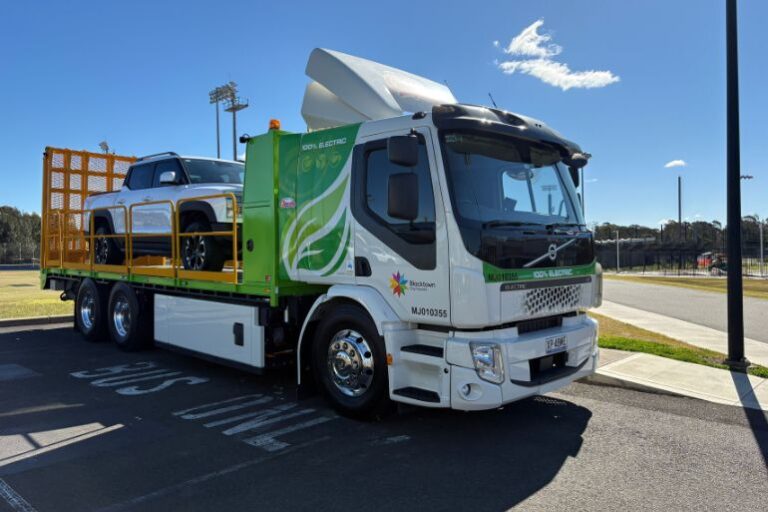
Blacktown City Council is a finalist in the Fleet of the Year category in the 2026 Fleet News Group Awards.
Over the coming weeks, Fleet News Group is looking at the work behind its nomination and the fleet management practices that have put the organisation in contention for the award.
Blacktown City Council manages one of the largest local government fleets in New South Wales, with approximately 2,000 road-registered assets supporting services across a fast-growing part of Western Sydney.
The scale is significant, but the variety and intensity of the work make the fleet challenge even more complex.

A fleet supporting essential services
The council operates around 600 heavy vehicles, including approximately 70 specialist waste collection and street-cleaning machines.
Some street-cleaning vehicles operate for 16 or 17 hours a day across multiple shifts, while a waste truck may complete around 1,200 bin lifts in a single day.
That means vehicle availability has an immediate effect on service delivery.
If three waste trucks are unavailable, thousands of bins may need to be collected another way. The fleet team therefore has to think about reliability, backup capacity and maintenance in operational terms, not simply as workshop statistics.
Owning the fleet provides flexibility
Blacktown City Council owns its fleet rather than leasing it. This gives the organisation more control over how long assets are retained and when they are sold.
The council works with external market specialists to understand the best disposal timing and has extended some replacement cycles beyond the traditional three-year or 50,000-kilometre point where the data supports doing so.
Residual proceeds are returned to future fleet reserves, supporting the next generation of asset purchases.
A large in-house capability
The City Fleet team includes 55 permanent employees, supported by around 10 casual employees and contractors.
Maintenance is managed through a combination of internal and external resources, particularly as the availability of experienced heavy diesel technicians has become more challenging.
The organisation has also created specialist roles in technical projects, zero-emission vehicles, alternative fuels, business analytics and communications.
Those roles reflect the changing nature of fleet management, where workshop capability must now sit alongside data analysis, electrification planning and operational change management.
Managing growth and complexity
Blacktown is also a rapidly growing city. Increasing population and higher-density development will place more pressure on waste collection, parks, roads and other frontline services.
The fleet team is therefore looking beyond simple fleet expansion and asking how existing assets can be used more effectively.
That includes improved utilisation, standardised vehicle bodies and the potential to run quieter electric vehicles across longer operating windows.
Why this matters for Fleet of the Year
Blacktown City Council is not managing a simple vehicle pool. It is operating a large, diverse and heavily utilised fleet that directly supports community services every day.
The council’s Fleet of the Year case is built on managing that scale with stronger systems, better data, specialist capability and a clear focus on whole-of-life value.
Blacktown City Council is a finalist in the 2026 Fleet News Group Fleet of the Year Award. You can support Blacktown by casting your vote on the Fleet News Group Awards voting page.
Vote for Blacktown City Council in the Fleet of the Year Award
The winners will be announced in Sydney on 14 October 2026. Fleet and automotive industry professionals can register their interest to attend the Fleet News Group Awards Night.
Register your interest for the Fleet News Group Awards Night
Next week: We look at how Blacktown moved from reactive repairs to a more proactive maintenance model and dramatically reduced its daily defect lists.