

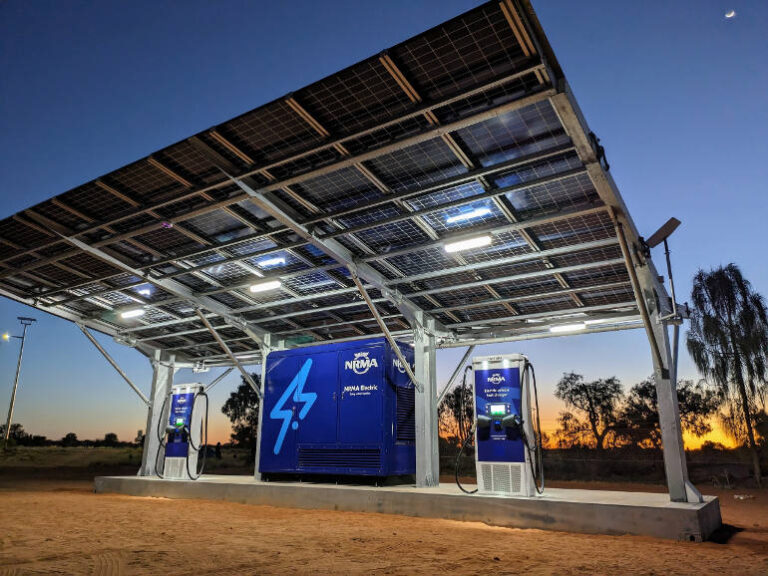
The public charging market has spent years promoting bigger and faster chargers, but the next phase of EV infrastructure will be shaped just as much by grid capacity as charger output.
Speaking with Fleet EV News at the Autel EV Innovation Seminar 2026, Peter Burke, EV Infrastructure Delivery at the NRMA, said newer electric vehicles are changing the demands placed on charging networks.
“Three or four years ago, cars didn’t require the capacity or the charge that they do now at the speed and at the volume of which people demand it,” Burke said. “A lot of the new units are coming out with a much, much larger ability to charge.”
However, Burke said the key constraint remains access to power.
“Again, the constraint is access to the grid,” he said.
That message is highly relevant for Fleet Managers and Finance Managers planning depot charging infrastructure. The natural starting point is often to ask how many chargers are required and how fast they should be. But the better question is whether the site has enough power capacity to support the charging profile required by the fleet.
Burke said there is no single ideal charger size for public charging sites because each location needs to be designed around demand, peaks, troughs and grid limitations.
“We have to be very careful that we design our sites to suit peaks and troughs,” he said. “We cannot go into this thinking bigger is better, because the grid doesn’t allow for that.”
The same principle applies to fleet depots. A fleet may not need the fastest possible chargers if vehicles are parked for long periods overnight. In many cases, the charging strategy should be based on daily kilometres travelled, energy required, vehicle dwell time and the replacement plan for the fleet.
Burke said the NRMA uses load management, equipment selection and battery energy storage systems to help manage grid constraints.
“We do a lot of load management, we do a lot of equipment selection, and BESS systems as well,” he said.
For fleet operators, this highlights the importance of planning before vehicles arrive. Installing EV chargers is not just a procurement exercise. It is an infrastructure project that may involve electrical upgrades, switchboard capacity, load management, energy contracts, site design and long-term asset management.
The fleet sector should take the same lesson from public charging operators: bigger is not always better. The right charging solution is the one that matches the operational need, the available power and the budget.