

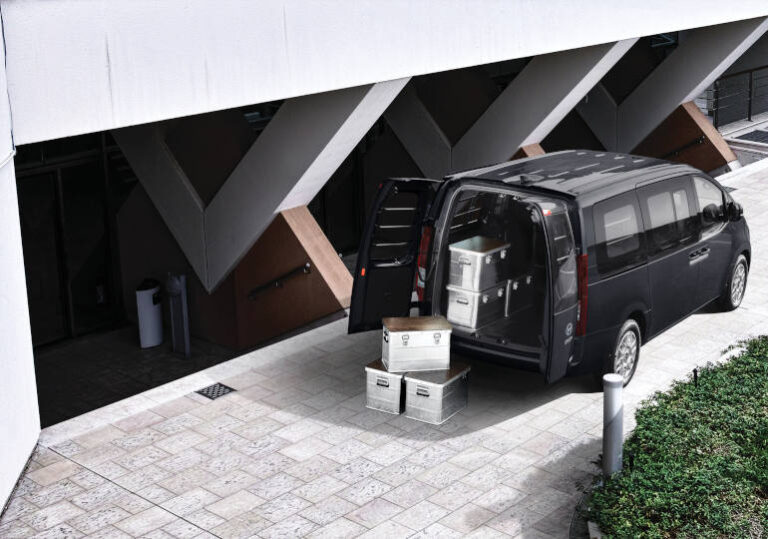
Hyundai has given its STARIA Load commercial van its most significant update since launching in Australia in 2021, introducing a new hybrid powertrain while refining the vehicle’s ride, cabin technology and comfort for fleet operators.
Speaking at the Australian launch, Michael Croan, Product Planning Assistant Manager at Hyundai, said the updated STARIA Load builds on the strengths of the existing model while giving commercial customers more choice.
“Most notably, we’ll be bringing the first in-segment full hybrid powertrain to the STARIA Load,” Croan said.
The refreshed range continues with the proven 2.2-litre turbo diesel while adding a 1.6-litre turbocharged petrol-electric hybrid. An all-electric STARIA Load will follow in the second half of 2026, creating one of the broadest powertrain line-ups available in Australia’s van market.

Hybrid headlines the changes
The biggest news for fleet buyers is the arrival of Hyundai’s TMED-I hybrid system.
The front-wheel-drive hybrid combines a 1.6-litre turbocharged petrol engine with an electric motor to produce a combined 180kW and 304Nm through a six-speed automatic transmission.
Croan said the hybrid was developed to meet commercial vehicle expectations rather than simply maximise fuel economy.
“This hybrid powertrain maintains a high degree of capability that is demanded of the STARIA Load, delivering a maximum system combined power output of 180 kilowatts and 304 newton metres of torque,” he said.
“The hybrid powertrain is set to elevate the STARIA model by providing a comparable product offering to the diesel, while simultaneously incorporating EV-like driving smoothness.”
The hybrid also introduces Hyundai’s hybrid-specific technologies, including e-Motion Drive, designed to reduce body movement over speed humps and improve grip during steering inputs.
Better ride for working drivers
Beyond the new powertrains, Hyundai engineers focused on improving everyday refinement.
All models receive retuned shock absorbers, revised front subframe bushings, additional front suspension bracing and strut rings to improve steering precision and body control. The van also gains revised rear shock absorber valve technology for a quicker response over smaller road imperfections.
Croan said the suspension revisions were aimed at improving day-to-day usability.
“Enhancements to the ride comfort and drivability of the vehicle have been made,” he said. “In the rear, the van has seen an upgrade to the shock absorber valve type, enabling faster and more precise response to small road impacts.”
For fleet drivers who spend long hours behind the wheel, those changes should make the STARIA Load more comfortable on urban roads while maintaining its carrying capability.
Quieter cabin
Hyundai has also invested in reducing cabin noise.
The dashboard insulation has increased from 24mm to 28mm, additional foam insulation has been fitted throughout the cabin structure and sound-absorbing material has been added around the wheel guards to reduce high-frequency road noise. Revised front subframe bushings also reduce booming noise entering the cabin.
“NVH is also focused on with this facelift,” Croan said. “The dash insulator thickness has been increased up to 28 millimetres, reducing engine noise intrusion… the application of sound absorption material in the wheel guard softens high-frequency noise.”
Smarter interior
Inside, the STARIA Load adopts Hyundai’s latest Connected Car Navigation Cockpit (ccNC) with dual 12.3-inch displays, wireless smartphone connectivity, Bluelink connected services, over-the-air software updates and Smart Key with push-button start.
The Premium grade also gains additional convenience features including heated seats, heated steering wheel, surround-view monitor, blind-spot view monitor and Highway Driving Assist.
Exterior refresh
The visual changes are subtle but modernise the STARIA Load’s appearance. Croan said Hyundai wanted to retain the model’s distinctive styling while sharpening its front-end design.
“Starting with the exterior design elements, a refreshment to the front grille has been targeted, moving from a seamless integrated pattern to a horizontal mesh grille,” he said.
“The STARIA Load Premium front end is unified by a front LED Horizon Lamp, now seamlessly connected across the face of the exterior.”
Fleet implications
For fleet operators, the 2026 STARIA Load update is about more than styling.
The addition of hybrid and future electric variants gives Fleet Managers more flexibility as they respond to emissions targets and operating cost pressures, while suspension, refinement and technology upgrades improve driver comfort without sacrificing the practicality that made the STARIA Load popular in commercial applications.
Hyundai expects the diesel to remain its highest-volume STARIA Load powertrain initially, accounting for around 50% of sales, with the hybrid forecast to represent approximately 45% of the mix and the electric model around 5% once available.