
Hino Australia is expanding its Built to Go range as it looks to reduce the time trucks spend waiting for body installation and final delivery.
At its recent business briefing, Hino Australia President and CEO Richard Emery said the business had identified the delivery process after vehicle arrival as a major constraint for customers.
“The challenge that we’ve had, in fact the whole industry has had, over the last five years, is getting vehicles to a point of delivery to customers in a suitable timeframe,” Emery said. “The timeframe, arrival in Australia to delivery to a customer, has blown out to close to four and a half to five months.”
For fleet buyers, that delay can be as significant as the wait for the chassis itself. A truck may arrive in Australia, but it can still be unavailable for work while it waits for a body, specialised fit-out, engineering approvals or final compliance work.
Emery said Hino’s response is a program called Project Vortex, which is focused on shortening the path between vehicle arrival and handover.
“In simple terms, Project Vortex is about delivering more trucks more quickly,” he said.
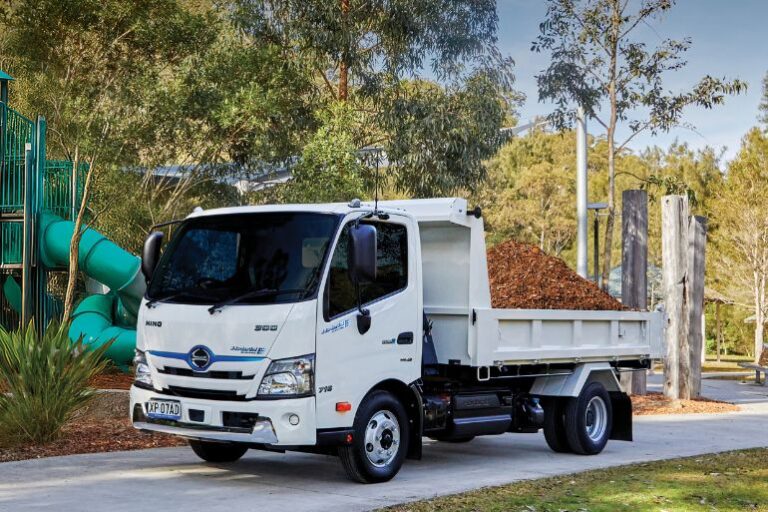
The strategy includes a broader range of Built to Go trucks, with bodies and equipment fitted before the vehicle reaches the customer. Hino is also working with body-building partners and looking at local engineering solutions for applications where factory support is not available.
“We’re expanding our Built to Go range beyond the models that we’ve had in place over the last five to 10 years,” Emery said.
“We are working with a number of partners on joint venture activities to bring an even wider variety of vehicles to a finished state, so that they are ready for delivery, rather than having to go through a long body-build process.”
The approach reflects a practical issue facing truck fleets across multiple sectors. Standard chassis lead times may be improving, but body-build capacity remains a constraint for many applications, particularly for tippers, trays, service bodies, refrigerated trucks, trade vehicles and vocational equipment.
For Fleet Managers, a ready-bodied truck can reduce uncertainty around replacement programs, project mobilisation and downtime caused by extended build schedules. However, it can also limit specification flexibility compared with a fully bespoke body.
That trade-off will depend on the fleet task. A standardised delivery, tray or tipper application may be well suited to a Built to Go model, while specialised operations may still require an individually engineered solution.
Emery said Hino was also taking steps to speed up product availability when Japanese factory programs could not meet local requirements.
“We have also taken the decision to take some local engineering solutions to speed up the availability of suitable products, once again, to our consumers, to our dealers in situations where Japan cannot support us.”
The growing focus on ready-to-deliver trucks suggests manufacturers will increasingly compete not only on chassis specification, price and fuel use, but on how quickly a vehicle can be placed into service.
For operators facing delivery commitments, workforce pressures and ageing vehicle fleets, reducing the final body-build delay may be as valuable as securing the truck allocation itself.