
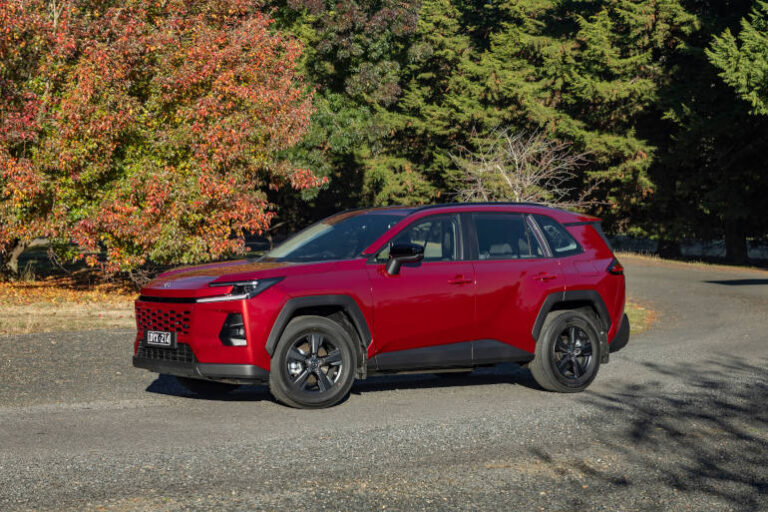
The Toyota RAV4 GX may sit at the entry point of the range, but after a week of normal work and urban driving, it feels purpose-built for the realities of fleet use.
This is not the RAV4 for buyers chasing leather trim, premium finishes or a more luxurious cabin experience. It is the practical fleet-grade version: cloth seats, manual seat adjustment, durable-looking surfaces and the core technology a driver needs to get through a busy working week.
For many Fleet Managers, that is exactly the point.

Real-world fuel use matters
The biggest positive from the week-long test was fuel economy. In a mix of short urban trips, traffic lights, stop-start driving and general day-to-day running around, the RAV4 GX Hybrid returned an average of 5.4L/100km.
That is slightly above Toyota’s claimed figure, but it is also a more useful number for fleet decision-makers because it reflects the type of work many SUVs actually do. It was not a long highway run designed to produce the best possible result. It was a normal routine of short trips, suburban driving and regular stops.
For fleets, this is the value of a hybrid RAV4. The vehicle does not need to be plugged in, drivers do not need to change their habits, and it can still deliver a meaningful reduction in fuel use compared with a conventional petrol SUV.
It is another reminder that fleet selection should always start with the application. Understanding where vehicles travel, how far they travel each day and how often they operate in urban areas will determine whether a hybrid is the right fit.
A simple cabin, but one designed for work
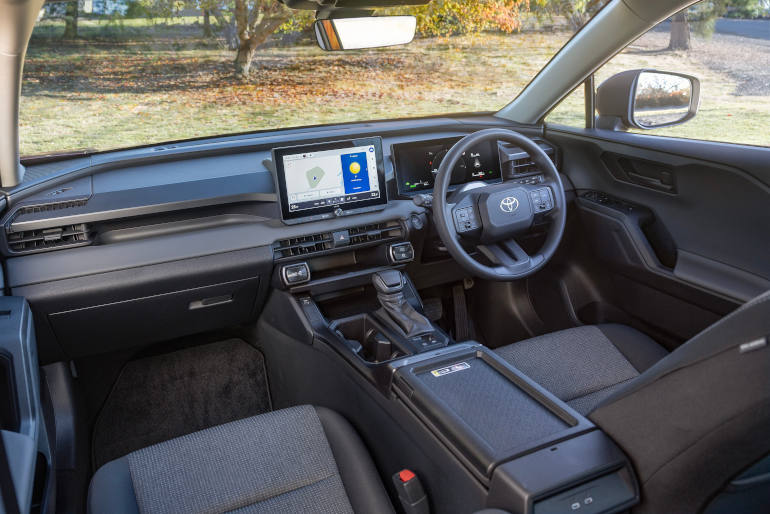
The GX cabin is clearly the fleet specification. There are hard-wearing surfaces, cloth seats and mechanical adjustment rather than powered controls. The driver’s seat does not include lumbar adjustment, which may be a consideration for organisations with drivers spending long periods behind the wheel.
However, the seat itself proved comfortable over the week. There is a useful amount of height adjustment, plenty of forward and rearward movement, and a steering wheel with both reach and tilt adjustment. That should help a wide range of drivers find a workable driving position.
The steering wheel design is functional rather than premium. It is easy to use, but it does not add much to the perceived quality of the cabin. That may not matter to a fleet operator, although private buyers considering a novated lease may see value in stepping up to a higher grade for a more polished interior experience.
Storage is where the GX shines
For a fleet vehicle, the RAV4 GX gets the basics right.
The dashboard layout provides practical places for mobile phones, including space for two devices to be connected and charged. With many drivers now carrying both work and personal phones, this is more useful than it sounds. Multiple USB-C charging points are available, while the centre console also includes 12-volt power and additional USB-C connections.
Wireless charging is not included on the GX, but the wired charging arrangement is neat and practical.
There is also plenty of general storage. The centre console is large enough for the everyday items that tend to build up in a work vehicle, while the dual-opening lid is a clever touch. One side works as a soft armrest, while the other offers a flatter and more practical surface.
The RAV4 also includes a sunglasses holder in the roof lining, a feature that is becoming less common but makes a lot of sense for people who are regularly getting in and out of the vehicle. Door pockets, bottle holders, cup holders and an additional passenger-side shelf above the glovebox add to the everyday usability.
It is the sort of cabin layout that will appeal to drivers who treat their vehicle as a mobile office.
Enough technology without the distraction
Despite being the entry-level model, the RAV4 GX includes the major features fleet buyers expect, including Apple CarPlay, climate control, adaptive cruise control and a broad suite of driver-assistance technologies.
The driver-assistance systems are one of the vehicle’s strengths. The warnings are noticeable without being excessively intrusive, and the alerts are less harsh than some systems now fitted to newer vehicles.
That matters in fleet use. A safety system should support the driver, not become an irritation that encourages them to switch it off.
Hybrid performance is smooth, but do not expect a sports SUV
The hybrid system is well suited to normal driving. At lower speeds, the RAV4 can move away quietly in electric mode, which is particularly noticeable during early-morning departures and suburban driving.
It also feels smoother and more refined than the previous RAV4 hybrid system in everyday conditions.
Push it harder, however, and the familiar hybrid behaviour becomes more obvious. Under strong acceleration, the engine can sound busy and the vehicle can feel like it is working hard. It is not underpowered for normal driving, but drivers expecting quick overtaking performance or a more engaging drive may prefer to adjust their expectations.
For fleet and family use, this is unlikely to be a major concern. The RAV4 GX is at its best when driven calmly and efficiently.
Space for people and luggage
The RAV4 remains a practical medium SUV for organisations needing to carry both passengers and equipment.
The rear seat has enough room for two adult passengers, while the cargo area easily accommodated two large overseas-style suitcases during the review. That makes it a sensible option for regional travel, airport runs, site visits and employees who need a vehicle that can cover both work and family duties.
Visibility may vary between drivers
One issue that fleet buyers should consider is driver visibility.
The RAV4’s more squared-off front-end design gives it a tougher appearance, but it may affect confidence for some drivers when parking or manoeuvring in tighter areas. During the test, a shorter driver found the bonnet shape more difficult to judge, despite the available seat-height adjustment.
There were also comments about potential blind spots around the mirrors and B-pillar.
This will not affect every driver in the same way, but it is a good reason for fleet teams to include a range of driver heights and experience levels in their evaluation process before committing to a large order.
The key fleet question: ANCAP status
The major issue for fleet buyers is the RAV4’s ANCAP status under the latest safety protocols.
For organisations with a requirement to purchase only vehicles carrying a current five-star ANCAP rating, this may be a barrier. Toyota has indicated that production changes are expected as part of a later 2026 update to support a five-star result, but fleet managers should confirm the current rating and timing before placing orders.
This is particularly important for government, council and corporate fleets where vehicle safety policy can be tightly linked to procurement eligibility.
Verdict: A strong practical choice, with one procurement caveat
The Toyota RAV4 GX Hybrid is easy to understand.
It is not designed to impress with luxury finishes or premium design details. Instead, it offers a comfortable driving position, excellent everyday storage, useful technology, low real-world fuel consumption and the practicality expected from one of Australia’s most familiar medium SUVs.
For fleets needing a dependable hybrid SUV for urban and mixed-use work, the GX should be on the shortlist.
For private buyers using a novated lease, the GX represents the sensible choice, while higher grades may be worth considering for those wanting a more premium cabin and added comfort features.
The one issue that should be resolved before purchase is the vehicle’s ANCAP status. For some fleets, that will be a procurement detail. For others, it could be the deciding factor.