

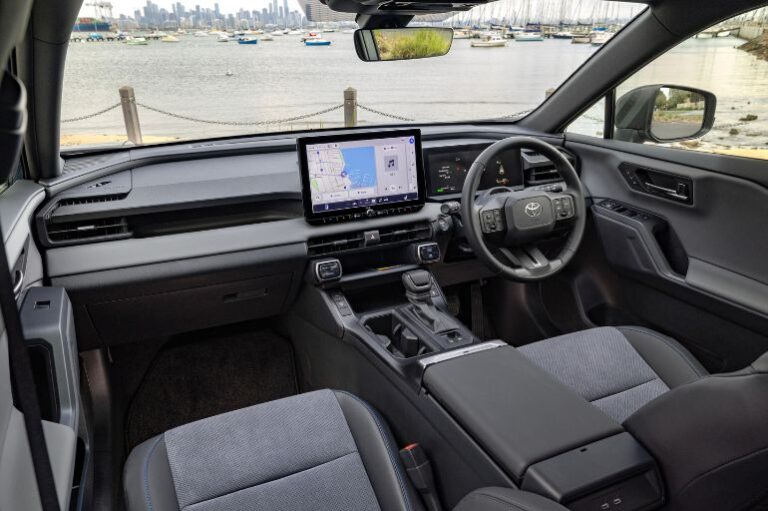
The sixth-generation Toyota RAV4 introduces something far more significant than a new infotainment system or upgraded driver assistance features. It marks the beginning of Toyota’s transition into software-defined vehicles — a shift that will shape how vehicles are developed, maintained and managed for the next decade.
Toyota is making a big deal about the new Arene software platform, and for good reason. This is not just another technology update. It is a foundational change in how the company builds vehicles and how those vehicles will evolve over their lifecycle.
But there is an important caveat.
The new connected technology is not yet available across the entire Toyota range, which means many fleet buyers will not immediately see the full benefit. That staged rollout makes it even more important to understand what the system does and why it represents a significant upgrade for Toyota.
What is Arene — and why it matters
At the centre of the new technology is the Arene operating system, developed in-house by Toyota’s software division, Woven by Toyota. It is the first time a Toyota vehicle has been built around a dedicated software platform rather than a collection of independent electronic systems.
That distinction is critical.
Arene is designed to act as the digital backbone of the vehicle, connecting safety systems, multimedia functions, navigation, and vehicle controls into a single architecture. It also allows Toyota to update vehicle software remotely, rather than waiting for scheduled service visits.
In practical terms, this means the vehicle becomes a platform that can improve over time rather than remaining static after purchase.
That is a fundamental shift for Toyota.
From hardware updates to software upgrades
Traditionally, vehicle improvements have required new model releases or mechanical changes. The Arene platform changes that approach by enabling over-the-air updates for key systems, including:
- Multimedia functions
- Active safety features
- Battery management systems
- Connected services
- Digital key functionality
These updates can be delivered remotely, reducing downtime and improving reliability. For fleet operators, this has immediate operational implications. Instead of bringing vehicles into workshops for minor software fixes, updates can be deployed automatically across the fleet.
That capability reduces maintenance interruptions and improves vehicle availability — two of the most important drivers of Whole-of-Life Cost.
A major step forward in vehicle data and connectivity
The Arene platform also introduces a new data infrastructure that allows vehicles to collect and analyse operational information in real time.
This data can be used to:
- Detect software faults
- Improve system performance
- Enhance safety features
- Refine vehicle behaviour
Toyota describes this as a continuous improvement model — applying the company’s long-standing “Kaizen” philosophy to vehicle software.
From a fleet management perspective, this is where the real value sits. Vehicles are no longer isolated assets. They become connected systems capable of learning and improving through real-world use.
New connected features drivers will notice immediately
While the underlying software architecture is the biggest change, several visible features demonstrate how the new system works in practice.
One of the most useful additions is the embedded drive recorder.
This system uses the vehicle’s existing safety cameras to record driving continuously, effectively replacing the need for an aftermarket dashcam. If a collision occurs, the system automatically stores video footage for later review.
Other connected features include:
- Remote vehicle monitoring through a smartphone app
- Automatic collision notification to emergency services
- Stolen vehicle tracking capability
- Remote locking and vehicle control
- Service reminders and safety recall notifications
These functions may appear convenience-focused, but they also support fleet risk management and asset protection.
Safety systems become smarter — and more adaptable
The new software platform also enables more advanced safety functionality.
Because the system integrates radar, cameras and navigation data, it can anticipate road conditions and adjust vehicle behaviour accordingly. For example, cruise control can now respond to curves and intersections based on navigation information rather than reacting only to nearby vehicles.
Additional safety upgrades include:
- Enhanced collision detection capability
- Improved lane monitoring systems
- Driver monitoring technology
- Emergency driving stop functionality
These improvements are not just about adding features. They represent a shift toward predictive safety — using data to prevent incidents rather than responding after they occur.
Why this is a significant change for Toyota
For decades, Toyota’s reputation has been built on mechanical reliability. The Arene platform signals the company’s recognition that future reliability will depend just as much on software as on hardware.
This transition is happening across the global automotive industry, but Toyota has traditionally moved cautiously with new technology. Introducing a dedicated software platform represents a clear commitment to modernising its vehicle architecture.
The significance of this shift cannot be overstated. It affects:
- Vehicle development
- Maintenance processes
- Safety performance
- Customer experience
- Fleet management capability
In short, it changes how vehicles are owned and operated.
Why the staged rollout matters for fleets
Despite its importance, the new connected technology is not yet available across every Toyota model.
That staged introduction reflects the complexity of deploying new software systems across large production volumes. It also highlights the reality that technology adoption in fleets often occurs gradually rather than immediately.
For Fleet Managers, this creates a transitional period.
Some vehicles in the fleet may have advanced connectivity and remote update capability, while others will continue using traditional systems.
Managing that mix will require careful planning, particularly when considering maintenance schedules, driver training and data management.
The fleet perspective — this is about asset management, not infotainment
It is easy to view connected technology as a driver convenience feature. But for fleets, the real value lies elsewhere. The Arene platform introduces tools that support:
- Predictive maintenance
- Reduced downtime
- Improved safety monitoring
- Better vehicle utilisation
- Enhanced asset security
These capabilities align directly with modern fleet management priorities. They also reflect a broader industry trend. Vehicles are becoming data-driven assets rather than purely mechanical machines.
The bottom line
The introduction of connected technology in the new Toyota RAV4 represents one of the most important upgrades in Toyota’s recent history.
It is not just a feature update. It is a structural change in how vehicles are designed, maintained and improved over time.
The technology may not yet be available across the entire range, but it signals the direction Toyota is heading — toward vehicles that evolve through software rather than waiting for the next model cycle.
For fleet buyers, that shift will shape procurement decisions for years to come.