

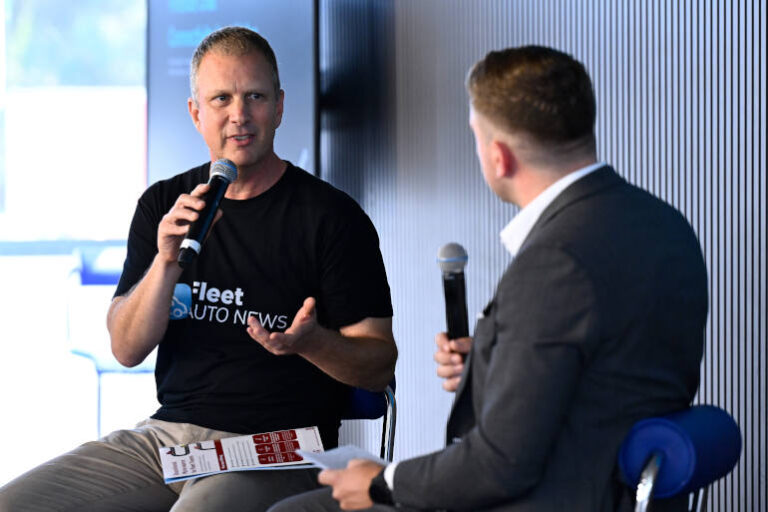
Earlier this month I had the opportunity to join the stage at the HERE Technologies Directions event in Melbourne for what was designed to feel more like a podcast conversation than a traditional presentation. Sitting down with Michael Johnson from HERE, the discussion ranged from connectivity and electrification to safety, driver behaviour and what the next few years might look like for fleets.
It was an interesting moment for me personally. Over the past decade I’ve spent a lot of time writing about the transformation happening across the fleet and mobility sectors, but this session was a chance to step back and talk about what those changes actually mean for businesses running vehicles every day.
From mechanic to fleet commentator
One of the first questions I was asked was about my background. Like many people in the fleet industry, my goal wasn’t a career in fleet.
I left school early to become a heavy vehicle mechanic. At the time I didn’t realise I was stepping into the world of fleet management — I just thought I was earning about $110 a week and working on trucks. Looking back, that practical experience has shaped the way I look at technology today. I always try to connect big industry trends with what they mean in the real world for drivers and Fleet Managers.
Connectivity isn’t new to fleets
Connectivity is a term that gets thrown around a lot in the automotive industry today, but fleets have actually been connected for decades.
Long before telematics and cloud platforms, fleets relied on two-way radios to stay in contact with drivers and vehicles on the road. The difference today is the scale and sophistication of the technology.
As I explained during the session, connectivity has become essential because expectations on fleets have changed dramatically. Organisations are now expected to operate safer vehicles, meet compliance requirements and reduce emissions — all while maintaining productivity.
Without connected data, fleets are still making decisions based on paperwork and guesswork.
Range anxiety is really a data problem
One topic that always sparks debate in fleet discussions is range anxiety around electric vehicles.
From my perspective, it’s largely a data problem.
If you ask people how far they drive each day, most don’t actually know. Yet we see constant conversations about needing 800 kilometres of range in an EV battery. In reality, the Australian Bureau of Statistics tells us the average daily travel distance is around 33 kilometres.
Fleet Managers understand the concept of fit for purpose. Once you have real data about how vehicles are used — distance travelled, parking times, route patterns — the decision about which vehicles can be electrified becomes much clearer.
Safety through visibility
Another major theme at the HERE event was safety.
Connectivity plays a powerful role here because it provides visibility into what is happening on the road. As someone responsible for employees who drive for work, having access to driver behaviour data allows organisations to see how vehicles are being operated and identify risk.
Driver behaviour monitoring, telematics alerts and real-time feedback mean safety doesn’t rely solely on after-the-fact reporting or customer feedback. Businesses can see issues as they occur and take action early.
This is especially important when vehicles are used across large service networks such as last-mile delivery, field service or sales fleets.
Fleets are strategic assets
One point I emphasised during the discussion — and it’s something I often say to executives — is that fleets are far more strategic than many organisations realise.
Every business understands the importance of IT systems. But fleets are often overlooked even though they are what physically deliver services to customers.
Hide the fleet vehicle keys and most organisations would quickly discover that their business stops working.
That’s why connectivity and fleet technology shouldn’t be seen as operational tools only. They are strategic assets that enable revenue generation, customer service and compliance.
Technology must not distract drivers
As someone who test drives a lot of vehicles, I also talked about how rapidly in-car technology is evolving.
Manufacturers are adding more digital features than ever before, but for fleets the priority remains clear — minimise driver distraction.
While advanced infotainment systems and connected services have value, the driver’s job is still to operate the vehicle safely. Simpler interfaces, heads-up displays and better ergonomics often deliver more benefit for fleets than flashy digital features.
The challenge of driver education
One issue that doesn’t get enough attention is how drivers adapt to new technology.
Vehicles are becoming increasingly sophisticated with advanced driver assistance systems and safety features. But many drivers receive little or no training when they receive a new vehicle.
Fleet Managers frequently tell me drivers jump from an older vehicle into a modern one packed with sensors, alerts and automation without understanding how it works.
If fleets want to unlock the safety benefits of these technologies, driver education will become far more important.
The next five years: decarbonisation through data
Looking ahead, the question I was asked was what connectivity will enable over the next five years.
My answer was simple: decarbonisation.
That doesn’t necessarily mean buying electric vehicles immediately. In fact, many organisations can reduce emissions significantly before replacing vehicles.
Connected data enables fleets to:
- coach drivers to reduce fuel consumption
- optimise routes and reduce unnecessary travel
- right-size vehicle fleets
- identify underutilised vehicles
- understand real-world energy use.
Driver behaviour alone can influence fuel consumption by 20–30 per cent in many fleets. Combine that with utilisation insights and route optimisation, and organisations can reduce both costs and emissions before they even begin electrification.
When executives finally ask the Fleet Manager
The final point I made during the conversation is something I suspect many Fleet Managers in the audience related to.
Sooner or later, executive teams will face mandatory emissions reporting, sustainability targets or regulatory requirements. When that happens, they will turn to their fleet teams and ask how the organisation can decarbonise.
The good news is the fleet industry already has many of the answers.
With the right connectivity, data and technology in place, Fleet Managers can deliver safer operations, lower costs and meaningful emissions reductions.
And judging by the conversations happening at events like HERE Directions, the industry is already well on its way.