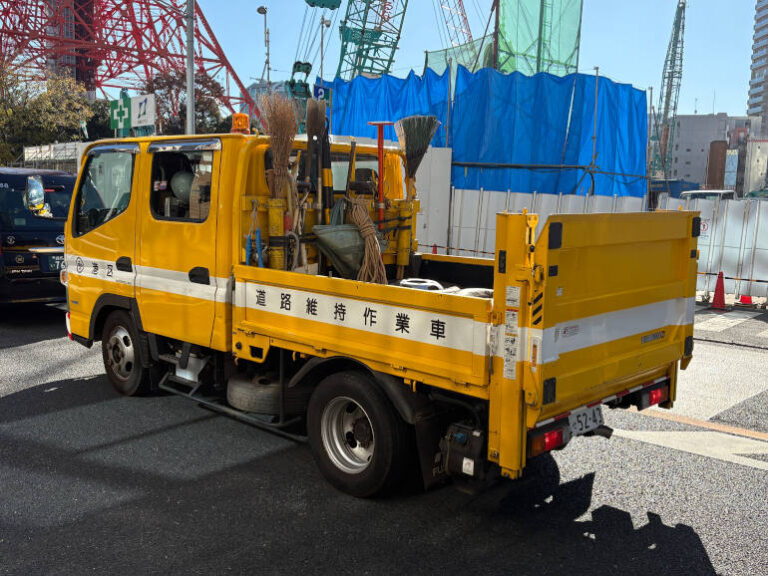
Local government fleets in Japan operate in one of the most structured and safety-conscious public sector environments in the world. Yet when viewed through a fleet management maturity lens, many municipalities are only beginning the transition from operational control to data-driven optimisation.
Insights from Shuji Shiraki, Founder and CEO of eMotion Fleet, suggest Japanese councils are at an inflection point — moving from manual oversight toward measurable, evidence-based fleet strategy.
A Strong Operational Base — But Manual Workflows
Japan’s local governments are disciplined operators. Vehicles are maintained, compliance is taken seriously and safety culture is embedded. However, much of the day-to-day fleet administration remains manual.
“In many cases, the daily management of these companies is done everything by manual,” Shiraki says. “From reservation systems to daily inspection reports, it is written down.”
For councils managing field service vehicles, pool cars and buses, this means booking systems, usage logs and reporting processes often rely on spreadsheets or paper-based systems. Operational control exists — but digital integration is limited.
That distinction matters. Fleet maturity is not just about having vehicles on the road safely; it is about having structured, accessible data to support decisions.
Utilisation: The First Lever of Maturity
One of the clearest signs of progression among Japanese municipalities is the growing focus on utilisation. Shiraki describes councils operating around 30 vehicles but questioning whether that number is justified.
“They are currently operating with 30 units, but they want to reduce the cost,” he explains. “They want to use telematics data to see if they can reduce down to 25. This delta of five units means significant impact to the cost and CO₂.”
This shift — from accepting fleet size as fixed to analysing it as variable — is a hallmark of advancing maturity.
Rather than responding to departmental pressure for “more vehicles”, councils are beginning to examine idle time, trip frequency and vehicle sharing patterns. Shiraki notes that resistance still exists at the operational level.
“They typically face strong resistance from local teams — ‘don’t take away my cars’,” he says.
That tension is familiar to fleet managers globally. The move from entitlement-based allocation to utilisation-based allocation often marks the transition from basic fleet control to strategic fleet management.
Electrification as a Catalyst
Electrification is also accelerating maturity conversations inside Japanese councils. Many municipalities have decarbonisation ambitions, but operational realities complicate implementation — particularly in colder regions.
“In Hokkaido, the perception is that cold temperature and EV don’t really match,” Shiraki says. “They say battery and cold weather don’t match, so we don’t go electric.”
Rather than relying on perception, some councils are turning to data.
“We are measuring EV data to see how you can improve operations and charging patterns to increase mileage,” he explains.
This represents another step up the maturity curve: policy ambition backed by operational analysis. Shiraki emphasises that electrification should not begin with vehicle procurement alone.
“The first step is low carbonisation,” he says. “Reducing idling, improving efficiency. Then through the data we collect, we can say which routes can go electric.”
In other words, decarbonisation becomes an outcome of utilisation and data optimisation — not a standalone initiative.
Safety Visibility and Behaviour Change
Telematics is also reshaping safety governance. When local government teams were shown driver behaviour reports, Shiraki recalls an unexpected reaction.
“They were so embarrassed — so much speeding,” he says.
The point is not cultural critique, but visibility. Once behaviour becomes measurable, accountability increases.
“You can catch speeding, harsh cornering and all these safety movements,” he explains.
For municipalities responsible for public safety and community trust, this shift from assumption to evidence strengthens governance maturity. Behavioural management becomes proactive rather than reactive.
From Compliance to Insight
Japan already has widespread digital tachograph and drive recorder adoption in regulated fleets. However, Shiraki distinguishes between compliance-based telematics and optimisation-based telematics.
“These systems collect distance, speed and location,” he says. “But when we try to go electric, pure GPS data is not enough. You need state of charge, state of health, energy efficiency data.”
As councils begin asking deeper questions — about asset lifecycle, energy performance and CO₂ reporting — the need for integrated data platforms grows.
Once they see the value, the appetite expands.
“Once customers see the granularity of the data, they ask, can we not do the same thing with diesel?” Shiraki says. “The more granular the data, the more fuel saving cost you can achieve. There is definitely an ROI.”
An Emerging Strategic Shift
Japanese local government fleets are not immature. They are structured, compliant and disciplined. But maturity in a contemporary sense requires integration — connecting policy, utilisation, safety, decarbonisation and financial performance.
The progression Shiraki describes is clear:
- Manual oversight
- Digital visibility
- Utilisation optimisation
- Electrification planning
- Integrated fleet and energy management
That staged journey mirrors the path many Australian councils have travelled over the past decade.
For Japanese municipalities, rising cost pressure, labour constraints and environmental expectations are converging. Electrification may be the headline, but the deeper shift is toward measurable, evidence-based fleet governance.
As Shiraki’s work with councils demonstrates, the move from manual to measured is already underway.